
ESTERO
Italy's defense budget faces pressure as NATO allies demand higher spending
European members grapple with increased military commitments amid shifting geopolitical priorities and U.S. expectations.
Adriana Sole1,289 wordsEdition №5Friday, 5 June 2026 — Edition № 5
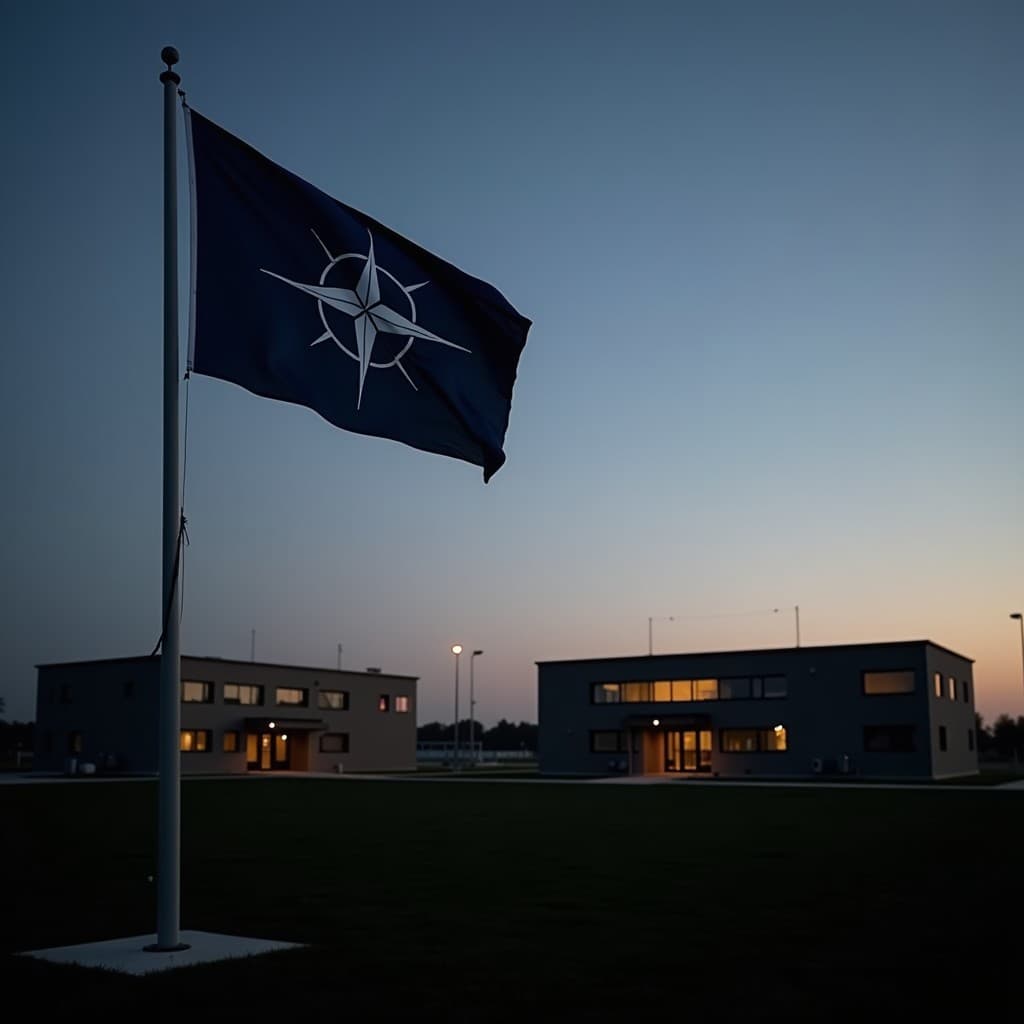
NATO members across Europe are reassessing defense budgets and military commitments in response to shifting geopolitical pressures and evolving expectations from Washington. While the specific details of Italy's defense posture have not dominated recent international headlines, the broader European context—reported by Reuters, the Financial Times and other outlets covering NATO affairs—indicates that Italy, as a G7 member and a NATO ally with significant Mediterranean responsibilities, faces mounting pressure to align its defense spending with alliance standards.
The pressure stems from multiple sources. The United States has consistently called on European NATO members to meet the alliance's spending target of two percent of gross domestic product on defense. Several European nations have already reached or exceeded this threshold, while others, including some of Italy's peers, remain below it. The expectation is that all members will eventually meet the standard, a shift that would require substantial budget reallocations in countries where defense spending has historically been lower.
For Italy, the implications extend beyond budgetary arithmetic. As a Mediterranean power and a NATO member bordering the Balkans and the Eastern Mediterranean, Italy plays a strategic role in NATO's southern flank. Increased defense spending could reshape Italy's military capabilities, its role in NATO operations, and its standing within the alliance. The decision to increase spending also carries domestic political weight, as it requires trade-offs with other budget priorities in a country managing significant public debt.
The broader NATO context has shifted considerably in recent years. The alliance's focus has moved from counterterrorism and expeditionary operations toward peer-competitor deterrence, particularly regarding Russia and, increasingly, China. This reorientation has implications for how member states structure their forces, procure equipment and allocate resources. Italy, like other European members, must decide how to position itself within this new strategic framework.
The United States has been explicit about its expectations. American officials have repeatedly stated that European NATO members must increase defense spending and reduce reliance on U.S. military support. This messaging has intensified as the United States faces budgetary pressures of its own and as policymakers in Washington question the sustainability of the post-Cold War security arrangement in Europe. The implicit threat is that reduced U.S. commitment could follow if European members do not shoulder more of the burden.
Italy's current defense spending stands below the two percent NATO target, though exact figures vary depending on how defense expenditures are calculated and what is included in the accounting. The country has historically prioritized other budget priorities, including pension obligations and infrastructure investment. Increasing defense spending would require either raising the overall defense budget or reallocating resources from other areas—both politically contentious propositions in a country with limited fiscal room.
The strategic rationale for increased Italian defense spending rests on several pillars. Italy's geographic position gives it responsibility for NATO's southern flank, including the Mediterranean Sea, the Balkans and the Eastern Mediterranean. The country hosts significant NATO infrastructure, including naval facilities and air bases. Italy also participates in NATO operations and missions across multiple regions. Higher defense spending could enhance Italy's capacity to fulfill these roles and to contribute more substantially to alliance objectives.
The equipment and capability implications are substantial. Increased defense spending would likely fund modernization of Italy's armed forces, including naval vessels, fighter aircraft, air defense systems and cyber capabilities. Such investments take years to plan and execute, and they carry long-term budgetary consequences. Italy would need to decide whether to prioritize certain domains—such as naval capabilities given its Mediterranean role—or to pursue a balanced modernization across all service branches.
The procurement dimension also touches on European industrial policy. NATO members increasingly prefer to source defense equipment from European suppliers when possible, partly to strengthen European defense autonomy and partly to support European defense industries. Italy's defense spending decisions could shape the market for European defense contractors and influence the competitive dynamics within the European defense industrial base.
Domestic political considerations complicate Italy's position. Public opinion in Italy has historically been skeptical of large military expenditures, particularly given the country's experience with austerity and the prioritization of social spending. Political parties across the spectrum have varying views on defense spending, and any government seeking to increase the defense budget significantly would need to build political consensus. The trade-offs between defense and other priorities—healthcare, education, infrastructure—would likely generate debate.
Italy's role in NATO operations also factors into the spending question. The country contributes to NATO missions in the Balkans, the Eastern Mediterranean and elsewhere. Higher defense spending could enable Italy to expand or deepen these contributions, enhancing its influence within the alliance. Conversely, if Italy does not increase spending, its ability to contribute to new or expanded NATO operations could be constrained, potentially reducing its voice in alliance decision-making.
The European context adds another layer. Several European NATO members have already committed to reaching or exceeding the two percent target. Germany, Poland and the Baltic states have all increased defense spending significantly in recent years. Italy's position relative to these peers matters for alliance cohesion and for Italy's standing within Europe. If Italy lags substantially behind comparable European members, it could face diplomatic pressure or reduced influence in NATO councils.
The fiscal constraints Italy faces are real. The country carries one of the highest public debt burdens in the eurozone, and fiscal flexibility is limited by EU rules on deficit spending and debt levels. Any increase in defense spending would need to be accommodated within these constraints, either through overall budget growth or through reallocation from other areas. The European Commission and other EU institutions would monitor how Italy manages this trade-off.
The timeline for Italian decision-making remains uncertain. NATO's two percent target is not a hard deadline, and member states have flexibility in how quickly they reach it. However, the political pressure from the United States and from other NATO members is unlikely to diminish. Italy will likely face mounting calls to increase defense spending over the coming years, and the government will need to develop a strategy for responding to these pressures while managing domestic political constraints.
The long-term implications of Italy's defense spending decisions extend beyond NATO. Higher defense spending could shape Italy's role in European security initiatives, its relationship with the European Union and its positioning in a potentially more multipolar world. Italy's choices will also influence how other European members approach the same question, potentially setting precedents for burden-sharing within the alliance.