
UMBRIA
Italy marks 80 years of Republic as inland towns reckon with change
Military ceremonies in Rome commemorate 1946 democracy vote; in Umbria, the anniversary arrives amid demographic decline and questions about the state's reach into the interior
Niccolò Mariani1,456 wordsEdition №3Wednesday, 3 June 2026 — Edition № 3
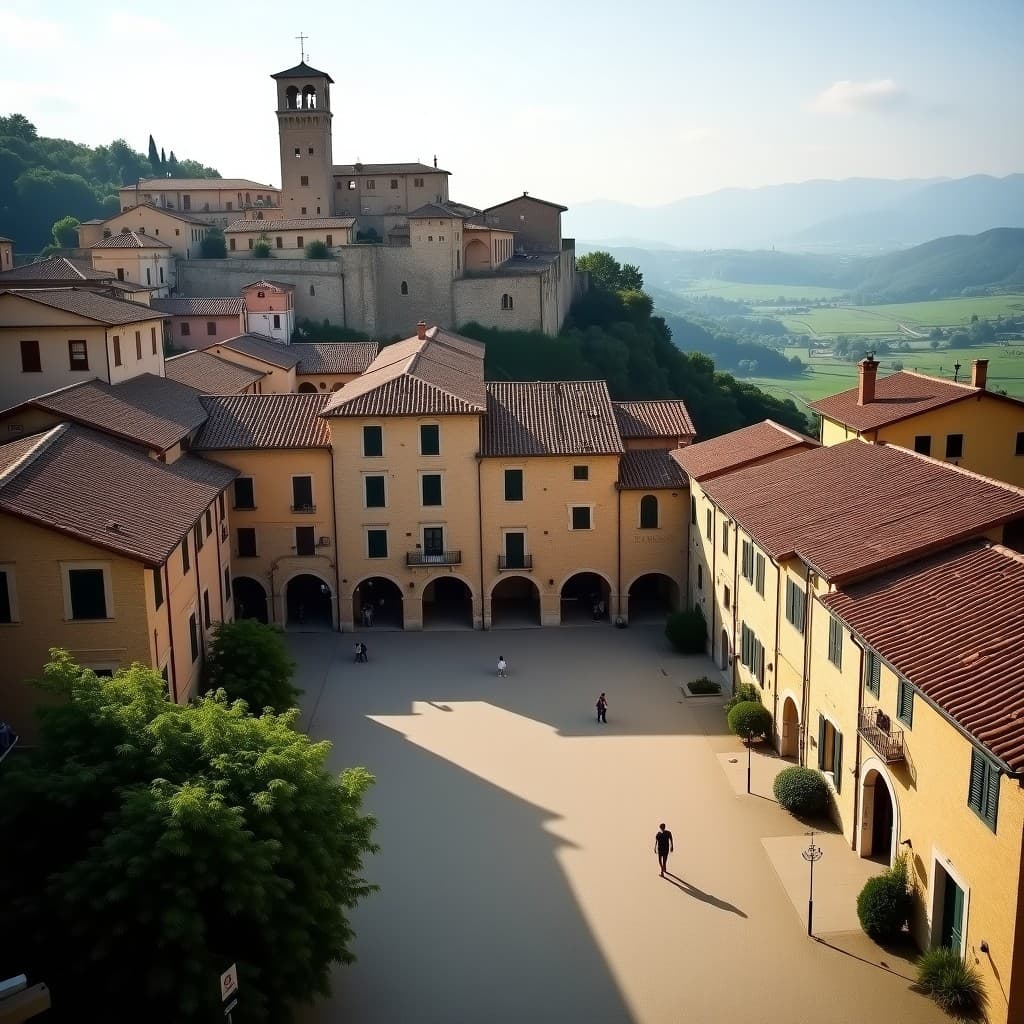
Italy marked the 80th anniversary of the Republic on Tuesday with military parades, flypasts and ceremonies in Rome, according to Euronews. The celebrations commemorated the 1946 referendum that abolished the monarchy and established the democratic Republic. The ceremonies included the traditional military parade and official state events, reasserting the symbols and continuity of the Italian state on an anniversary that falls at a moment of significant change in the country's demography and regional character.
The Republic's founding in 1946 followed the collapse of Fascism and the end of the Second World War. The 1946 referendum was a watershed: it marked the Italian people's choice to abandon monarchy and embrace republican democracy. For eighty years, the Republic has endured through numerous governments, constitutional reforms, and crises — from the political violence of the 1970s to the financial crisis of 2008 to the pandemic. The military parade in Rome, a ritual repeated annually on the Republic's founding day, reasserts continuity and state authority.
Yet the Italy of 2026 is profoundly different from the Italy of 1946 or even 1980. The population is ageing rapidly, with a birth rate among the lowest in Europe. Young people continue to emigrate, particularly from the south and from inland regions. The state's fiscal capacity has been constrained by debt and European fiscal rules. Public services — healthcare, education, transport — have contracted in many inland areas. Tourism has become the primary economic driver in some regions, while agriculture has consolidated into fewer, larger operations. The Republic's institutions remain formally intact, but their reach and capacity in inland Italy have diminished.
Umbria, like much of inland Italy, embodies these tensions. The region's population has declined from around 900,000 in the 1990s to 858,000 today. The decline is not evenly distributed: the provincial capitals of Perugia and Terni have held relatively steady, while smaller towns and villages have emptied. Young people leave for Rome, Milan, Bologna or abroad. Those who remain are increasingly elderly. Schools close. Bus services are reduced. Post offices consolidate. The visible apparatus of the state — the carabinieri station, the municipal office, the courthouse — persists in form but with fewer staff and reduced hours.
This pattern is not unique to Umbria. International coverage of Italy's demographic crisis has focused on the scale of the problem: Reuters, the Guardian and the BBC have all reported on Italy's ageing population and emigration of the young. But the regional consequence — the slow withdrawal of state capacity from inland towns — is less frequently examined in the foreign press. The military parade in Rome reasserts the state's presence and continuity at the national level, but it does not address the question of what the Republic means to a town of 2,000 people in the Umbrian hills, where the school has closed and the young have left.
The Republic's founding was built on the premise of a strong, centralised state that would extend its reach and services across the entire territory. The 1948 Constitution, adopted two years after the referendum, enshrined principles of universal healthcare, public education, and social security. These were revolutionary commitments for the time. Over the subsequent decades, the Italian state built a welfare system, a national health service, and a network of public institutions that, at their peak, reached into even the smallest towns. The Republic was, in principle, a project of national integration and equity.
The erosion of this reach has been gradual and is not unique to Italy. Across Europe, smaller towns and rural areas have experienced the contraction of public services, the consolidation of economic activity in larger cities, and the emigration of young people. But Italy's particular combination of high public debt, slow economic growth, and political fragmentation has meant that the contraction has been more severe. The foreign press has reported on Italy's fiscal constraints and the European Union's pressure on Italian budgets, but the human consequence — the slow hollowing out of inland towns — is often treated as a curiosity rather than a central feature of the Republic's transformation.
Umbria's experience reflects this broader pattern. The region's economy has historically been based on agriculture, small manufacturing, and, increasingly, tourism. The agricultural sector has consolidated: fewer farms, larger operations, more mechanisation. Small manufacturing — ceramics, textiles, food processing — has struggled to compete with larger producers in other regions or abroad. Tourism has grown, particularly around Assisi and the Spoleto Festival, but it is seasonal and concentrated in a few towns. The result is that the region's economy offers fewer opportunities for young people, particularly those without specialised skills or capital.
The state's role in this transformation has been ambiguous. Public investment in infrastructure, education and healthcare has declined in real terms. The healthcare system, once a source of employment and stability in smaller towns, has consolidated services into larger hospitals in provincial capitals. Schools have closed as the student population has shrunk. Public transport has been reduced. Yet the state's regulatory and fiscal apparatus remains present: taxes are collected, regulations enforced, bureaucracy maintained. The Republic persists as a formal structure, but its capacity to provide the services and opportunities that once anchored people to inland towns has diminished.
The 80th anniversary celebrations in Rome do not address this paradox. The military parade, the official ceremonies, the speeches by state officials — these reassert the Republic's continuity and legitimacy at the national level. But they do not engage with the question of what the Republic means to people in regions where its institutions are visibly contracting. This is not a failure of the anniversary itself, but rather a reflection of how the Italian state, and how international coverage of Italy, tends to focus on the national capital and the major cities, while treating the inland regions as peripheral to the story of the Republic's evolution.
International media coverage of Italy's Republic Day has typically focused on the military parade, the historical significance of the 1946 referendum, and the state of Italian politics at the moment of the anniversary. Euronews' coverage followed this pattern, reporting on the ceremonies and flypasts without engaging with the regional or demographic dimensions of the Republic's current state. This is not unusual: foreign correspondents based in Rome naturally focus on events in the capital, and the anniversary itself is structured as a national ceremony. But it means that the international press, which shapes how the world understands Italy, tends to report the Republic as a national institution rather than as a set of regional experiences.
The question of what the Republic means in inland Italy is not merely a matter of nostalgia or regional grievance. It touches on fundamental questions about how democratic states function when their capacity to provide services and opportunities is contracting. The Republic was founded on the principle that the state would extend its reach across the entire territory and provide a baseline of services and dignity to all citizens. Eighty years later, that principle is being tested by demography, economics and fiscal constraints. The military parade in Rome reasserts the state's formal authority, but it does not resolve the tension between the Republic's founding promise and its current capacity to deliver on that promise in inland regions.
For Umbria specifically, the anniversary arrives at a moment when the region is attempting to position itself as a destination for cultural tourism and, increasingly, for remote workers and retirees seeking a slower pace of life. The Spoleto Festival and Umbria Jazz remain the primary vehicles for international cultural attention. But the region's ability to retain young people and to offer economic opportunity remains constrained. The state's role in this transformation — through investment in infrastructure, education and services — remains ambiguous. The Republic's institutions persist, but their capacity to shape the region's future is limited.
The 80th anniversary is a moment for reflection on what the Republic has achieved and what challenges it faces. In Rome, this reflection took the form of military ceremonies and official speeches. In inland regions like Umbria, the anniversary might prompt different questions: What does the Republic mean to a region where the young are leaving and the state's visible presence is contracting? What is the state's obligation to inland communities? How can the Republic's founding promise of universal dignity and opportunity be sustained in regions where economic activity is declining? These questions are not addressed by the anniversary celebrations, but they are the questions that will shape the Republic's future in inland Italy.