
CAMPANIA
Italy Marks 80 Years of Republic with Military Ceremony in Rome
The nation commemorated the 1946 referendum that established democracy, though the anniversary arrives amid ongoing political and economic tensions.
Rosaria Esposito1,356 wordsEdition №3Wednesday, 3 June 2026 — Edition № 3
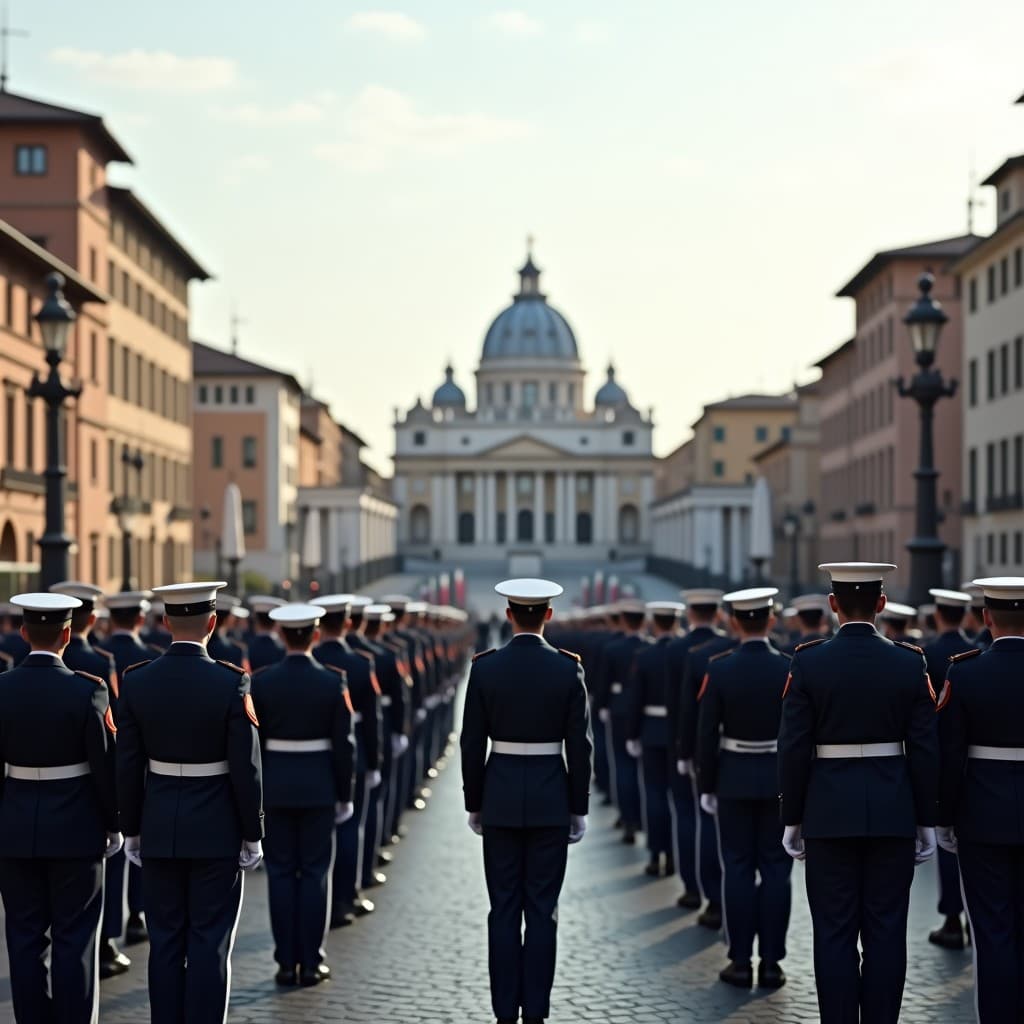
Italy observed the 80th anniversary of the Republic on 2 June with military parades, ceremonial flypasts and official commemorations in Rome, according to Euronews. The date marks the 1946 referendum in which Italian voters chose democracy and a republican constitution over the monarchy that had ruled the peninsula for nearly a century.
The anniversary carries symbolic weight in Italian public life. 2 June is a national holiday, and the military parade—a fixture of the observance—displays the armed forces and affirms the state's institutional continuity. This year's ceremony occurred against a backdrop of persistent economic challenges, political fragmentation and regional tensions that have defined Italian governance since the 1990s.
For Campania and the South, the anniversary resonates differently than in Rome or the North. The referendum itself revealed deep regional divides: the South voted overwhelmingly to retain the monarchy, while the North favoured the Republic. Those fault lines have never fully closed, and they shape how the South experiences Italian statehood today.
The 1946 referendum was Italy's first democratic vote as a unified nation. After two decades of fascism and five years of war, Italians chose between monarchy and republic. The result was narrow nationally—54 percent for the Republic—but the regional split was stark. Southern voters, particularly in Naples and Sicily, supported the king; northern and central Italy backed the republic. The result reflected not only dynastic loyalty but also deeper anxieties about what a republic would mean for southern economic interests and the Church's role in public life.
The foreign press has long treated the 1946 moment as a founding myth of modern Europe. It represented Italy's break with fascism and its integration into the Western democratic order. Yet international coverage has also noted the paradox: Italy's republican institutions, while formally democratic, have been marked by chronic political instability, corruption, organised crime and the persistent economic divergence between North and South.
Eighty years later, that divergence remains the defining feature of Italian regional life. The South—Campania, Calabria, Sicily, Basilicata, Puglia—has consistently lower incomes, higher unemployment, weaker infrastructure and less institutional capacity than the North. The foreign press regularly attributes this to historical factors (the legacy of feudalism, the Bourbon kingdom's underdevelopment, the mafia's stranglehold on southern economies) and to structural problems (brain drain, underinvestment, weak governance).
Naples itself embodies these tensions. The city is Italy's third-largest and the capital of the South's most populous region. It is also a symbol of the contradictions the foreign press identifies in Italian life: extraordinary cultural heritage and street vitality coexist with poverty, crime, political dysfunction and environmental degradation. The Guardian, the BBC and other international outlets have documented Naples' cycles of renaissance and crisis—moments when the city attracts global attention and investment, followed by periods of neglect and disorder.
The 80th anniversary ceremony in Rome, while nationally significant, does not address the regional question that has haunted the Republic since its founding. The South remains economically dependent on transfers from the North and the EU. Youth unemployment in Campania runs well above the national average. The Camorra, Naples' mafia, continues to exercise control over significant sectors of the local economy. These realities sit uneasily alongside the patriotic symbolism of military parades and national commemoration.
The foreign press has become more attentive to this gap in recent years. As Italy has aged demographically and faced competition from other European economies, international coverage has shifted from treating the South as a quaint or tragic backdrop to recognising it as a structural problem for the entire nation. The Economist, Reuters and other outlets have reported on the brain drain from southern Italy—young, educated Italians leaving for opportunities in the North or abroad—as a demographic and economic crisis.
Campania's experience is acute. The region has lost roughly 700,000 people to emigration since the 1990s, according to foreign demographic analyses. The outflow has accelerated in recent years as younger Italians, particularly graduates, seek work elsewhere in Europe or globally. This exodus weakens the regional economy, reduces the tax base and concentrates poverty among those who remain.
The anniversary also arrives at a moment of political fragmentation in Italy. The foreign press has tracked the rise of populist and far-right parties, the instability of coalition governments and the persistent tensions between Rome and Brussels over fiscal policy and migration. These national political currents have particular resonance in the South, where economic desperation and resentment of northern dominance have fuelled support for anti-establishment movements.
Yet the 80-year arc also includes genuine achievements. The Republic established universal suffrage, a written constitution and, eventually, a functioning welfare state. It integrated Italy into NATO and the European Union. It produced periods of economic growth, cultural flourishing and institutional reform. The foreign press acknowledges these accomplishments even as it documents ongoing dysfunction.
For Campania, the challenge is that the Republic's formal institutions—Parliament, the judiciary, the bureaucracy—have never fully taken root in the region in the way they have in the North. The Camorra's parallel authority, the weakness of local government and the persistence of informal economies mean that the state's reach remains limited. The foreign press has documented how this institutional weakness perpetuates poverty and crime, creating a cycle that formal democracy alone has not broken.
The military parade and ceremonial commemoration serve an important function: they affirm the state's continuity and legitimacy. But they also highlight the gap between republican ideals and southern realities. The state that parades in Rome is the same state that has failed to deliver economic development, security or institutional capacity to much of the South.
Looking forward, the anniversary offers an occasion for reflection on what the next 80 years might hold. The foreign press has begun to ask whether Italy can sustain itself as a unified nation given its regional disparities, demographic decline and economic stagnation. The South's future—whether it can retain its population, develop economically and integrate more fully into the Republic—remains an open question that the military parade in Rome does not answer.