
TOSCANA
Italy marks 80 years of the Republic with ceremony and military display
The nation commemorates the 1946 vote that ended monarchy and established democratic rule
Costanza Bardi1,247 wordsEdition №3Wednesday, 3 June 2026 — Edition № 3
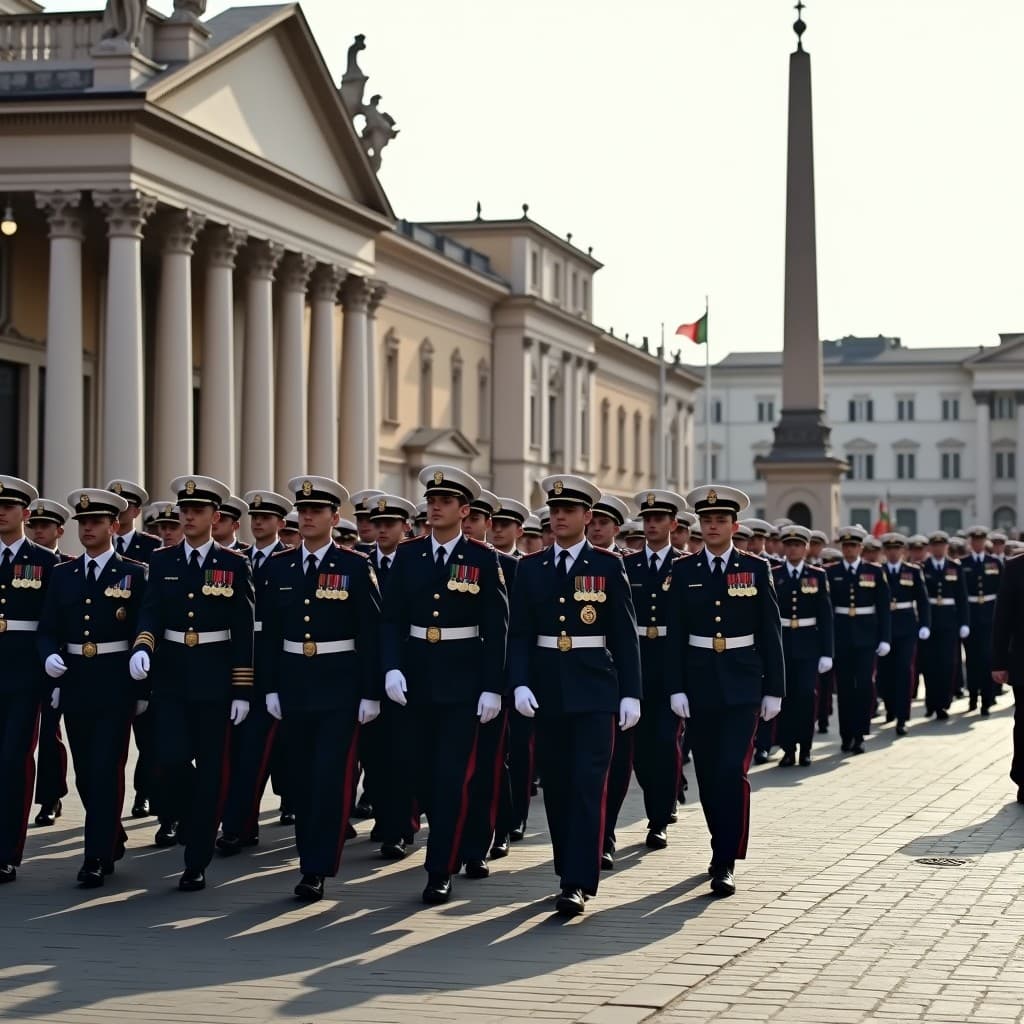
Italy marked the 80th anniversary of the birth of the Republic on Tuesday with ceremonies, military parades and flypasts in Rome, according to Euronews. The commemoration recalled the 1946 vote that paved the way for democracy and ended the monarchy's reign over the Italian state.
The ceremonies took place across the capital, with the military display forming the centrepiece of the nation's observance. The anniversary represents a symbolic moment for a country whose postwar constitution established a parliamentary republic and, later, membership in the European Union and NATO.
The date marks a watershed in Italian history: the referendum of June 2, 1946, in which Italian voters chose a republican form of government over the restoration of the House of Savoy. The result was narrow — 54 per cent in favour of the republic — yet decisive enough to reshape the nation's political architecture for the subsequent eight decades.
The 1946 referendum followed the collapse of Benito Mussolini's fascist regime and the end of the Second World War. Italy, occupied and devastated, faced a choice between continuity with its monarchical past and a break toward democratic renewal. The vote reflected a broader European reckoning with authoritarianism and a turn toward constitutional democracy.
The result was not uniform across the country. The south, traditionally more royalist, voted to retain the monarchy; the north, industrial and urban, favoured the republic. The margin of victory was sufficiently close that the result was contested at the time, yet it held. The monarchy departed into exile, and the Italian Republic was born.
The 1948 Constitution that followed established a bicameral Parliament, a President as head of state elected by Parliament, and a Prime Minister as head of government. It also created a Constitutional Court to guard the document's principles. The system reflected a deliberate dispersal of power — a reaction against the concentration of authority that had enabled fascism.
For Tuscany, the anniversary carries particular resonance. Florence, the heart of the region, had been the seat of the Grand Duchy before Italian unification in 1861. The city's cultural and political identity is bound up in the long arc from Renaissance republic through monarchy to modern democracy. The region's museums, archives and monuments embody that history.
The postwar period transformed Tuscany economically and socially. The region shifted from agriculture toward manufacturing — textiles, leather, wine production — and later toward tourism. The Republic's framework enabled the regional autonomy that allowed Tuscany to develop its own economic policies and cultural institutions. The region's wine consortiums, craft guilds and tourism boards operate within a constitutional order that the 1946 vote established.
The military parade in Rome on Tuesday was the formal state observance. Euronews reported the event as a commemoration of democratic transition, situating Italy's Republic Day within the broader European postwar settlement. The parade itself — a display of institutional continuity and military tradition — underscored the stability the Republic has provided across eight decades of political change.
Italy has experienced significant political turnover in those eighty years: more than seventy governments, shifts between left and right, periods of instability and reform. Yet the constitutional framework has endured. The Republic survived the economic crises of the 1970s, the mafia wars, the corruption scandals of the 1990s, and the eurozone crisis of the 2010s. The Tuesday ceremonies implicitly celebrated that durability.
The anniversary also comes at a moment when the European Union — itself a postwar creation born from the same impulse toward democratic integration — faces questions about the health of democratic institutions across its member states. Italy's Republic Day thus carries a secondary meaning: a reminder of the democratic choice made eighty years ago and the constitutional order that choice created.
For visitors to Florence and Tuscany, the anniversary is largely invisible. The region's tourism economy runs on the imagery of Renaissance Florence, Tuscan wine country and the postcard countryside. Yet the democratic institutions that protect those cultural assets, manage heritage conservation and regulate tourism itself all rest on the constitutional settlement of 1946. The Republic's eighty years have been the eighty years in which Tuscany became a global cultural and economic destination.
The ceremonies in Rome on Tuesday were formal and ceremonial — the kind of state observance that democracies conduct to affirm their own continuity. They served, in effect, as a public reaffirmation of the choice made in 1946: that Italy would be a republic, not a kingdom; a democracy, not an autocracy; a member of the European community, not an isolated power. Eighty years on, that choice remains the foundation of Italian political life.