
LAZIO
Italy marks 80 years of the Republic
Military parades and ceremonies in Rome commemorate 1946 democratic transition
Davide Ruspoli1,489 wordsEdition №3Wednesday, 3 June 2026 — Edition № 3
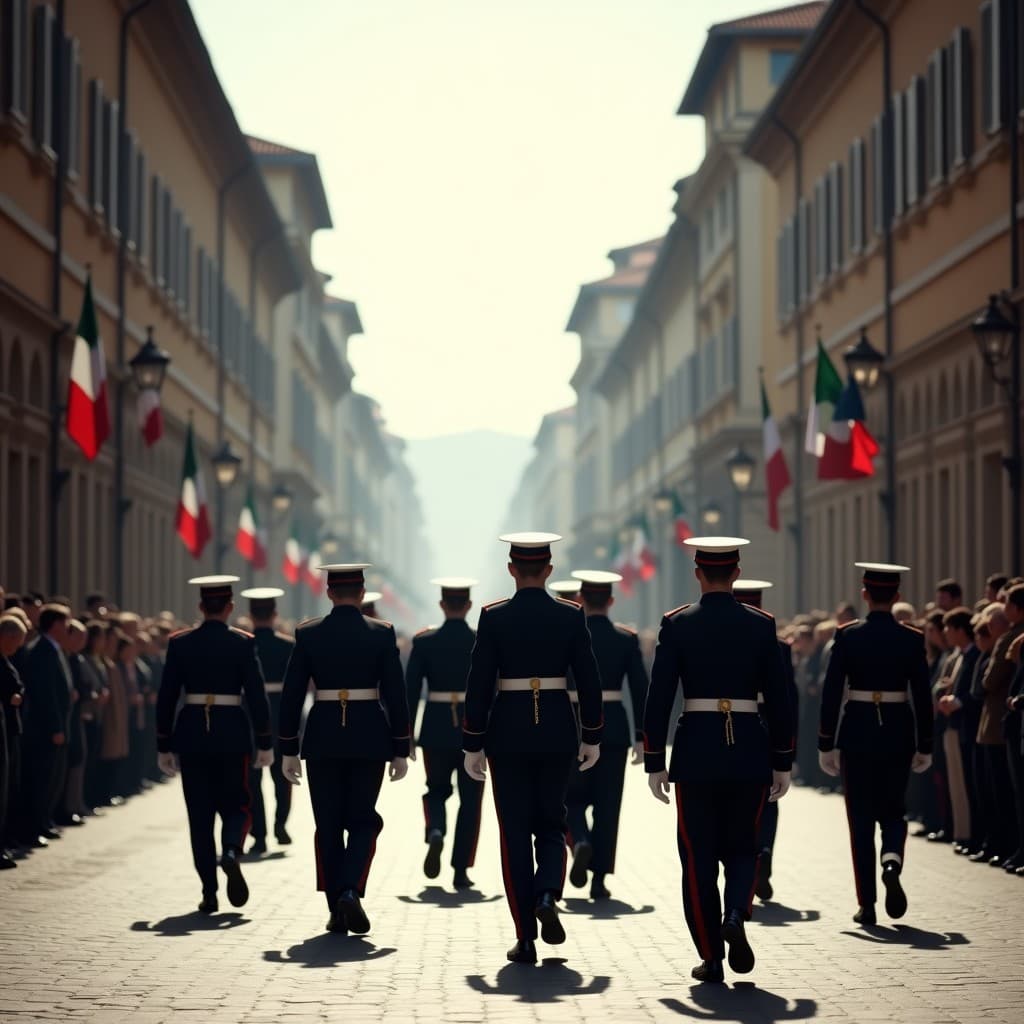
Italy marked the eightieth anniversary of the Republic on Tuesday with military parades, flypasts, and ceremonies in Rome, according to Euronews. The celebrations commemorated the 1946 referendum in which Italian voters chose a republican form of government over the monarchy, a turning point that paved the way for the modern democratic state.
The anniversary falls at a moment when Italy's political system faces familiar pressures: coalition instability, regional tensions, and questions about institutional reform. Yet the commemorative events in Rome emphasised continuity and institutional legitimacy, with the military and state apparatus on full display.
The 1946 vote was a watershed. Italy had emerged from fascism and World War II as a defeated nation under Allied occupation. The monarchy, tainted by association with Mussolini's regime, was deeply unpopular. Voters chose to replace it with a republic, and the Constitution adopted in 1948 established a parliamentary democracy with a president as head of state and a prime minister as head of government.
The eightieth anniversary of the Italian Republic is a symbolic milestone. The date marks not the founding of the state—Italy as a unified nation dates to 1861—but the moment when Italians collectively chose to remake their political system. The 1946 referendum was a democratic act of constitutional creation, a rare moment when citizens directly determined the form of their government.
The military parades and flypasts in Rome served multiple purposes. They demonstrated the state's institutional continuity and the armed forces' role as guarantors of the constitutional order. They also provided a civic spectacle, reminding Italians of shared national identity and democratic achievement. In a country where regional identities remain strong and political divisions run deep, such ceremonies affirm the legitimacy of the central state.
Rome, as the capital and seat of government, was the natural venue for the celebrations. The city embodies Italian statehood: it is home to Parliament, the Presidency, the government ministries, and the Constitutional Court. The military parade through Rome's streets is a ritual reassertion of state authority and democratic legitimacy, performed in the city that houses the institutions themselves.
The timing of the eightieth anniversary is instructive. Italy's political system has undergone significant change since 1946. The Cold War shaped the early decades of the Republic, with the Christian Democracy party dominating government and the Communist Party forming a permanent opposition. The transition to the Second Republic in the 1990s, following corruption scandals and the collapse of the old party system, marked another watershed. Since then, coalition governments have become the norm, and no single party has commanded a stable majority.
The current political landscape reflects this fragmentation. Italy has experienced rapid turnover in prime ministers and coalition configurations. The rise of populist movements, the Five Star Movement and the League, disrupted traditional centre-left and centre-right alignments. Regional parties, particularly in the North, have gained ground. The European Union and eurozone membership have constrained fiscal autonomy and generated domestic political friction.
Yet the institutional framework established in 1948 has proven resilient. The Constitution has been amended but not fundamentally replaced. The separation of powers, the bicameral Parliament, the Constitutional Court, and the career judiciary have all endured. The military and security services remain subordinate to civilian authority. Elections, though sometimes contentious, are held regularly and results are accepted.
The eightieth anniversary celebrations implicitly affirm this institutional continuity. By staging military parades and state ceremonies, the government reaffirms that the Republic, despite its political turbulence, remains the legitimate framework for Italian governance. The message is one of stability and constitutional legitimacy, even as the specific composition of government changes.
For Lazio and Rome specifically, the anniversary carries particular weight. The capital is the physical embodiment of the Italian state. The Quirinal Palace, residence of the President of the Republic, sits on one of Rome's hills. Parliament meets in the city. The government ministries are housed in Rome's centre. When the state performs its ceremonial functions—military parades, state funerals, presidential inaugurations—Rome is the stage.
The city's role as capital also makes it a focal point for international attention. Foreign diplomats, journalists, and observers watch Italian politics from Rome. The military parade on Republic Day is observed by international media as a symbol of Italian institutional stability and democratic legitimacy. In a country that has experienced political instability and coalition volatility, such ceremonies serve a reassuring function for both domestic audiences and international observers.
The 1946 referendum itself was a remarkable democratic moment. Italians voted by a margin of roughly 54 percent to 46 percent in favour of a republic. The result was close enough to be contested, and the South voted more heavily for the monarchy than the North. The referendum revealed deep regional and social divisions that have persisted for eight decades. Yet the result was accepted, and the Republic was established.
The Constitution that followed in 1948 was a product of negotiation among Christian Democrats, Socialists, Communists, and smaller parties. It reflected the desire to prevent a return to authoritarianism and to establish a democratic system with checks and balances. The document is lengthy and detailed, reflecting the framers' determination to constrain executive power and protect individual rights.
Eighty years later, the Constitution remains the supreme law. Amendments require supermajorities in Parliament and, in some cases, a popular referendum. This high bar for constitutional change has meant that the basic framework has remained stable even as governments have come and gone. The Constitutional Court, established in 1956, has become a powerful institution, striking down laws deemed unconstitutional and mediating disputes between branches of government.
The anniversary also occurs against the backdrop of broader European challenges. The European Union, of which Italy is a founding member, faces questions about its future direction. Italy's relationship with the EU has been fraught at times, particularly over fiscal policy and migration. Yet Italy remains embedded in European institutions and NATO. The Republic Day celebrations, while focused on national identity, implicitly affirm Italy's place in the European order.
The military parade itself is a carefully choreographed display of state power and institutional legitimacy. The armed forces march through Rome's streets in formation, demonstrating their readiness and their subordination to civilian authority. Aircraft perform flypasts overhead. The President of the Republic presides over the ceremony, embodying the constitutional role of head of state. The Prime Minister and other government officials are present, affirming their commitment to the constitutional order.
Such ceremonies are common in democracies worldwide. They serve to remind citizens of shared national identity and of the legitimacy of democratic institutions. In Italy's case, where political fragmentation and regional division are persistent features, the Republic Day celebrations take on added significance. They assert that despite political disagreements, Italians share a common constitutional framework and commitment to democratic governance.
The eightieth anniversary is also a moment for reflection on the Republic's achievements and challenges. Italy has transformed from a war-devastated, largely agricultural society into a major industrial and service economy. It has integrated into Western institutions and become a G7 member. Its culture, fashion, design, and cuisine have global influence. Yet the country also faces persistent challenges: a large public debt, demographic decline, regional inequality, and political instability.
The Republic Day celebrations do not address these challenges directly. Instead, they affirm institutional continuity and democratic legitimacy. The message is that the constitutional framework established in 1946 remains valid and binding, even as specific governments and policies change. This affirmation of institutional stability is itself politically significant in a country where political change has been frequent and sometimes turbulent.