
ECONOMY
Italy's Schengen suspension with Spain adds friction to a fragile recovery
Border checks threaten summer tourism and trade as growth stays modest
Economy Desk468 wordsEdition №66Monday, 3 August 2026 — Edition № 66
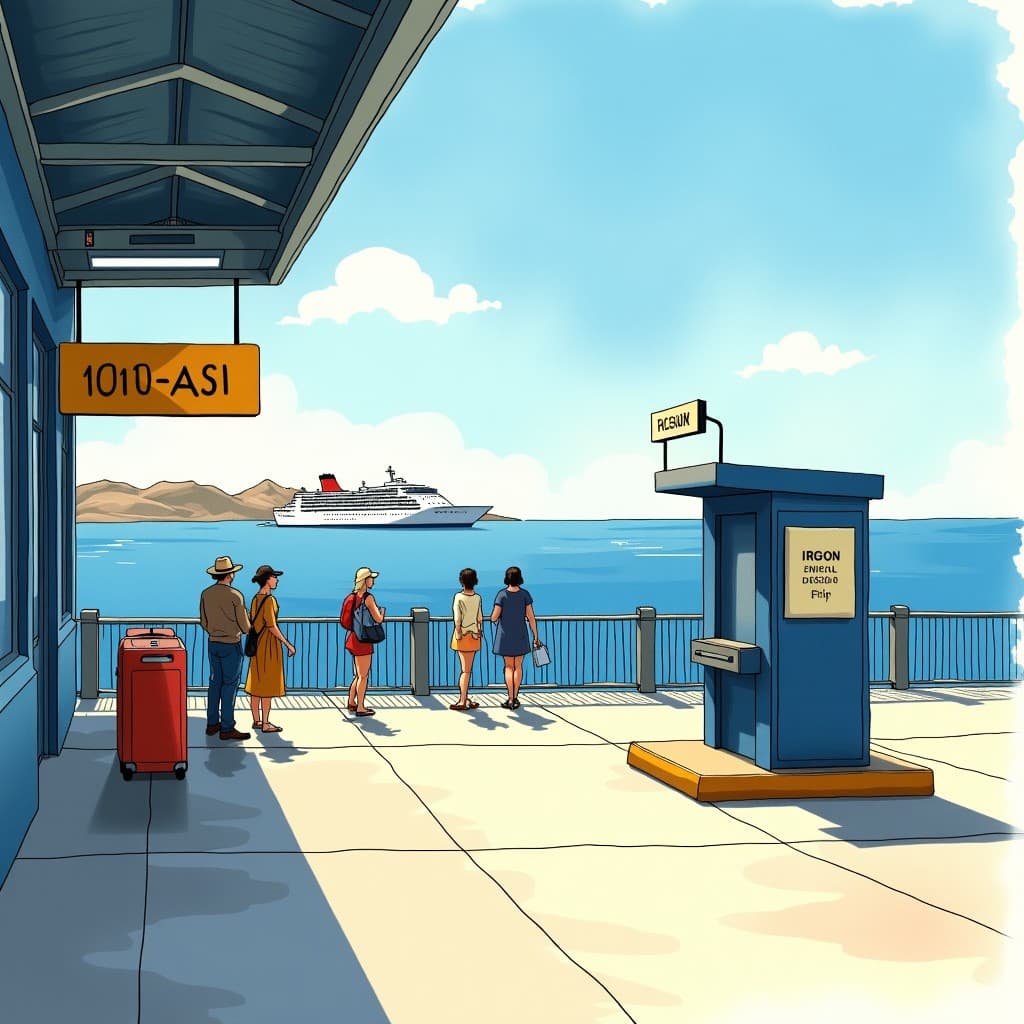
Italy's decision to temporarily suspend the Schengen agreement with Spain, reported by The Guardian and France 24, introduces a new layer of friction into the eurozone's southern economies. The measure, which affects air and sea travel between the two countries, comes at the peak of the summer season when cross-border movement of tourists and goods is at its highest.
The economic stakes are clear: Spain and Italy are each other's significant trading partners, and the tourism sector in both countries relies heavily on intra-European visitors. According to the BBC, nearly all major Italian cities are under the highest heat alert, which may already be deterring some travelers; the added border checks could amplify that effect, hitting hoteliers, restaurants, and transport operators along the Adriatic and Tyrrhenian coasts.
The suspension is a response to a migration crisis that saw tens of thousands of people enter Ceuta, with at least 57 deaths reported by The Guardian. For Italy, the move is partly symbolic—a signal to Brussels and Madrid that the external border must be managed more strictly—but it carries real economic consequences for businesses that depend on seamless cross-border movement.
Italy's economy is growing at a modest pace, with GDP up 0.54% in 2025 and inflation at 1.53%, according to World Bank data. Unemployment, at 6.39%, is near historic lows, but the recovery remains fragile. Any disruption to the summer season, a key driver of domestic demand, could weigh on second-half growth and complicate the government's fiscal arithmetic.
The euro's recent strength adds another layer of complexity. The single currency has appreciated against the dollar, from 1.1448 to 1.1485 over the past month, and is trading at 0.9304 against the Swiss franc. A firmer euro makes Italian exports costlier outside the bloc, even as the Schengen suspension raises the cost of moving goods within it.
The broader context is a European Union grappling with migration and internal border controls. France has also tightened checks at its Spanish border, as France 24 reported, signaling that the Schengen area's free-movement principle is under strain. For Italy, the suspension is a short-term measure, but it underscores how external shocks can quickly translate into economic frictions.
For ordinary Italians, the practical effects may be limited—border checks at airports and ports will add time, not halt travel. But for businesses that rely on Spanish tourists and for exporters shipping to the Iberian market, the uncertainty is unwelcome. The government's challenge is to balance security concerns with the need to keep the economy moving, especially when growth is already modest.
As the summer progresses, the key question is how long the suspension lasts. A quick resolution would limit the economic damage, but a prolonged period of checks could erode confidence and add to the costs of an already complex operating environment for small and medium-sized enterprises.