
CAMPANIA
Italy's rental market faces sharp earnings drop as tourism recovery stalls
Short-term rental revenues have fallen nearly 16 per cent on average, signalling tougher conditions ahead for cities dependent on holiday lets and raising questions about the sector's role in Italy's tourism economy.
Rosaria Esposito1,412 wordsEdition №9Tuesday, 9 June 2026 — Edition № 9
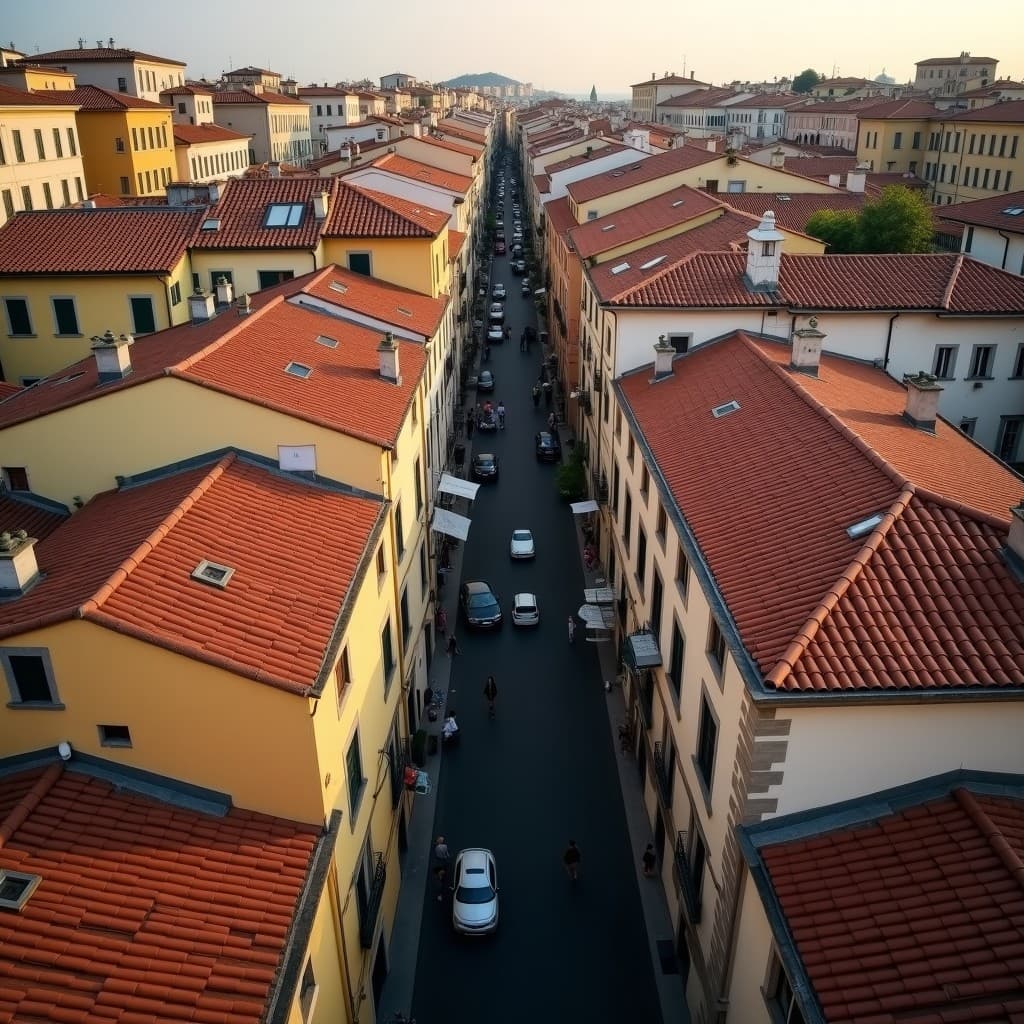
Italy's short-term rental market, once hailed as central to tourism recovery after the pandemic, is now showing early signs of weakness as earnings decline sharply. According to tourism-review.com, the sector is experiencing a drop in average revenues of nearly 16 per cent, reversing two years of strong growth. The contraction reflects tougher conditions across the market and signals a shift in the dynamics that have shaped Italian tourism and urban housing in recent years. The decline comes as cities across Italy grapple with the tension between tourism revenue and affordable housing availability.
The timing of the downturn is significant. International tourism to Italy has remained robust, with foreign visitors returning in substantial numbers post-pandemic. Yet the earnings decline suggests that the market for short-term rentals is becoming saturated or that rental rates are being compressed by increased competition. Tourism-review.com's analysis indicates that the sector, which expanded rapidly during the recovery phase, is now facing a correction as supply outpaces demand or as travellers shift their booking patterns. The decline is not uniform across all cities or property types, but the overall trend is downward.
For Campania, the implications are substantial. Naples and the surrounding region have seen a tourism boom in recent years, with international visitors drawn to the city's cultural heritage, street life, and proximity to Pompeii, Herculaneum, and the Amalfi Coast. Short-term rentals have proliferated across the city's historic neighbourhoods, generating income for property owners and contributing to the broader tourism infrastructure. The 16 per cent decline in average earnings suggests that property owners in Naples are facing reduced returns on their rental investments, which may prompt a reassessment of how many properties are held for short-term rental versus other uses.
The short-term rental market in Italy expanded dramatically during the pandemic recovery, as tourism rebounded and travellers sought flexible, independent accommodation options. Platforms like Airbnb became central to how visitors experienced Italian cities, offering access to residential neighbourhoods and local life that traditional hotels could not provide. Tourism-review.com's report indicates that this growth phase has now plateaued and reversed, with earnings contracting sharply. The sector, which once appeared to be a permanent fixture of Italy's tourism economy, is now experiencing the kind of market correction that suggests structural changes in demand or supply.
The causes of the decline are not fully detailed in the available reporting, but several factors are likely at play. Increased regulation in major Italian cities—Florence, Rome, Venice—has restricted the number of new short-term rental listings and, in some cases, converted properties back to long-term residential use. International travel patterns may have shifted, with some visitors returning to hotels or choosing alternative destinations. Economic conditions in key source markets for Italian tourism may be affecting discretionary spending. The saturation of the market in popular neighbourhoods may have driven down prices and thus reduced per-unit earnings.
For Naples specifically, the decline in short-term rental earnings arrives at a moment of considerable tension between tourism growth and urban livability. The city has experienced a genuine renaissance in international tourism over the past decade, with foreign visitors discovering Naples as a vibrant, authentic alternative to the more crowded and commercialized destinations of Rome and Florence. This tourism boom has brought economic benefits—jobs, tax revenue, cultural vitality—but it has also driven up property values and rents, contributing to an affordable housing crisis. Short-term rentals have been part of this dynamic, with property owners converting long-term apartments into holiday lets to capture higher revenues.
The contraction in short-term rental earnings may paradoxically ease some of the pressure on housing affordability in Naples. If property owners find that short-term rental returns are no longer attractive, they may convert properties back to long-term residential use or sell them to buyers seeking stable rental income rather than volatile tourism revenues. Tourism-review.com's report does not specify whether this conversion is occurring, but the economic incentive structure has shifted. A property that generated strong returns during the peak tourism recovery years may no longer justify the effort and regulatory compliance required to operate as a short-term rental.
The broader pattern across Italy reflects the tension between tourism as an economic engine and tourism's impact on urban life. Florence, as La Veduta has previously reported, has moved aggressively to restrict short-term rentals, extending bans beyond the historic centre to nine residential neighbourhoods where new listings had surged. Venice, facing chronic overtourism, has implemented entry fees and other measures to manage visitor numbers. Rome has grappled with similar pressures. These regulatory responses have constrained the short-term rental market in Italy's most visited cities, contributing to the decline in earnings that tourism-review.com documents.
Naples has not implemented the same restrictions as Florence or Venice, but the conversation is occurring. The city's tourism boom has been genuine and economically significant, but it has also created visible tensions: crowded streets in the historic centre, rising rents, the conversion of neighbourhood shops into tourist-oriented businesses. The short-term rental market has been both a symptom of these pressures and a driver of them. As earnings decline, the calculus for property owners shifts, and the city may experience a natural correction without requiring the aggressive regulatory measures that other cities have adopted.
The decline in short-term rental earnings also reflects broader changes in how international travellers book and experience travel. Younger travellers, who have driven much of the post-pandemic tourism boom, are increasingly price-conscious and may be shifting away from short-term rentals toward budget hotels or hostels. Group travel platforms and alternative accommodation models are fragmenting the market that short-term rental platforms once dominated. Tourism-review.com's data suggests that the sector is experiencing not merely a cyclical downturn but a structural shift in market dynamics.
For Campania's tourism industry more broadly, the contraction in short-term rental earnings is one data point in a larger story. The region's tourism economy depends on multiple revenue streams: hotels, restaurants, museums, transportation, cultural attractions. Short-term rentals have been a significant component, but they are not the whole picture. The decline in holiday-let earnings may be offset by growth in other sectors or by the retention of properties in long-term residential use, which supports local communities and quality of life.
The international press coverage of Italy's tourism market has often emphasized the tension between the economic benefits of tourism and its social costs. Foreign journalists have documented overtourism in Venice, the transformation of Rome's historic neighbourhoods, the pressure on housing in Florence. Tourism-review.com's report on the declining earnings in the short-term rental sector fits into this broader narrative: tourism growth has limits, and the market mechanisms that drive that growth can reverse. The decline in earnings may be a market signal that the peak of the post-pandemic tourism boom has passed and that a new equilibrium is emerging.
Naples, unlike Venice or Florence, has not yet reached the point of saturation that would trigger aggressive regulatory intervention. The city remains relatively underdeveloped as a tourism destination compared to its cultural significance and potential. The short-term rental market in Naples is smaller and less concentrated in historic neighbourhoods than in Florence or Venice. The decline in earnings may occur without the same acute housing crisis that has prompted regulation in those cities. However, the trend is clear: the era of rapid short-term rental growth is over, and cities across Italy are entering a period of adjustment.
The Campania bureau notes that the decline in short-term rental earnings, while economically significant for property owners, may be a positive development for the long-term sustainability of Naples as a living city rather than a museum for tourists. The tension between tourism revenue and urban livability is real, and tourism-review.com's data suggests that market forces may be correcting some of the imbalances that rapid growth created. Whether this correction is sufficient to address housing affordability and neighbourhood vitality without regulatory intervention remains to be seen.
Looking forward, the short-term rental market in Italy is likely to stabilize at a lower level of earnings and activity than the peak years of the post-pandemic recovery. Tourism-review.com's report does not project how long this contraction will last or what the final equilibrium will be, but the trend is established. For Campania, this means that the economic model based on rapid tourism growth and short-term rental expansion is shifting. The region's tourism future will be shaped by how it manages the transition from growth to sustainability, from expansion to equilibrium.