
ECONOMY
Cities Move to Curb Tourist Lets as Housing Costs Squeeze Residents
Florence and others act locally where national policy has not, exposing a tension at the heart of Italy's tourism-dependent growth model.
Economy Desk569 wordsEdition №6Saturday, 6 June 2026 — Edition № 6
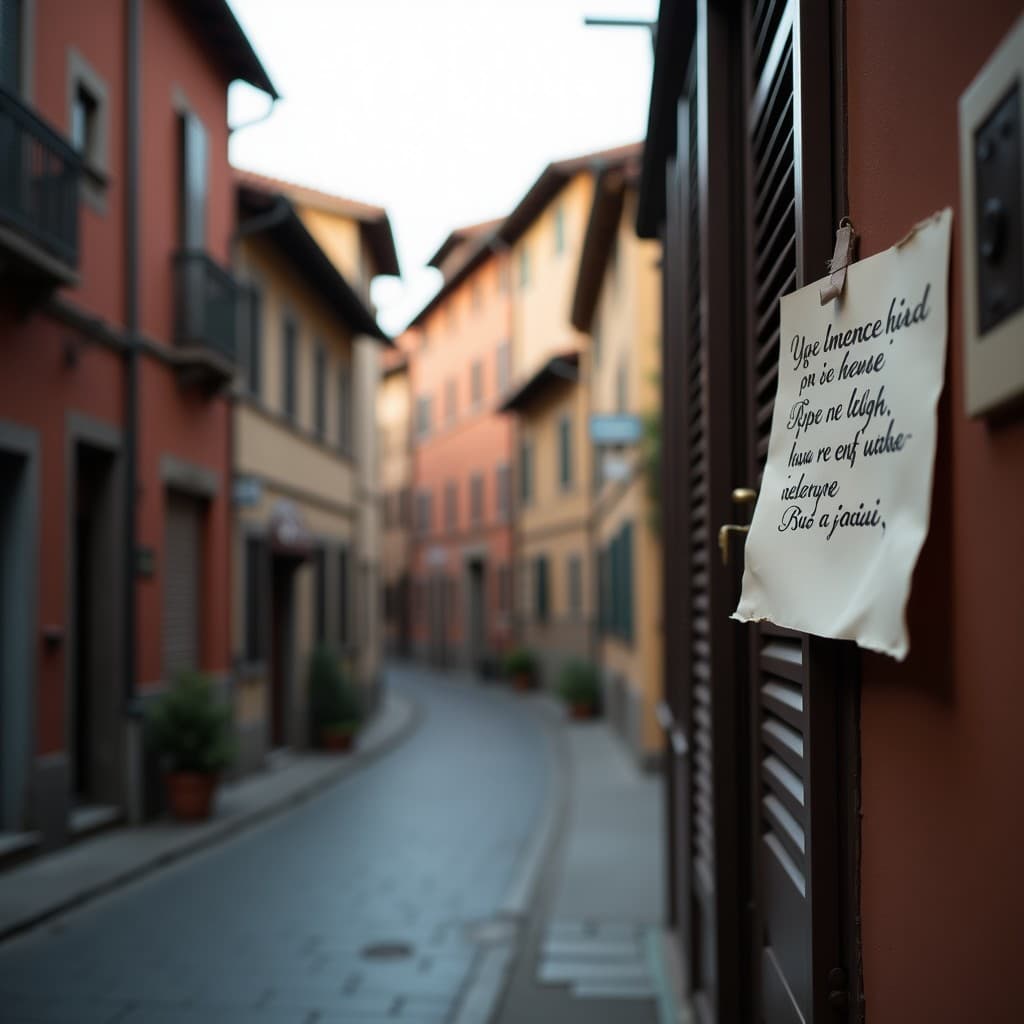
Florence's city council gave final approval this week to an expansion of its short-term rental freeze beyond the historic centre, extending the ban to nine residential neighbourhoods where listings on platforms such as Airbnb have surged in recent years, according to The Local Italy. The move is the most concrete municipal action yet in a country where, as The Local reported separately, no national framework yet restricts holiday lets — leaving individual cities to improvise their own responses to an affordable housing crisis that foreign correspondents have been tracking for several years.
The economic backdrop makes the stakes clear. Data in the Economy desk's figures show Italian GDP grew by just 0.69 percent in 2024 — a rate that leaves little margin for distributional losses. When a significant share of urban housing stock is redirected toward short-stay tourism, the cost falls disproportionately on lower-income residents and young workers, the very groups whose labour-market participation is needed to sustain even modest growth.
Unemployment stood at 6.39 percent in 2025, a figure that, while lower than the double-digit rates Italy recorded earlier in the decade, conceals persistent structural gaps between the north and the south, and between age cohorts. Young Italians who cannot afford to rent in city centres face a choice between long commutes and emigration — a dynamic that compounds Italy's already acute demographic decline.
The EU has added institutional pressure on a related front. According to The Local Italy, the European Union has urged Italy to raise inheritance taxes after data showed that ten percent of Italian families own more than half the country's wealth — a concentration that, the EU noted, has been rising. The piece observed that some of the surnames at the top of the wealth distribution have not changed since the Renaissance, a detail that points to how little intergenerational mobility the Italian economy generates.
The currency context is relevant for any city that depends on international visitors. The euro has weakened against the dollar over the past month, moving from EUR/USD 1.177 on 7 May to 1.164 on 5 June, according to ECB exchange rate data. A softer euro makes Italy cheaper for American and Asian tourists, which tends to increase demand for short-stay accommodation and can push platform-listed rents higher in nominal terms — reinforcing exactly the pressure that Florence is trying to contain.
Inflation, at 0.98 percent in 2024, is low enough that it is not the immediate driver of housing unaffordability. The problem is structural: in cities where tourism is a primary industry, market rents for short stays can exceed long-term residential rents by multiples, creating a persistent incentive for landlords to convert stock. Low general inflation does not correct that distortion; only regulation or a shift in the underlying demand can.
What Florence has done — and what other Italian cities are reportedly considering, according to The Local — is to treat the short-term rental market as an economic externality requiring a planning response, much as cities in the Netherlands, Spain and Portugal have done before them. Whether the Italian government will eventually legislate a national standard, or leave the patchwork of city-level rules to stand, remains an open question. For now, the world's correspondents are watching a country try to reconcile two things it depends on equally: the tourism revenues that support its services economy, and the affordable cities that its own citizens need in order to stay.