
ECONOMY
Wealth concentrated, housing squeezed: the EU turns its gaze on Italy
Brussels urges higher inheritance taxes as city councils move to curb short-term rentals amid an affordable housing crisis.
Economy Desk713 wordsEdition №8Monday, 8 June 2026 — Edition № 8
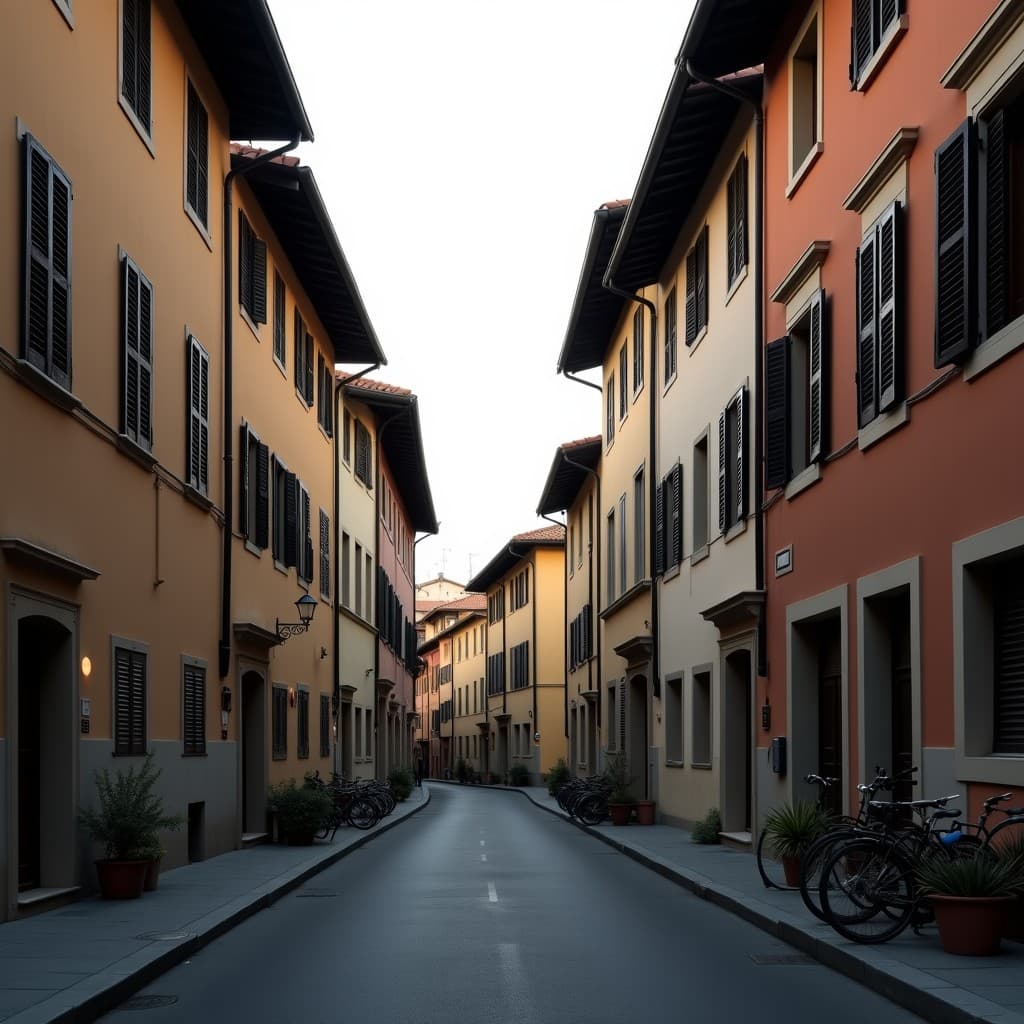
Two stories broke in the same week that, taken together, describe a structural problem the Italian economy has carried for decades. The Local Italy reported that the European Union has urged Italy to raise inheritance taxes after data showed that ten percent of Italian families own more than half the country's wealth — and that some of the surnames at the top of that list have not changed since the Renaissance. Separately, city councils in Florence and other major centres moved to restrict short-term tourist rentals, citing an affordable housing crisis that is pricing ordinary residents out of their own neighbourhoods.
The macroeconomic backdrop makes the inequality picture harder to ignore. According to World Bank data, Italy's economy grew by 0.69 percent in 2024 — a rate that barely keeps pace with population change and leaves almost no margin for redistribution through growth alone. When an economy expands slowly, the share of national income going to labour and to younger, asset-poor households tends to stagnate, while returns on existing capital and property accumulate to those who already hold them.
Inflation, at 0.98 percent in 2024, was low enough to offer households some relief on everyday costs. But low inflation is a double-edged condition: it also means that asset prices — property above all — deflate slowly if at all, keeping the barrier to home ownership high for first-time buyers and young workers. The result is a housing market that functions well for owners and poorly for renters, a pattern common across southern Europe but particularly acute in Italy's historic city centres.
Florence's decision, reported by The Local Italy, to extend its ban on new short-term rental listings beyond the historic centre into nine surrounding residential neighbourhoods is the most concrete municipal response yet to that pressure. The city council gave final approval to the expansion on Thursday, making Florence the first Italian city to push such restrictions into ordinary residential districts rather than confining them to tourist zones. The economic logic is straightforward: when rental yields from platforms such as Airbnb exceed those from long-term leases, landlords have a financial incentive to convert housing stock into tourist accommodation, reducing supply for residents and pushing rents upward.
The EU's call for higher inheritance taxes addresses the same structural imbalance from the other end. Inheritance levies in Italy are among the lowest in the European Union; the threshold above which tax applies is high, and the rates are modest by the standards of France or Germany. The practical effect, as the EU's analysis implies, is that intergenerational wealth transfer reinforces concentration rather than dispersing it. Whether the Italian government has the political appetite to act on that recommendation is a separate question, but the institutional pressure is now on record.
Currency movements add a further layer of context for the Italian economy's external position. The euro has weakened against the dollar over the past month, moving from 1.1761 on 8 May to 1.164 on 5 June, according to ECB exchange rate data. A softer euro makes Italian exports — machinery, luxury goods, food — marginally more competitive in dollar-denominated markets, which is a modest positive for the industrial north. It also raises the cost of imports priced in dollars, including energy, which feeds through to business costs across the peninsula.
Unemployment stood at 6.39 percent in 2025, a figure that, while not alarming in isolation, conceals significant regional and generational disparities that international economists have long flagged. Youth unemployment and the rate in the Mezzogiorno remain structurally higher than the national average, and Italy's long-run demographic trajectory — a shrinking and ageing workforce — means the labour market's apparent stability rests on a narrowing base of active workers supporting a growing share of retirees.
Taken together, the data and the week's coverage point to an economy that is stable in the short term but unresolved in its deeper architecture: slow growth, concentrated wealth, a housing market under strain from tourism, and an ageing population. The EU's nudge on inheritance tax and the municipal experiments with rental restrictions are early-stage responses to problems that have been building for a generation. Whether they amount to a coherent policy direction, or remain isolated interventions, will determine how the international institutions assess Italy's economic trajectory in the years ahead.