
NATIONAL
Italy weighs Schengen suspension with Spain over Ceuta crisis
Meloni says Rome ready to take 'extraordinary measures' in row with Madrid over deadly Ceuta border breach
Sergio Madrussan615 wordsEdition №62Friday, 31 July 2026 — Edition № 62
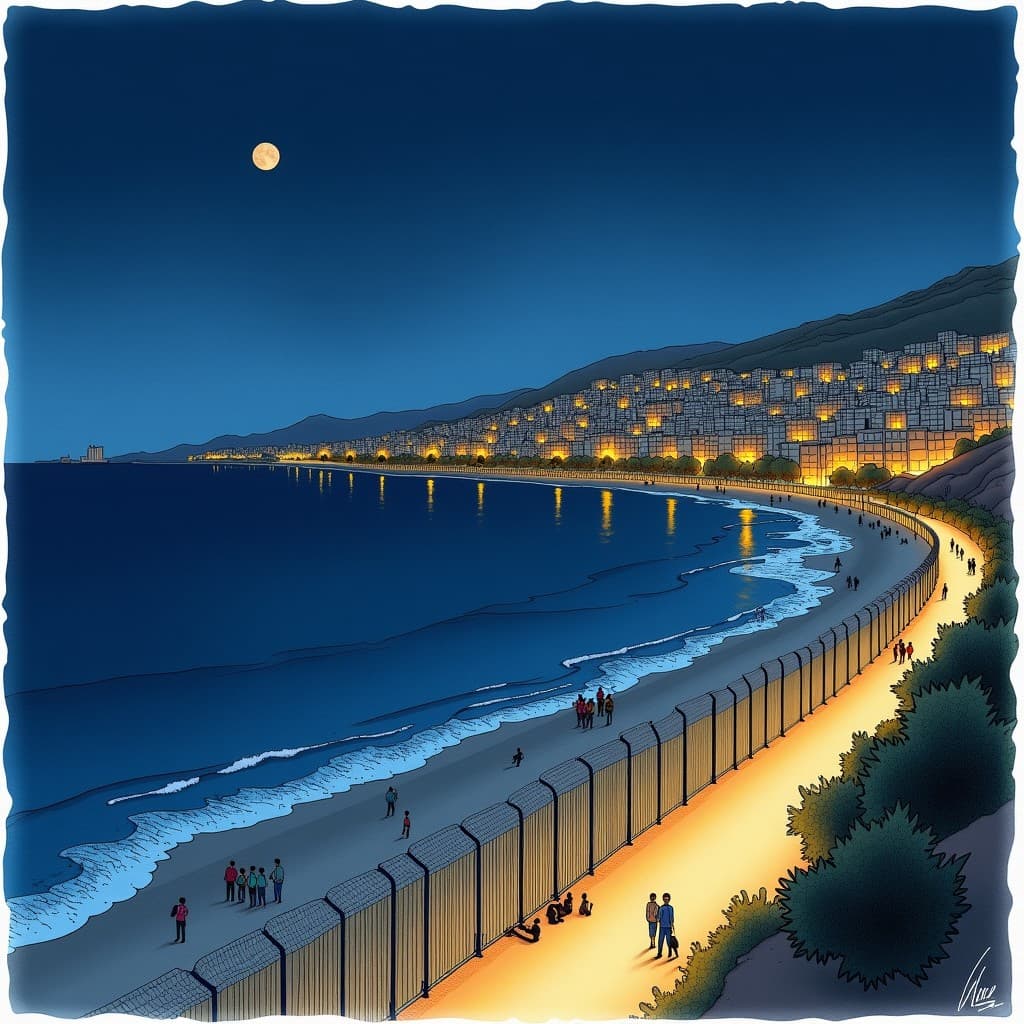
Rome has threatened its most serious rupture yet with a fellow EU state over migration, as the border crisis in Spain's North African exclave of Ceuta moves decisively into the politics of the Schengen area. According to Politico Europe, Prime Minister Giorgia Meloni said Italy was prepared to take "extraordinary measures" to defend its borders, and France 24 reported that the Italian government is considering suspending the Schengen agreement with Spain. The clash follows a mass breach of Morocco's border into Ceuta, in which nine deaths were reported.
This would be a remarkable step between two large EU member states. Suspending Schengen with Spain would in principle allow Italy to reintroduce checks on travellers arriving from Spain, and would signal that Rome no longer trusts the bloc's external frontier to manage pressure at its source. France 24 said Madrid had announced the deployment of soldiers to Ceuta to restore order after hundreds of migrants entered the exclave, mainly by swimming.
Meloni's phrase, reported by Politico Europe, is deliberately open-ended. "Extraordinary measures" can cover anything from heightened surveillance and bilateral diplomacy to formally triggered internal border controls. No outlet reported that Italy has yet notified Brussels or set a deadline; the statement appears for now to be a warning rather than a notification of action.
Ceuta is one of the EU's two land frontiers with Africa, making it an immediate test of the bloc's capacity to control its external perimeter. The Spanish government's decision to send the military, taken on Thursday, is an admission that police alone could not cope with the scale of the entry, which France 24 said involved thousands of people. The reported nine deaths put the humanitarian dimension at the centre of the argument before the political dimension even begins.
The Schengen mechanism is not untested. The agreement has been suspended temporarily by member states during terrorism alerts, health emergencies and previous migration waves, and the European Commission has tolerated those suspensions without abandoning the principle of free movement. A bilateral suspension by Italy against Spain, however, would be different in kind: one member state using the treaty's own machinery to discipline another over a failure at the external border. The legal ground for such a move is far less settled than the routine security suspensions.
The political calculation in Rome is clear. Meloni has built her government's identity around border defence, and the Ceuta episode allows her to argue that Italy is not alone in facing chaotic arrivals and that the EU's southern frontier cannot function if events in one corner of the Mediterranean are allowed to spiral. Politico described the dispute between the two capitals as boiling over, a sign that the issue has moved beyond technical migration management and into high politics.
Spain, for its part, is under pressure to show it can control Ceuta without sacrificing the country's broader relationship with Morocco. The military deployment may restore order in the short term, but the underlying pattern of episodic mass attempts to cross the border is one that no European capital has managed to end permanently. The clash with Italy is unlikely to be the last time southern members argue over who carries the burden of the bloc's external frontier.
Neither France 24 nor Politico Europe reported a specific Italian measure beyond the threat, or any timeline for a formal suspension. The immediate test for the EU is to keep the dispute from hardening into a step that would place one member state's frontier above the union's shared free-movement order. If Italy does follow through, the row would move from the political sphere into the legal machinery of the treaties, where free movement and national security have collided before.