
EMILIA-ROMAGNA
Lamborghini shelves electric dreams as Motor Valley rethinks the future
The supercar maker's retreat from EV ambitions signals a broader shift in how Emilia-Romagna's luxury engineering sector navigates a stalled global market.
Giulia Benati1,247 wordsEdition №3Wednesday, 3 June 2026 — Edition № 3
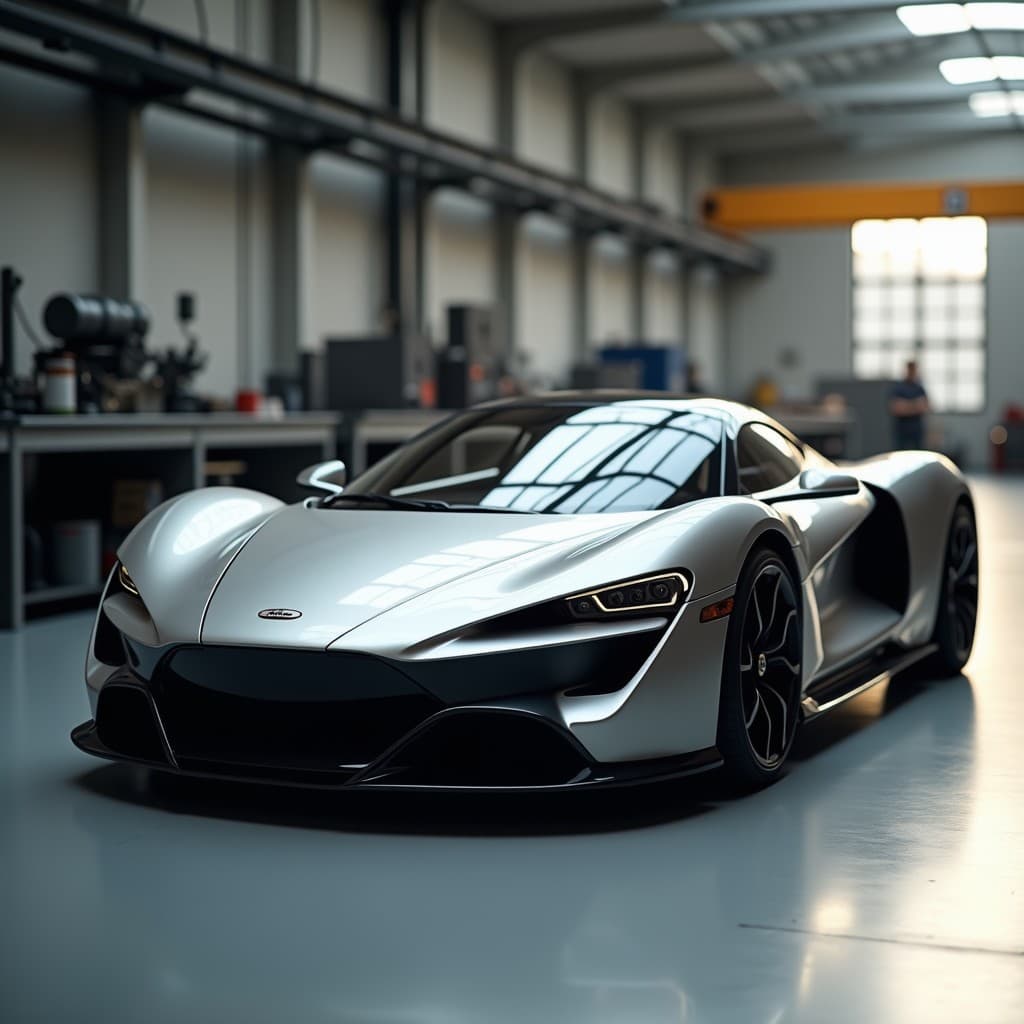
Lamborghini's chief executive, Stephan Winkelmann, told CNBC this week that cancelling the automaker's electric vehicle programme was "the right way to go" for the Sant'Agata-based manufacturer. The Lanzador grand tourer, originally scheduled for 2028, was pushed to 2029 and then delayed indefinitely; the electric Urus, too, will not arrive before the decade's end as first planned. Winkelmann's comments follow Ferrari's launch of the Luce, its first all-electric model, which faced immediate investor backlash and public scepticism.
The retreat marks a sharp reversal from the electrification roadmaps both companies published just years ago. Motor1 reported that Lamborghini is still developing an EV platform, but the timeline has stretched beyond commercial viability in a market where global EV sales have flatted. Other luxury rivals—Porsche and Audi among them—have similarly overhauled their electrification strategies in response to stuttering demand, according to Business Insider.
For Emilia-Romagna's Motor Valley, the shift carries immediate weight. The region's supercar cluster—Ferrari in Maranello, Lamborghini in Sant'Agata, Ducati in Bologna—has long bet on technological leadership to justify premium pricing and maintain export margins. A prolonged pause in EV development signals that the sector's engineers and supply chains will instead focus on plug-in hybrid platforms, a technology that demands different expertise and component sourcing than full electrification.
Winkelmann's endorsement of the delay came as Ferrari faced its own reckoning. The Luce, unveiled this week, is positioned as a bet on the Chinese market—a luxury segment where electric vehicles still command premium valuations despite global headwinds. Yet the car's reception among Ferrari's existing customer base and financial analysts was harsh. Motorsport.com reported that Formula One driver Charles Leclerc's reaction to the Luce went viral online, capturing a broader sentiment that the marque's identity—rooted in combustion engines and mechanical drama—sits uneasily with silent, battery-powered propulsion.
Business Insider noted that Ferrari is gambling on an "untapped market" at precisely the moment when other premium manufacturers are retreating. Lamborghini's decision to abandon that same gamble suggests the market may not exist at the scale required to justify the investment. Winkelmann's framing—that plug-in hybrid electric vehicles (PHEVs) represent "the right way to go"—reflects a pragmatic reading of consumer behaviour: buyers of supercars in mature markets still want the visceral experience of an internal combustion engine, while the company can claim environmental credentials through hybrid technology.
The regional consequence is substantial. Motor Valley's competitive advantage has always rested on engineering excellence, heritage, and the ability to command margins that only true innovation can sustain. If electrification is no longer the differentiator, the sector must compete on other grounds: design, performance, exclusivity, and the emotional register that only a roaring V8 or V12 can deliver. Audi's CEO, Gernot Döllner, told Motor1 that he remains "a big fan of the V8"—a comment that signals how even mainstream luxury manufacturers are reconsidering the rush to full electrification.
The timing compounds the challenge. Italy's government has been lobbying the European Commission for fiscal flexibility to address energy costs, and the EU is preparing to criticise Rome's fuel duty cuts as insufficient and misdirected, according to Euronews. In this context, a region whose identity is built on high-performance petrol engines faces a widening gap between political pressure to decarbonise and market signals that consumers are not yet ready to abandon them.
Lamborghini and Ferrari have long operated in a register removed from mass-market concerns. Their customers are wealthy enough to absorb premium pricing for any powertrain; their production volumes are small enough that emissions regulations, while binding, do not force the same urgent transition as they do for volume manufacturers. Yet the global EV slowdown has exposed a deeper truth: electrification was never inevitable, and luxury automakers can afford to wait for technology and consumer preference to align before committing capital at scale.
The plug-in hybrid pivot also reflects supply-chain realities. PHEVs require fewer battery cells than full EVs, easing pressure on the semiconductor and raw-material bottlenecks that have constrained EV production. They allow manufacturers to leverage existing engine plants and supplier networks—a significant advantage in a region where precision engineering and just-in-time manufacturing are embedded in the industrial culture. For Motor Valley, a PHEV strategy means less disruption to existing expertise and capital stock.
Yet the delay also carries risk. If global EV adoption accelerates in the next five to ten years—driven by stricter EU emissions standards, Chinese competition, or a breakthrough in battery technology—Lamborghini and Ferrari will have ceded first-mover advantage to competitors who persisted. The Luce's poor reception may prove temporary; consumer attitudes toward electric supercars may shift once the technology matures and the driving experience improves. Ferrari's bet on China suggests the company believes that market will eventually embrace EVs, even if Europe and North America remain sceptical.
For Emilia-Romagna's broader economy, the supercar sector is a symbol rather than a major employer. Ferrari and Lamborghini together employ fewer than 5,000 people directly. But their global visibility, their role in attracting investment and talent to the region, and their influence on the supply chains of smaller engineering firms make them culturally and economically significant. A region known for exporting excellence—in food, machinery, and design—depends on its flagship manufacturers to project that image.
The retreat from electrification also intersects with Italy's demographic and fiscal challenges. An ageing population and high public debt limit the government's ability to subsidise the transition to electric vehicles or to invest in charging infrastructure. The EU's criticism of Italy's fuel duty cuts reflects this tension: Rome wants to ease the burden on consumers and industry, but Brussels sees such measures as economically inefficient and fiscally unsustainable. In this context, Lamborghini's decision to delay EVs may reflect a calculation that the Italian market—and the European market more broadly—will not be ready for mass electrification for years to come.
Winkelmann's comments also signal confidence in the PHEV platform as a long-term solution. Plug-in hybrids allow manufacturers to claim environmental credentials while preserving the mechanical and emotional core of their brand. For a company like Lamborghini, which has built its identity on extreme performance and visual drama, a PHEV Temerario or Revuelto offers a way to meet regulations without abandoning the values that justify its premium positioning.
The global context matters too. China, despite its dominance in EV manufacturing, has seen EV sales growth slow as subsidies wind down and the market matures. Europe faces similar headwinds: EV adoption has plateaued in several countries, and consumer surveys suggest price and charging infrastructure remain barriers. In this environment, luxury manufacturers can afford to be patient. Their customers are not price-sensitive; they are willing to wait for the technology and the market to mature.
For Motor Valley, the next five years will be critical. The region's engineering firms—the suppliers, the design studios, the testing facilities—must adapt to a world where electrification is no longer the default future. Some will pivot to PHEV components; others will focus on lightweighting, aerodynamics, and materials science. The cooperative tradition that has long defined Emilia-Romagna's manufacturing culture may prove an asset: smaller firms can cluster around the supercar makers, sharing knowledge and investment in new technologies.
Lamborghini's decision also reflects a broader truth about luxury markets: they are not bound by the same rules as mass markets. While Volkswagen, BMW, and Mercedes-Benz must electrify to meet EU targets and compete in China, Lamborghini can afford to move at its own pace. The company's annual production is measured in thousands; its customers are global elites for whom environmental concerns are secondary to performance and exclusivity. In this niche, the PHEV compromise may prove durable for longer than anyone expects.