
LOMBARDIA
Leonardo's Ferry Offers Commuters a 15th-Century Crossing
A hand-operated cable ferry based on da Vinci's design spans the Adda River between Lecco and Bergamo provinces.
Beatrice Comolli347 wordsEdition №13Friday, 12 June 2026 — Edition № 13
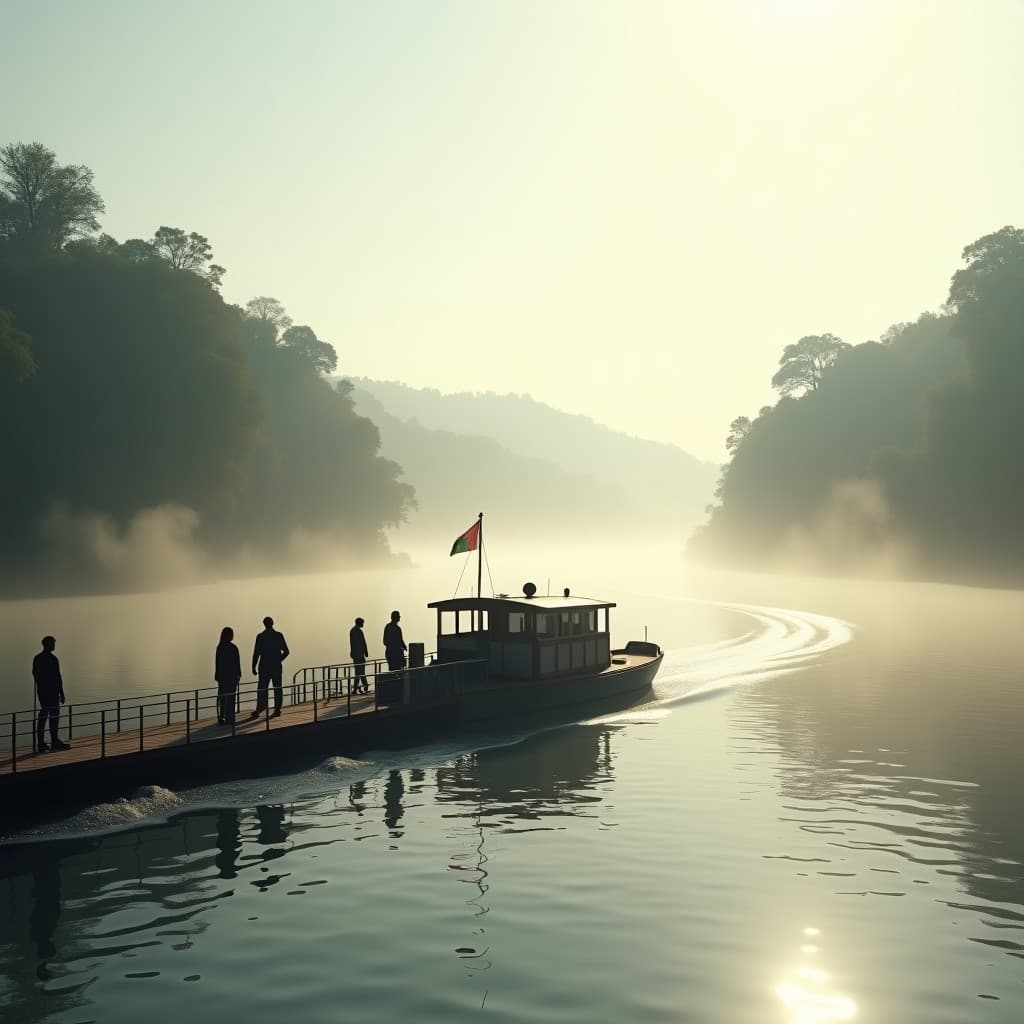
A hand-operated ferry modelled on a design sketched by Leonardo da Vinci in the 15th century has become a daily fixture for commuters crossing the Adda River in Imbersago, between the provinces of Lecco and Bergamo in Lombardy. According to the Washington Post, the vessel, dubbed "Leonardo's Ferry," offers a peaceful five-minute crossing in a region where modern transport infrastructure dominates the landscape. The ferry operates on a cable-guided system, hand-operated by staff including worker Venanzio Lavelli, and has drawn attention from international media as a working example of Renaissance engineering principles applied to contemporary commuter needs.
The Adda River crossing sits in the foothills of Lombardy's Alpine north, an area historically defined by water transport before road and rail networks expanded across the region. The ferry's revival speaks to a quieter mode of mobility in an age of highway congestion and rail strikes—a five-minute hand-pulled crossing that contrasts sharply with the frenetic pace of Milan's finance and fashion sectors, located less than 100 kilometres south. For commuters in the Lecco-Bergamo corridor, the journey has become something more than transit: international outlets have framed it as a moment of respite, a tangible link to da Vinci's vision of human-powered engineering.
The ferry's design originates in da Vinci's 15th-century notebooks, where he sketched solutions for crossing rivers using cable and pulley systems. The modern Imbersago crossing translates that principle into daily practice: commuters board a small vessel tethered to a cable strung across the river, and the ferry is pulled across by hand-operated machinery. The Washington Post noted that the crossing has become a small tourist draw as well as a functional commute, attracting visitors curious about the marriage of Renaissance design and working infrastructure.
For Lombardy's regional economy, the ferry represents a minor but symbolic counterweight to the region's dominant narrative of high-speed rail, automotive manufacturing, and financial markets. Lombardy's wealth derives from precisely the opposite of hand-operated transit—from Stellantis factories, fashion logistics, pharmaceutical supply chains, and the Milan stock exchange. Yet the Adda crossing, serving commuters in a smaller northern corridor, has caught the foreign press's attention as a curiosity: a place where da Vinci's engineering still moves people across water, unchanged in principle for five centuries.