
INTERNATIONAL
Ten Dead Off Malta as Mediterranean Migrant Route Strains
Capsized vessel from Libya highlights persistent peril on Europe's southern frontier as Sicily braces for summer surge
Concetta Vassallo1,347 wordsEdition №10Wednesday, 10 June 2026 — Edition № 10
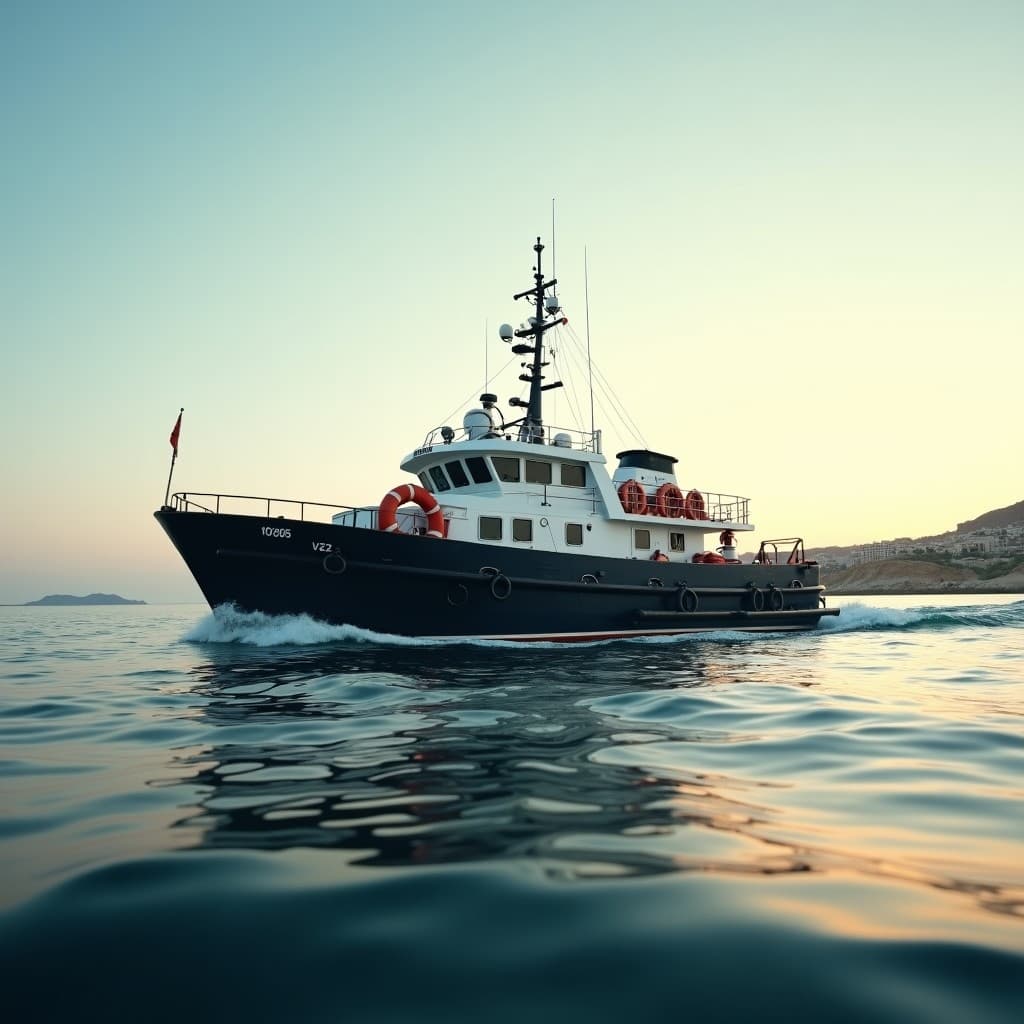
A patrol boat recovered the bodies of ten people after a fishing vessel rescued 48 migrants from a craft that capsized near Malta on Sunday, according to the Italian coastguard. The vessel, which had departed from Libya carrying approximately 60 people, overturned in waters south of the island nation. The BBC and the Guardian reported the incident as part of a pattern of Mediterranean crossings that has intensified as summer weather approaches.
The rescue operation unfolded in the contested waters between Libya and Malta, a zone that Sicily's maritime authorities monitor as part of Italy's broader responsibility for search and rescue across the central Mediterranean. The survivors were brought to safety by a fishing vessel before Italian patrol boats arrived at the scene. No immediate statement from Italian authorities specified where the survivors would be disembarked or processed.
The capsizing marks the latest in a series of maritime disasters that have claimed hundreds of lives in recent years along the same route. The Guardian noted that the vessel had reportedly carried about 60 passengers, suggesting overcrowding typical of smuggling operations that prioritize profit over safety. Summer months historically see an increase in crossing attempts as weather conditions improve, placing renewed pressure on Italy's coast guard and reception infrastructure.
The central Mediterranean crossing from Libya to southern Europe remains one of the world's deadliest migration routes. According to the BBC, the capsized vessel departed from Libya, a country where instability and economic collapse have driven emigration for more than a decade. The route itself—roughly 300 kilometres across open sea—offers no safe passage; smugglers pack vessels beyond capacity, often with minimal safety equipment or navigation capability.
Sicily sits at the frontline of this crossing. The island's ports in Palermo, Messina, and Gela serve as primary disembarkation points for rescued migrants, and Sicilian coast guard stations coordinate much of the central Mediterranean's search and rescue operations. The regional government in Palermo has repeatedly warned that summer surges strain the island's reception capacity, with migrant processing centres operating at or beyond capacity even in quieter months.
The Guardian's reporting emphasised that such capsizings are not anomalies but recurring consequences of a system that criminalises irregular migration while offering no legal pathways. Survivors of Sunday's incident join thousands who have crossed the same waters this year, many fleeing conflict, persecution, or economic collapse in sub-Saharan Africa, the Horn of Africa, and the Middle East. The route has become a permanent fixture of European migration politics, with Italy bearing disproportionate responsibility for rescue and reception.
Pope Leo XIV's recent visit to Spain, reported by AP News, included explicit focus on migration as a moral and political crisis. The pontiff visited Europe's migration hotspots to ease political tensions around asylum and integration—a signal that the Vatican recognises the Mediterranean crossing as a defining humanitarian challenge of the moment. His intervention reflects the scale of the crisis: thousands of people attempting the crossing annually, with hundreds dying in the attempt.
Sicily's position as Europe's southern frontier has made the island a focal point for international migration policy. The European Union's border agency, Frontex, coordinates operations in the central Mediterranean, but Italy—and Sicily specifically—absorbs the operational and humanitarian burden. The regional government has argued that EU burden-sharing remains inadequate, with most rescued migrants eventually moving northward to other European countries rather than remaining in Sicily.
The capsizing on Sunday occurred as temperatures in the Mediterranean rise and crossing season intensifies. International maritime law obliges any vessel in distress to be rescued, but the legal framework governing where survivors are disembarked remains contested. Italy has periodically resisted accepting rescued migrants, citing capacity constraints, while the EU has struggled to establish a burden-sharing mechanism that distributes responsibility equitably across member states.
The BBC reported that the fishing vessel that rescued the 48 survivors acted under the maritime principle of assistance to those in peril. Such rescues often involve commercial fishermen who encounter distressed vessels by chance, placing them in the position of de facto rescue operators. In recent years, dedicated non-governmental rescue ships have also operated in the central Mediterranean, though some EU governments have sought to restrict their activities.
Sicily's reception infrastructure has been strained by the scale of arrivals. The island's migrant processing centres, particularly the facility on the island of Lampedusa, have become symbols of Europe's migration crisis. When arrivals surge—as they do seasonally—conditions deteriorate rapidly, and the regional government appeals for national and EU support. The ten deaths recovered on Sunday represent only a fraction of the estimated toll across the Mediterranean in recent years.
The route itself reflects geopolitical realities beyond Italy's control. Libya's state collapse has eliminated any functioning coast guard or border enforcement, leaving the country as the primary departure point for westbound migrants. Tunisia, to the west, has also become a launching point, though crossings from there typically target Italy's southern coast or Malta. The absence of legal migration pathways from North Africa to Europe ensures that smuggling networks remain profitable and migrants remain vulnerable.
International coverage of Mediterranean migration has increasingly framed the issue as a humanitarian crisis rather than a security threat—a shift reflected in Pope Leo's recent statements and in the BBC and Guardian's reporting. This reframing has not, however, translated into policy change at the EU level. Italy continues to argue that migration responsibility should be shared more equitably, while northern European states have resisted accepting higher numbers of asylum seekers.
The survivors of Sunday's capsizing will likely be processed in Sicily, where they will undergo health screening and initial asylum interviews. Many will eventually move northward through the Balkans or across the Alps to France, Germany, or beyond. This secondary migration reflects the reality that Sicily, while the point of entry, is not the intended destination for most arrivals. The island serves as Europe's reception desk, but migrants typically seek to reach wealthier, more established diaspora communities in northern Europe.
The incident underscores a persistent tension in European migration policy: the gap between humanitarian obligation and political will. Italy's coast guard performs rescue operations as a legal and moral duty, but the political response to arrivals remains contested. As summer progresses and crossing attempts increase, Sicily will face renewed pressure on its reception capacity, its public services, and its social cohesion—a burden that the island bears disproportionately as Europe's southern frontier.