
CALABRIA
Ten dead as migrant boat capsizes off Malta; Calabria braces for surge
Italian rescuers recover bodies as Mediterranean crossing toll climbs; southern ports face renewed pressure
Saverio Gallo1,247 wordsEdition №8Monday, 8 June 2026 — Edition № 8
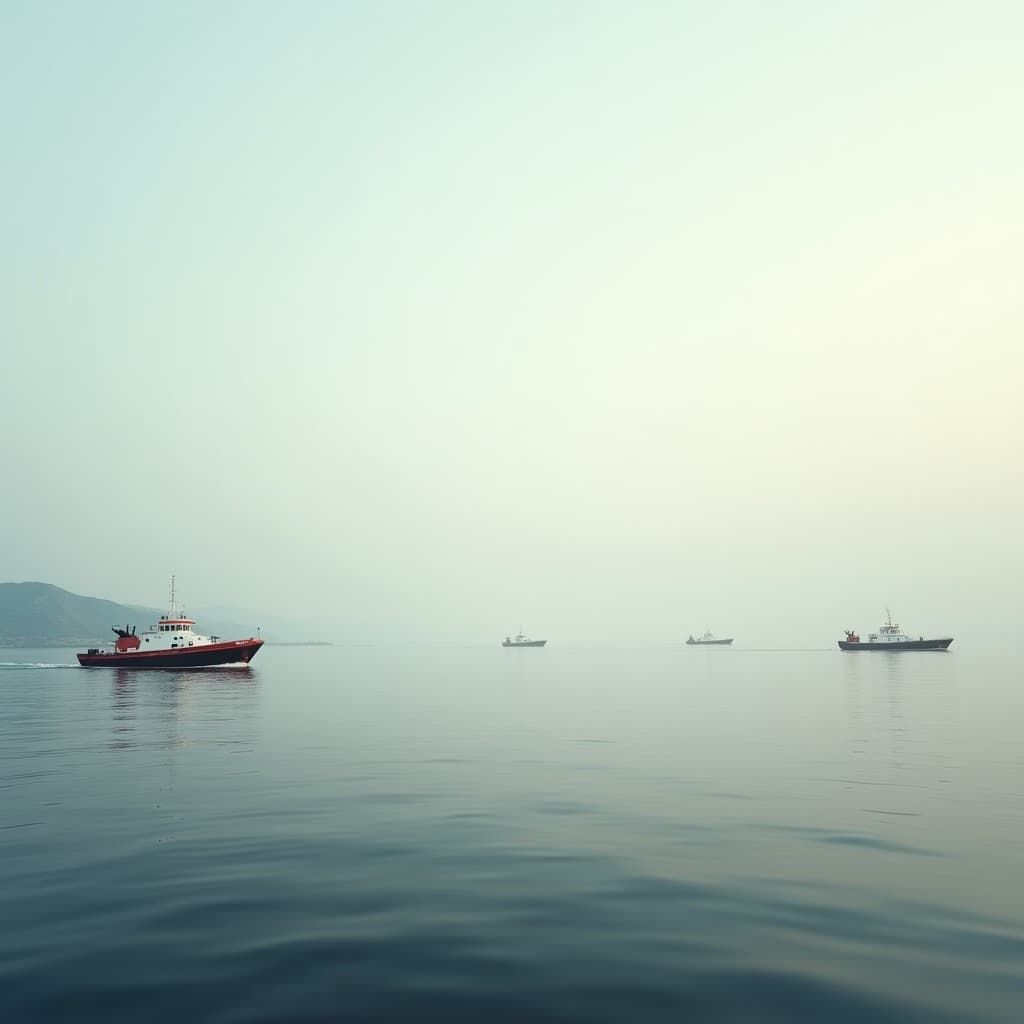
Italian rescuers recovered ten bodies on Sunday after a migrant boat capsized in waters off Malta, according to a coastguard statement reported by the Guardian. The vessel, which had departed from Libya carrying approximately 60 people, overturned during the crossing; about 48 people were rescued alive. Al Jazeera reported that at least 990 refugees and migrants have died this year while attempting the perilous journey across the Mediterranean.
The incident underscores the continuing toll on the central Mediterranean route, which funnels migrants northward toward Italy's southern ports and Calabria's coastline. Calabria, with its long exposure to the Ionian and Tyrrhenian seas, remains a primary landing point for vessels departing from North Africa. The region's ports—particularly Gioia Tauro, already a focal point for international trafficking investigations—face renewed operational pressure as rescue operations intensify.
The capsizing comes as Pope Leo XIV continues a week-long visit to Spain focused on migration, signalling the Vatican's sustained attention to Mediterranean crossings and Europe's reception of migrants. According to the Washington Post and AP News, the pontiff has been drawing large crowds in Madrid and will meet migrants who have crossed dangerous Atlantic waters to reach Europe, part of a broader papal effort to ease political tensions around immigration across the continent.
The boat that capsized on Sunday departed from Libya, a departure point that has become increasingly central to Mediterranean migration flows. Libya's political fragmentation and economic collapse have made it a staging ground for smuggling networks, which pack vessels with migrants seeking entry to Europe. The Guardian's reporting on the incident reflects a pattern: departures from Libya remain frequent despite international efforts to disrupt smuggling operations and despite the documented dangers of the crossing.
Calabria's position on this route is not incidental. The region sits directly across from the Libyan coast, making it a natural landfall for vessels that successfully complete the journey. Gioia Tauro, the port authority's jurisdiction, has become a focal point in European law-enforcement investigations into trafficking networks. The port's role in maritime commerce—it is one of Europe's busiest container terminals—has made it simultaneously a hub for legitimate trade and a point of vulnerability for smuggling operations that exploit the volume of maritime traffic.
The death toll reported by Al Jazeera—990 migrants and refugees dead in the Mediterranean so far this year—reflects a crisis that has not abated despite years of international attention. The figure underscores that rescue operations, while necessary, remain reactive rather than preventive. Each capsizing represents a failure of deterrence, of safe passage alternatives, and of the conditions that drive people to risk their lives on unseaworthy vessels.
For Calabria's reception infrastructure, the incident signals renewed strain. The region's migrant reception centres, already operating under capacity constraints documented in international coverage of southern Italy's labour trafficking crises, will likely face an influx of survivors requiring medical attention, documentation processing, and onward placement. The regional health system, already stretched by chronic underinvestment in the South, will absorb the immediate medical burden.
Pope Leo's migration-focused visit to Spain, reported by France 24 and AP News, reflects Vatican concern about Europe's hardening stance on asylum and reception. The pontiff's decision to meet migrants and to address immigration as a moral question—rather than a security or economic problem—represents a counterweight to the rhetoric of European politicians who have increasingly framed migration as a threat. Yet the papal visit, however symbolically significant, does not alter the structural conditions that make the Mediterranean crossing lethal.
The regional angle for Calabria is acute. While northern European cities debate tourist rental restrictions and wealth inequality, Calabria's working poor—both Italian and migrant—navigate an economy structured around informal labour, agricultural work, and remittances. The migrants who arrive at Calabrian ports often move inland to agricultural zones or to construction sites, where they encounter the labour trafficking networks that have periodically erupted into international headlines. The capsizing off Malta is thus not an isolated maritime incident but a symptom of deeper economic and political failures that push people toward dangerous crossings.
International coverage of Mediterranean migration has long focused on the crossing itself—the boats, the rescues, the body counts. Less visible in foreign reporting is what happens after arrival: the informal employment networks, the debt bondage, the vulnerability to exploitation that characterises the experience of many migrants who survive the journey. Calabria, as a primary landing zone and as a region with significant informal labour sectors, sits at the intersection of these two narratives.
The Guardian's reporting on the capsizing includes no analysis of the smuggling networks that organised the journey or the economic conditions in Libya that made departure seem preferable to staying. These gaps reflect a broader pattern in international coverage: the Mediterranean crossing is reported as a humanitarian crisis, which it is, but the political economy of migration—the trade networks, the debt arrangements, the role of corruption in facilitating departures—remains largely outside the frame of foreign news outlets.
For Calabria's regional authorities, the incident will likely prompt renewed calls for EU support in managing arrivals and for coordination with Malta and other Mediterranean states on search-and-rescue operations. The port of Gioia Tauro, already under scrutiny from European law enforcement, will face questions about its role in processing survivors and in preventing onward trafficking of vulnerable migrants.
The timing of the capsizing—coinciding with Pope Leo's migration tour—creates a symbolic tension. The pontiff's visit emphasises moral responsibility and human dignity; the deaths in the Mediterranean represent the failure of that responsibility at a systemic level. The Pope's encyclical on AI, reported by Project Syndicate, invokes the Tower of Babel as a parable of technological hubris. The Mediterranean crossing, by contrast, represents a more ancient form of human vulnerability: the desperation that drives people to trust their lives to smugglers and unseaworthy boats.
Calabria's response to the incident will likely follow familiar patterns: emergency reception of survivors, coordination with national authorities, documentation of the dead, and a return to the baseline condition of chronic underfunding and understaffing that characterises the region's migration infrastructure. The capsizing will be reported in the international press as a tragedy; it will be experienced in Calabria as a routine crisis in a system that has never been adequately resourced to manage the scale of Mediterranean migration.
The 990 deaths reported by Al Jazeera for the year to date represent a continuation of a trend that has persisted for more than a decade. Despite international attention, despite papal visits, despite EU coordination mechanisms, the central Mediterranean route remains lethal. Calabria, as the region most directly exposed to this route, bears the consequences—both the immediate humanitarian burden of rescue and reception, and the longer-term challenge of integrating survivors into a regional economy that offers few formal opportunities and abundant informal risks.