
LOMBARDIA
Ten dead as migrant boat capsizes off Malta
Mediterranean toll rises as Italy's rescue services face mounting pressure on southern frontier
Beatrice Comolli1,247 wordsEdition №8Monday, 8 June 2026 — Edition № 8
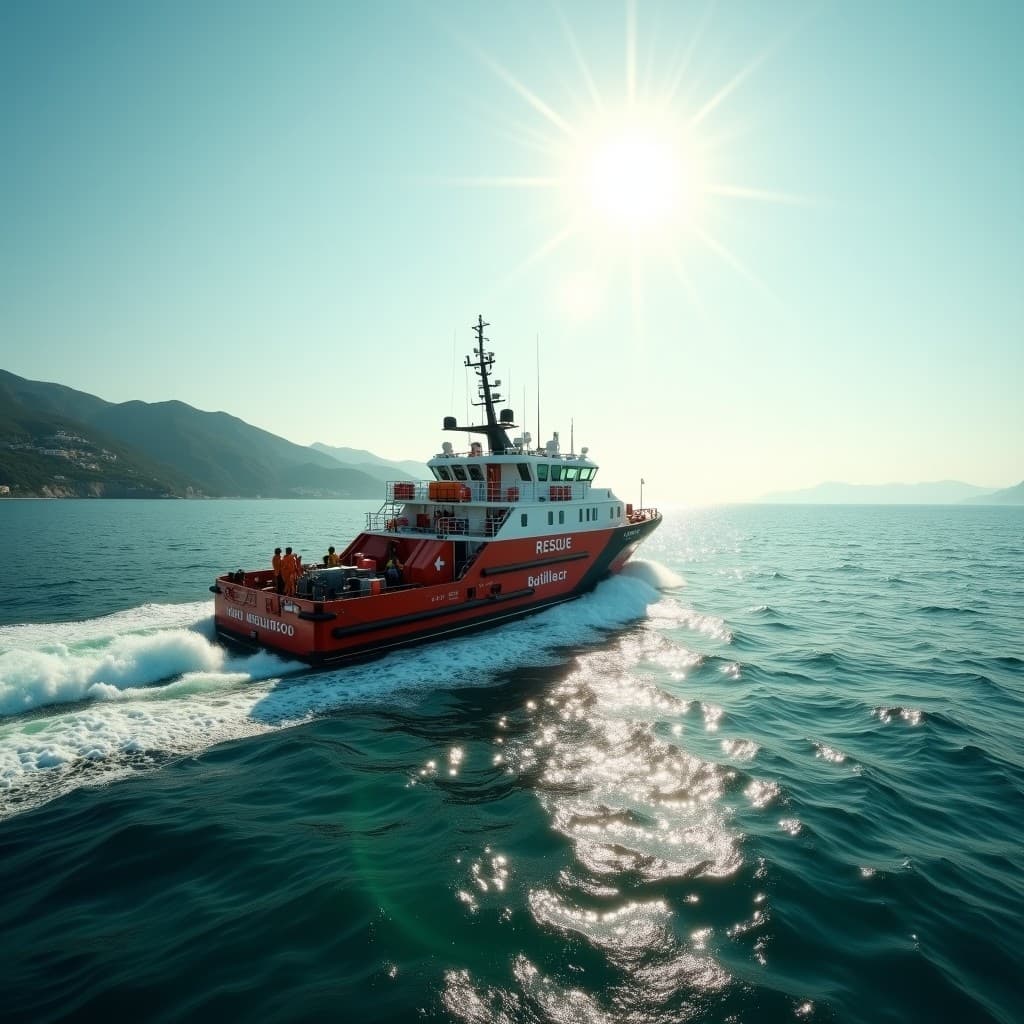
Italian coastguard vessels recovered ten bodies on Sunday after a migrant boat capsized in waters off Malta, according to the Guardian. The vessel, which had departed from Libya carrying approximately 60 passengers, overturned during the crossing. Rescue teams pulled at least 48 survivors from the sea alive.
The incident marks the latest fatality in a year of mounting losses across the Mediterranean. Al Jazeera reported that at least 990 refugees and migrants have died attempting the crossing in 2026 alone, a toll that underscores the persistence of the perilous route despite international efforts to stem departures from North Africa.
Italy's southern maritime frontier remains the primary entry point for migrants attempting to reach Europe from Libya and Tunisia. The country's rescue services, already stretched by the volume of crossings, continue to operate in waters where capsizings and drownings occur with regularity. The Maltese authorities coordinate with Italian counterparts on rescue operations in the central Mediterranean, a shared responsibility that has become routine.
The capsizing off Malta reflects a broader pattern of Mediterranean crossings that have intensified despite seasonal weather variations and international naval patrols. The Guardian's reporting on Sunday placed the incident within the context of ongoing migration pressure on southern Europe, where Italy bears the heaviest operational burden as the nearest major EU nation to North Africa.
Lombardy's connection to the Mediterranean migration story is indirect but significant. Milan serves as the financial and media capital from which Italy's response to the crisis is coordinated and interpreted for international audiences. The city's banking sector and multinational firms monitor migration policy as a factor in labour markets, social stability, and EU political cohesion—all matters that affect Lombardy's economy and business environment.
The 990 deaths recorded by Al Jazeera this year represent a continuation of a pattern established over the past decade. The crossings occur despite the presence of Italian, Maltese, and EU naval assets in the central Mediterranean, suggesting that the volume of departures from Libya outpaces rescue capacity. The Guardian's reporting emphasised that survivors were rescued alive, indicating that rescue operations, when they occur, do save lives—but the scale of departures means that not all vessels receive assistance in time.
Italy's government has repeatedly called for burden-sharing on migration within the EU, arguing that countries on the southern frontier bear disproportionate responsibility for processing arrivals and managing humanitarian crises. The capsizing off Malta will likely reignite debate among EU member states about funding for rescue operations, border management, and the conditions that drive departures from Libya.
The political context matters for Lombardy's business community. Migration policy affects labour supply in agriculture, logistics, and hospitality—sectors that depend on migrant workers. The deaths in the Mediterranean are also a recurring reminder of the human cost of the routes that feed labour trafficking networks, a matter that intersects with corporate supply-chain accountability and the reputational risks that multinational firms face when they source from regions with documented labour abuses.
Rescue operations in the Mediterranean have become institutionalised. Italian coastguard vessels, commercial shipping, and NGO-operated rescue ships operate in a coordinated system that has evolved over years of crisis management. The Guardian's account of Sunday's rescue suggests that the system functioned as designed—survivors were pulled from the water—but the ten deaths indicate that not all passengers were reached in time or that the vessel's rapid capsizing prevented full evacuation.
The timing of the incident, in early June, falls within the summer season when Mediterranean crossings typically increase due to calmer seas. Weather conditions favour departures from Libya, and smuggling networks adjust their operations accordingly. The pattern has been consistent for years: spring and summer see higher volumes of crossings and, consequently, higher absolute numbers of deaths, even if the fatality rate per crossing may vary.
For Milan's international business press and financial analysts, migration remains a structural issue affecting Italy's labour market, fiscal burden, and political stability. The deaths off Malta are reported in the international media as part of a broader narrative about Europe's migration frontier, but they also carry implications for Italian labour costs, social services expenditure, and the political pressure on the government to manage arrivals—all factors that influence investment decisions and corporate strategy in Lombardy.
The Guardian's framing of the incident emphasised the humanitarian dimension: survivors rescued, bodies recovered, a tragedy averted for some but not all. This narrative is consistent with how international media outlets cover Mediterranean crossings—as human tragedies embedded in a systemic problem of migration pressure and inadequate international coordination on burden-sharing.
Italy's role as the primary rescue actor in the central Mediterranean reflects both geography and EU policy. The country's coastguard operates under international maritime law obligations to assist vessels in distress, regardless of the nationality of those aboard or the legality of their journey. This obligation has made Italy the de facto first responder to Mediterranean crises, a responsibility that has accumulated political and fiscal costs over the past decade.
The capsizing off Malta will likely feature in discussions about EU migration policy at upcoming meetings of member-state governments. Italy has consistently argued that the burden of managing Mediterranean arrivals should be shared more equitably across the EU, a position that reflects both the volume of arrivals processed in Italian ports and the political pressure that migration places on Italian governments from both left and right.
For Lombardy's economy, the incident is a reminder of the structural pressures that shape labour supply and social policy across Italy. The deaths in the Mediterranean are not a Lombardy-specific story, but they affect the region indirectly through their impact on national labour markets, fiscal policy, and the political calculus around migration that influences investment and business confidence in the country as a whole.