
MOLISE
Ten Dead Off Malta as Mediterranean Toll Mounts
Italian rescuers recover bodies from capsized migrant vessel; Molise's coastal towns brace for arrivals and grief
Antonio Petrella1,247 wordsEdition №8Monday, 8 June 2026 — Edition № 8
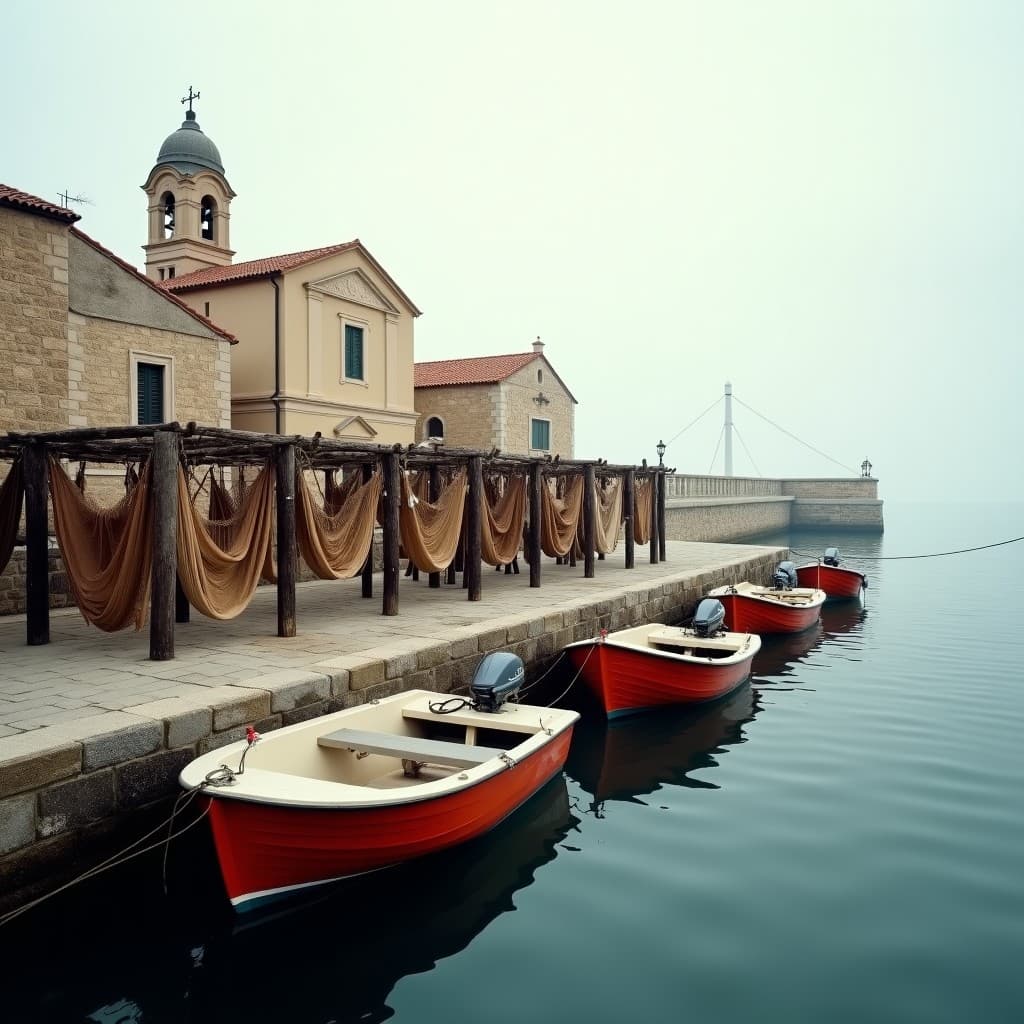
Italian rescuers recovered ten bodies after a migrant boat capsized in waters off Malta on Sunday, according to the Guardian. The vessel, which had departed from Libya, was carrying approximately 60 people when it overturned. About 48 people were rescued alive, the coastguard said, though the full toll remained uncertain.
Al Jazeera reported that at least 990 refugees and migrants have died this year while attempting the crossing. The figure underscores the scale of loss in a route that has claimed thousands since the Mediterranean became a graveyard for the displaced. Each capsizing repeats a familiar arithmetic: some survive, some drown, the world moves on.
For Molise, a region of 289,000 people with a coastline on the Adriatic, the news arrives as a recurring punctuation mark in the story of Southern Europe's migration frontier. The region's small ports and fishing towns have become way stations for the rescued and the grieving. Local hospitals and morgues absorb the human consequence of policies made in Rome and Brussels.
The Guardian's reporting placed the capsizing within the broader Mediterranean crisis that has defined European politics for a decade. The route from Libya across open water to Malta, Sicily, or the Italian mainland remains one of the world's deadliest migration corridors. Smugglers pack vessels beyond capacity; boats lack proper equipment; the sea offers no mercy to the unprepared.
Molise's position on Italy's eastern coast means the region sits on the secondary tier of arrival points. While Sicily and Lampedusa dominate international coverage, smaller Adriatic ports in Molise receive fewer migrants but face the same infrastructure strain. The region's two main ports—Termoli and Montenero di Bisaccia—lack the resources of larger Italian cities, yet they are bound by maritime law to receive and process the rescued.
The economic and social fabric of coastal Molise has been shaped by these arrivals for years. Termoli, a town of 32,000, has absorbed hundreds of migrants in recent years, straining local services and housing stock. The fishing industry, already weakened by EU quotas and climate stress, competes for attention and funding with the humanitarian response to maritime emergencies.
The psychological weight falls on local volunteers, medical staff, and clergy who encounter the survivors. Molise's Catholic tradition runs deep; the region's churches have become informal reception centres. Priests and nuns provide hot meals, dry clothes, and the first human kindness many migrants experience after hours in the sea. The encyclical Pope Leo XIV released this year, Magnifica Humanitas, emphasised human dignity in the face of technological and economic abstraction—a message that resonates in Molise's small towns, where the pope's words meet the concrete reality of drowning.
The Guardian noted that the capsizing occurred in international waters, technically outside Italy's search-and-rescue zone, yet Italian vessels responded. This pattern has become routine: Italian crews, often stretched thin, deploy to save lives in waters where responsibility is contested between Malta, Libya, and the European Union. The political cost of rescue has risen as anti-migration sentiment hardens across Europe.
Molise's depopulation—the region has lost roughly 15 percent of its population since 2000—creates a paradox. The region desperately needs working-age migrants to sustain its economy and reverse demographic collapse, yet political hostility to immigration has intensified. Young Molisani continue to emigrate to the North or abroad; migrants arrive from Africa and the Middle East; and the region's interior villages empty while coastal towns absorb the human cost of European border policy.
The ten bodies recovered off Malta will likely be transferred to Italian territory for identification and burial. Molise's morgues have experience with this grim work. The Red Cross and local authorities will attempt to trace families, many of whom paid smugglers life savings for a crossing that lasted hours. The regional health system will bear the cost; local communities will bear the moral weight.
Al Jazeera's reporting situated this capsizing within the year's toll—nearly 1,000 dead—a figure that suggests the route has not become safer despite years of international attention and European funding for border control. The paradox is stark: more surveillance, more enforcement, more walls, yet the death toll persists. Migrants continue to depart Libya because the alternative—remaining in camps, poverty, or conflict zones—seems worse than the risk of drowning.
For Molise, the arrival of the rescued and the dead is a reminder of the region's geographic fate. Situated between the Balkans and the Mediterranean, between the EU's fortress and the world's displaced, Molise absorbs flows it did not create and cannot control. The region's small population and limited resources mean that each arrival has outsized impact. A town of 5,000 receiving 50 migrants experiences a proportional strain that Rome or Milan would barely register.
The Guardian's coverage emphasised the human stories—the survivors' accounts of panic, the rescuers' professionalism, the uncertainty of the missing. These narratives matter, yet they can obscure the structural forces that drive people to board unseaworthy boats. Molise's experience suggests that migration is not a crisis to be managed but a consequence of global inequality, conflict, and climate stress that will persist as long as those root causes remain unaddressed.
Local authorities in Molise have begun preparing for the possibility of more arrivals. The region's civil protection agency has stockpiled supplies; hospitals have reviewed protocols; the Red Cross has trained volunteers. Yet preparation is not prevention. The sea will continue to claim lives until the journey becomes unnecessary—until conditions in origin countries improve, or until Europe opens legal pathways to migration.
The encyclical Pope Leo XIV released this year, Magnifica Humanitas, called for technology and economic systems to serve human flourishing rather than profit or control. The principle applies to migration policy. A system designed around human dignity would look very different from the current architecture of walls, deportations, and maritime tragedy. Molise's small towns, which have welcomed migrants and buried the drowned, understand this truth intuitively. The region's future depends on recognising that migration is not an invasion but a human reality that requires compassion and structural change.