
LAZIO
Ten dead as migrant boat capsizes off Malta; Italy's rescue system strained
Fishing vessel rescues 48 survivors from vessel that departed Libya; incident underscores Mediterranean frontier pressures
Davide Ruspoli1,289 wordsEdition №10Wednesday, 10 June 2026 — Edition № 10
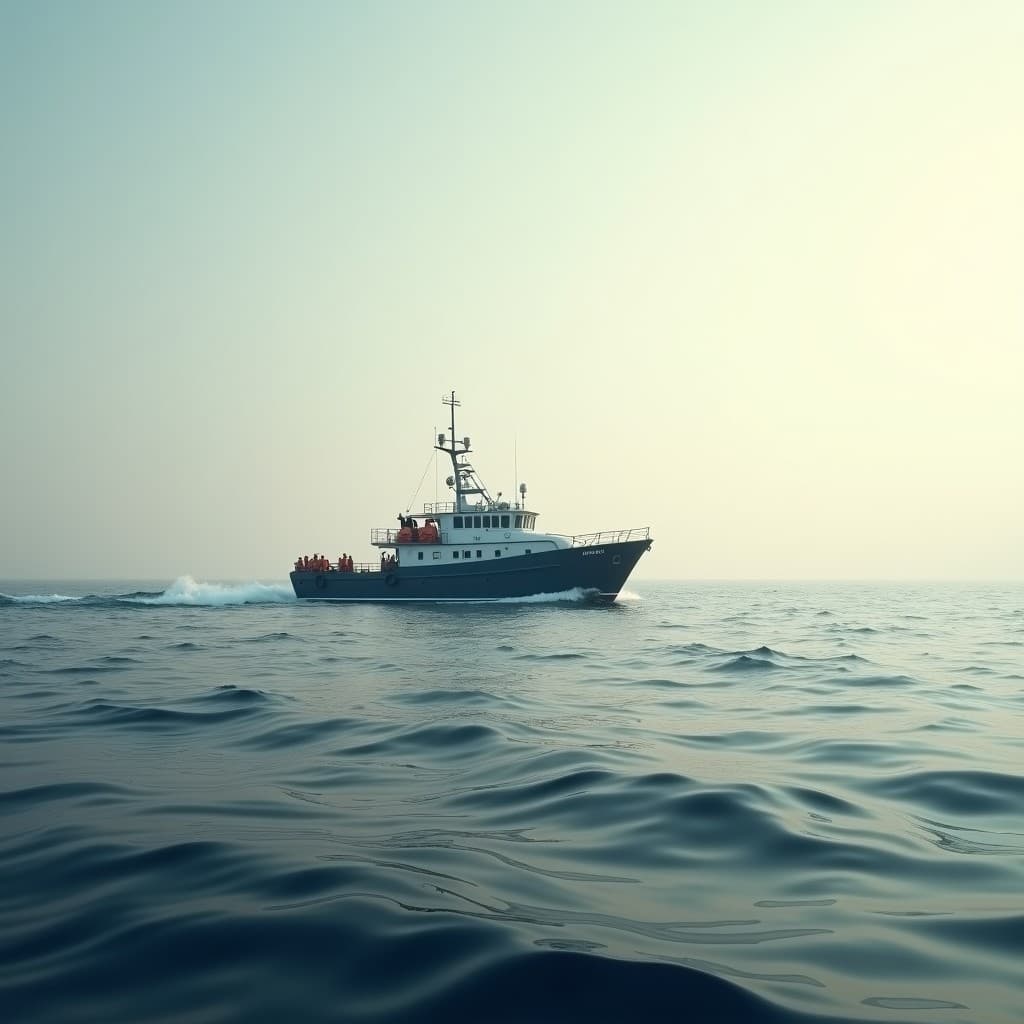
A migrant boat capsized in Mediterranean waters off Malta on Sunday, resulting in at least ten confirmed deaths, according to the Chicago Tribune and the Guardian. Italian coastguard vessels recovered the bodies while a fishing vessel rescued 48 survivors from the vessel, which had departed from Libya with roughly 60 people aboard. The incident represents one of the deadliest capsizing events recorded in recent weeks and underscores the persistent dangers of the central Mediterranean crossing.
The rescue operation involved coordination between Italian maritime authorities and commercial fishing vessels operating in international waters, a pattern that has become routine as official rescue capacity struggles to meet demand. The Guardian reported that the vessel overturned in waters off Malta, placing the incident within Italy's operational sphere of maritime responsibility, though the exact circumstances of the capsizing remain unclear from the initial reports.
For Italy's coast guard and rescue services, the incident adds to a mounting toll of Mediterranean fatalities and rescues that have strained institutional capacity throughout the spring and early summer. The timing coincides with the Pope's tour of Europe's migration hotspots and his framing of migration as a spiritual crisis—a theological intervention that arrives as Italy's practical rescue and asylum infrastructure faces daily pressure from departures originating in Libya and Tunisia.
The central Mediterranean remains the world's deadliest migration route, and Italy's position as the primary rescue authority for the region places the country at the intersection of humanitarian obligation and political controversy. The Chicago Tribune's report of the Malta incident follows weeks of similar capsizings, each generating debate within Italy about the sustainability of rescue operations and their political consequences.
Italy's coast guard operates under standing maritime law obligations to rescue vessels in distress, a principle codified in international convention and reinforced by EU directives. However, the scale of departures from Libya—driven by political instability, economic collapse, and climate stress—has created a situation where rescue capacity is perpetually insufficient. The ten deaths off Malta represent not an exceptional event but a continuation of a pattern that has claimed thousands of lives in recent years.
The involvement of a commercial fishing vessel in the rescue operation highlights a critical gap in official capacity. Private maritime actors—fishing boats, merchant vessels, NGO-operated rescue ships—have become de facto components of Europe's migration management system, filling gaps left by underfunded coast guards and politically constrained governments. The fishing vessel's rescue of 48 survivors suggests that commercial operators continue to fulfil humanitarian obligations despite the political backlash that rescue operations generate in some European capitals.
From Rome's perspective, the incident reinforces the tension between Italy's humanitarian commitments and its political pressures. The Italian government has pursued bilateral agreements with Libya and Tunisia designed to reduce departures, while simultaneously maintaining rescue operations that save lives at sea. This dual approach—deterrence combined with rescue—creates a paradox that the Pope's moral framing of migration now challenges from the Vatican.
The location of the capsizing off Malta carries additional significance. Malta, like Italy, sits on the central Mediterranean frontier and faces similar pressures from departures originating in North Africa. The incident occurred in waters where Italian and Maltese rescue zones overlap, requiring coordination between the two countries' maritime authorities. Such coordination has become routine but remains politically fraught, as both nations struggle with the political consequences of accepting rescued migrants.
The survivors rescued from the capsized vessel now face the question of disembarkation and asylum processing. Italian ports have become the primary landing sites for Mediterranean rescues, placing the burden of initial reception, medical care, and asylum determination on Italian municipalities and the national government. The ten deaths off Malta will likely result in survivors being transferred to Italian ports, adding to the caseload that Italian authorities must process.
The incident also reflects broader patterns in migration routes and departure strategies. Vessels departing from Libya typically carry between 50 and 150 people, often in severely overcrowded and unseaworthy conditions. The approximate 60 people aboard the capsized vessel represents a typical departure size, suggesting that the incident reflects standard rather than exceptional conditions. The high casualty rate—ten deaths from approximately 60 people—indicates either severe overcrowding or structural failure of the vessel.
For Italy's maritime rescue services, the incident generates immediate operational and logistical challenges. The recovery of ten bodies requires forensic processing, identification procedures, and coordination with Libyan and international authorities. The 48 survivors require medical assessment, documentation, and processing through Italy's asylum system. These procedures consume significant institutional resources and generate political controversy, particularly in regions like Sicily and Calabria that receive disproportionate numbers of rescued migrants.
The timing of the incident—occurring as the Pope frames migration as a spiritual crisis in Madrid—creates a stark juxtaposition between theological and practical dimensions of migration policy. While Leo XIV speaks to European parliaments about moral obligations to migrants, Italian rescue services are recovering bodies from the Mediterranean. The Pope's emphasis on addressing "the causes and consequences of the tragic drama of migration" implicitly critiques the deterrence-based policies that Italy and other EU states have adopted, yet those policies remain in place even as rescue operations continue.
The incident also underscores the limitations of Italy's bilateral agreements with Libya and Tunisia. Despite efforts to reduce departures through cooperation with Libyan authorities and the provision of coast guard equipment to Libyan forces, departures continue at high volumes. The capsizing off Malta suggests that migrants continue to undertake the crossing despite the risks, indicating that the push factors driving migration remain more powerful than the deterrence mechanisms that European states have implemented.
For Lazio and Rome specifically, the incident carries implications for asylum reception and processing. Rome's municipal services, already strained by tourism pressures and housing shortages, must accommodate asylum seekers processed through Italian ports. The ten deaths off Malta will likely generate calls for expanded rescue capacity and more generous asylum policies, while simultaneously fuelling political demands for stricter border controls and reduced rescue operations.
The incident also reflects climate and environmental pressures that drive migration from North Africa. Libya's economic collapse, combined with drought and desertification across the Sahel, creates conditions that push people toward the Mediterranean crossing despite its dangers. The Pope's invocation of "spiritual and cultural crisis" implicitly acknowledges these material drivers of migration, though his theological framing differs from the climate and economic analysis that foreign correspondents typically employ.
Looking forward, the incident suggests that Mediterranean casualties will continue at current levels absent significant changes in departure conditions, vessel safety, or rescue capacity. Italy's coast guard will likely recover additional bodies in coming weeks, and survivors will continue to arrive in Italian ports. The Pope's moral framing of migration may influence European policy discourse, but the practical realities of rescue operations and asylum processing will continue to shape Italy's experience of the Mediterranean frontier.