
VENETO
Ten Dead as Migrant Boat Capsizes Off Malta; Veneto Braces for New Arrivals
Italian rescuers recover bodies as Mediterranean crossing toll mounts; northeastern ports prepare for increased pressure from migration flows.
Tommaso Veronese1,198 wordsEdition №8Monday, 8 June 2026 — Edition № 8
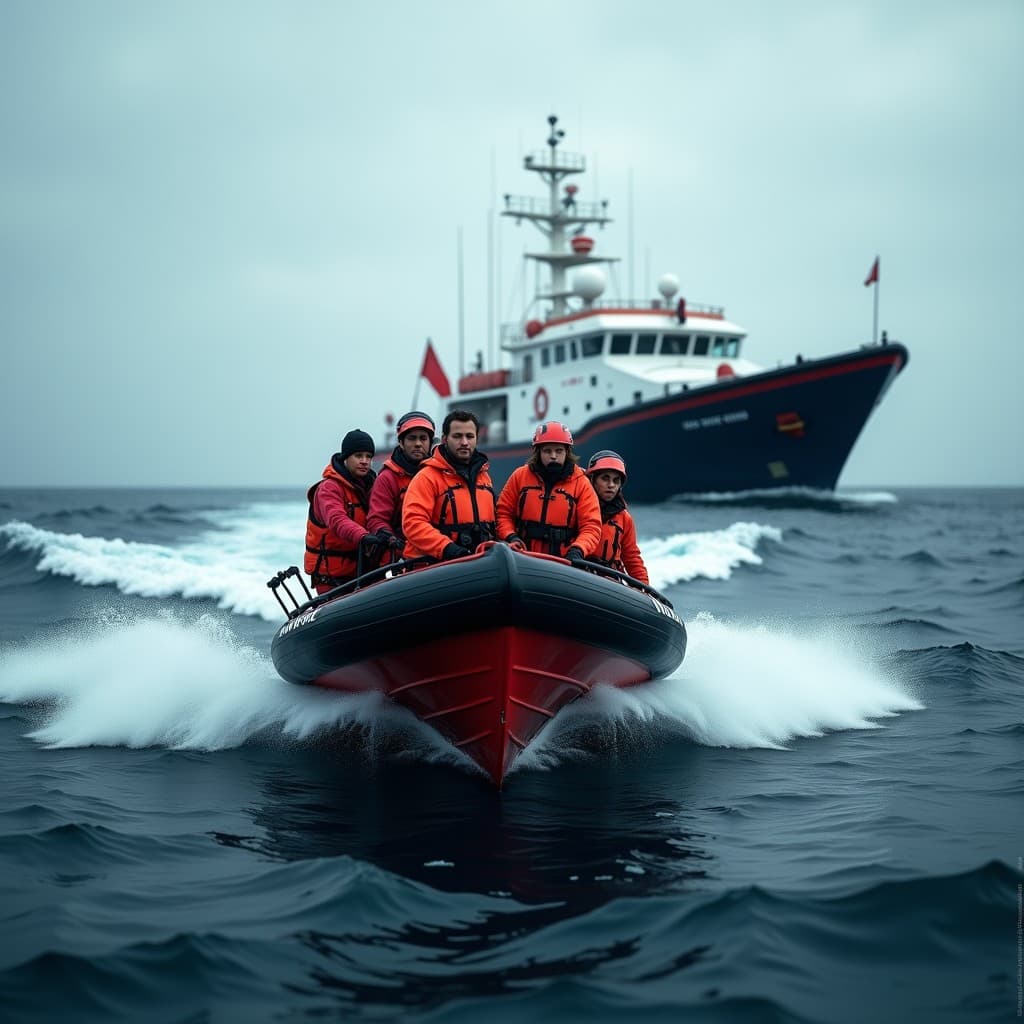
Italian rescuers recovered ten bodies after a migrant boat capsized in waters off Malta on June 7th, according to a statement from the Italian coastguard cited by the Guardian and Al Jazeera. The vessel had departed from Libya carrying approximately 60 passengers; about 48 people were rescued alive. The incident marks the latest in a relentless sequence of maritime disasters along the central Mediterranean route, where at least 990 refugees and migrants have died this year attempting the crossing, according to Al Jazeera's reporting.
The capsizing occurred in international waters south of Malta, a zone that sits at the intersection of Italian, Maltese, and Libyan maritime responsibility. Italian naval assets, stationed in the region as part of ongoing search-and-rescue operations, responded to distress signals and recovered survivors. The dead were transferred to Malta for identification and repatriation procedures, according to reports in the Guardian and international wire services.
For the Veneto region and its northeastern ports, the incident signals renewed pressure on Italy's maritime borders and asylum processing infrastructure. Trieste, the region's primary port and Italy's gateway to the Balkans and Central Europe, has become an increasingly critical node in Mediterranean migration flows. The city's reception capacity, already strained by irregular arrivals from the Balkans and Eastern Europe, faces additional pressure from sea arrivals diverted northward from southern Italian ports.
The capsizing off Malta is one of dozens of maritime disasters recorded in the central Mediterranean this year. According to data cited in Al Jazeera and other international outlets, the death toll on the Mediterranean crossing has accelerated in 2026, driven by several factors: deteriorating conditions in Libya, increased desperation among migrants fleeing conflict and economic collapse in sub-Saharan Africa and the Middle East, and the continued operation of smuggling networks despite international enforcement efforts.
The route from Libya to southern Europe remains the deadliest maritime crossing in the world, according to reports from the International Organization for Migration cited in international media. Vessels are typically overcrowded, poorly maintained, and operated by smugglers with no regard for passenger safety. Capsizing, sinking, and engine failure are common; so too are deaths from dehydration, exposure, and asphyxiation in cargo holds.
Italy has long borne the primary burden of Mediterranean rescue operations. The Italian coastguard, navy, and merchant marine conduct thousands of rescues annually, often in coordination with international partners including Malta, Greece, and Tunisia. However, according to reports in the Guardian and other outlets, the political debate over migration in Italy has intensified pressure on rescue operations. Some Italian politicians have criticized sea rescue as an incentive for smuggling, while others have argued for stricter border enforcement and reduced asylum processing capacity.
The Veneto region occupies a distinctive position in Italy's migration geography. While the central Mediterranean route (Libya to Sicily and southern Italy) remains the primary entry point for sea arrivals, the northeastern frontier—particularly Trieste and the Slovenia border—has become an increasingly important secondary route. Migrants who reach southern Italy are often transported northward by smugglers or, in some cases, by Italian authorities seeking to distribute reception capacity across regions. Trieste, as the region's primary port, receives both sea arrivals and land arrivals from the Balkans.
According to reports in international media, including the Guardian and Deutsche Welle, Trieste's reception system has been under acute stress. The city hosts a major reception centre for asylum seekers, but capacity has been exceeded repeatedly in recent years. Migrants arriving in Trieste often face weeks or months of waiting before asylum interviews can be scheduled, and many move onward to northern Europe—Austria, Germany, France—seeking faster processing or family reunification. This onward migration has created tensions with Austria, which has periodically closed or restricted the Brenner Pass border crossing in response to migrant flows.
The Veneto region's economy depends significantly on small-firm manufacturing and export industries, particularly in eyewear, textiles, and machinery. These sectors rely on a stable, skilled workforce, and the region has historically attracted internal migration from southern Italy and, increasingly, from abroad. However, irregular migration has become a flashpoint in regional politics. The Veneto has a strong regional identity and a history of skepticism toward central government authority; migration policy, controlled from Rome, has become a symbol of that tension.
International coverage of Italy's migration crisis has focused heavily on the humanitarian dimension—the deaths, the desperation, the failures of international coordination. But it has also documented the political economy of migration within Italy. According to reports in the Guardian, the New York Times, and other outlets, Italy's reception system is fragmented, underfunded, and unevenly distributed across regions. Southern regions, which receive the majority of sea arrivals, bear disproportionate costs; northern regions, including Veneto, receive fewer arrivals but face political pressure from residents concerned about irregular migration.
The European Union has been attempting to reform migration policy through its New Pact on Migration and Asylum, which came into force in 2024. According to reports in Politico Europe and other outlets, the pact aims to distribute asylum responsibility more equitably across EU member states, but implementation has been uneven. Italy has argued that it bears a disproportionate burden as a Mediterranean gateway state and has sought greater EU financial support for border management and reception services.
The capsizing off Malta also reflects the broader geopolitical context of Mediterranean migration. Libya, the primary departure point for central Mediterranean crossings, has been in a state of near-state collapse since 2011, according to international coverage. The country is divided between competing governments, militias, and smuggling networks. Conditions for migrants in Libya are dire: detention camps are overcrowded and abusive, according to reports from Human Rights Watch and Amnesty International cited in international media. Many migrants are held for ransom by smugglers; others are enslaved or trafficked.
The international response to Mediterranean migration has been limited and contested. The European Union has funded maritime patrols and coast guard operations, but has also supported the Libyan coast guard in intercepting migrant vessels and returning them to Libya—a practice condemned by human rights organizations as violating international law. According to reports in the Guardian and other outlets, migrants returned to Libya face torture, detention, and further trafficking.
For Veneto, the incident off Malta is a reminder of the region's position at the intersection of Mediterranean and Balkan migration routes. The region's ports, particularly Trieste, will likely receive some of the survivors from the capsizing, either directly or indirectly through transfers from southern Italy. The incident will also intensify political debate within the region about migration policy, border security, and the distribution of reception capacity.
The death toll in the Mediterranean—990 this year, according to Al Jazeera—represents a humanitarian catastrophe that international media continues to document but that political responses have failed to address. The capsizing off Malta is one incident among thousands; the ten dead are part of a much larger toll. For the Veneto region, as for all of Italy, the question of how to respond to Mediterranean migration remains unresolved, contested, and urgent.