
BASILICATA
Ten dead as migrant boat capsizes off Malta; Basilicata braces for arrivals
Italian rescuers recover bodies as Mediterranean crossing claims more lives; southern Italy prepares for influx
Pietro Lasorsa1,247 wordsEdition №8Monday, 8 June 2026 — Edition № 8
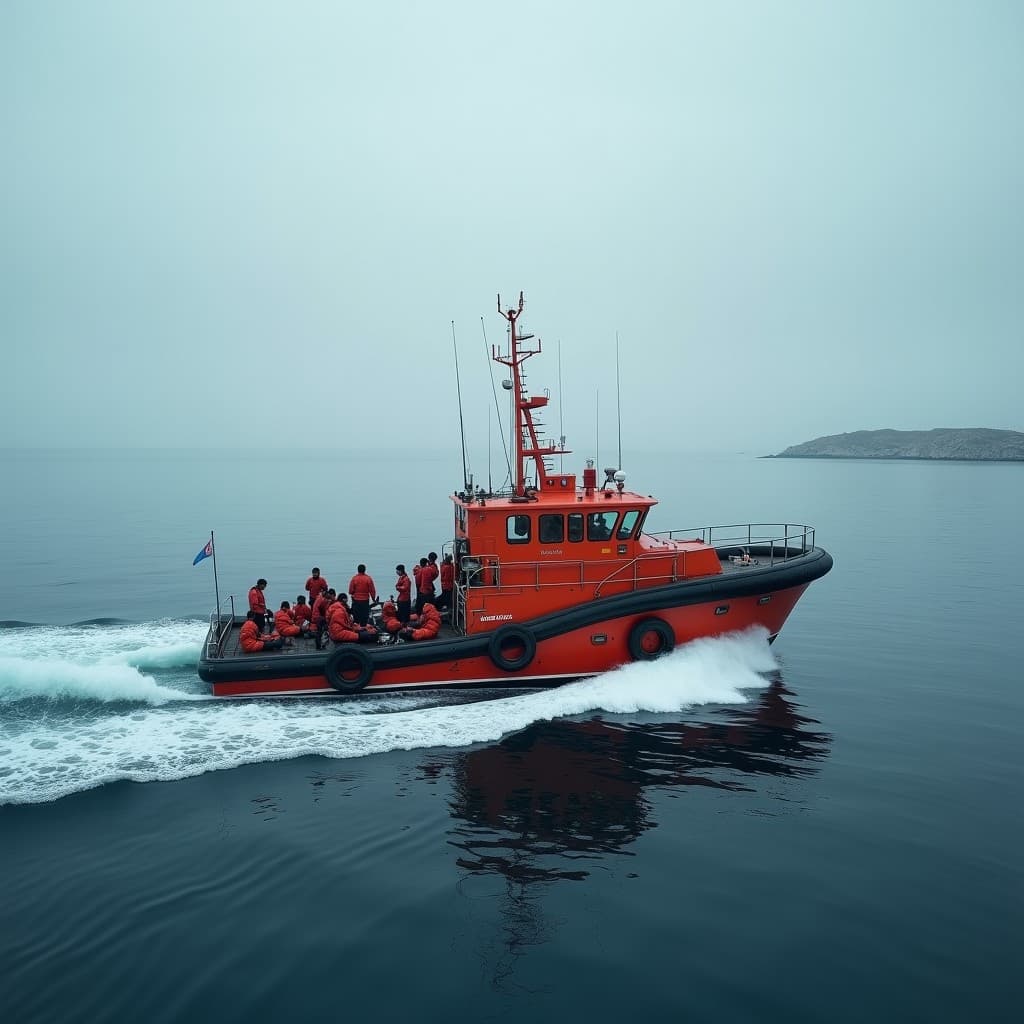
Italian rescuers recovered ten bodies on Sunday after a migrant boat capsized in waters off Malta, according to a coastguard statement reported by the Guardian. The vessel, which had departed from Libya carrying approximately 60 passengers, overturned in the central Mediterranean. Nearly 48 people were rescued alive, the Guardian reported, though the precise circumstances of the capsizing remain unclear from international coverage.
The incident marks the latest in a sustained toll across the Mediterranean. Al Jazeera reported that at least 990 refugees and migrants have died this year while attempting the crossing—a figure that underscores the scale of loss on a route that has become one of Europe's deadliest migration corridors. The deaths occur as European Union member states, including Italy, face mounting pressure to manage arrivals and enforce increasingly restrictive border policies.
For Basilicata, the recovery operation and its aftermath carry immediate practical weight. The region's ports—particularly those in the Ionian Sea—routinely receive migrant vessels and survivors from Mediterranean rescues. The Taranto naval base and the port facilities at Metaponto have become de facto processing centers for arrivals, placing strain on local health services, accommodation, and administrative capacity already stretched by depopulation and limited public resources.
The capsizing off Malta follows a pattern of vessel disasters that have defined Mediterranean migration for the past decade. The route from Libya to Italy and Malta remains the world's deadliest sea crossing relative to the number of people who attempt it. Survivors are typically transferred to the nearest safe port—often in southern Italy—where they undergo medical screening, registration, and processing before being distributed to reception centers across the country.
Basilicata's position in this system reflects both geography and administrative reality. The region sits on the Ionian coast, directly across from Greece and Albania, and its ports are closer to North African departure points than those of central Italy. When rescue operations occur in the central Mediterranean, Italian vessels—whether naval, coastguard, or commercial—often divert to the nearest Italian port, which may be in Basilicata. This has made towns like Taranto and smaller coastal settlements unexpected nodes in Europe's migration infrastructure.
The Guardian's reporting on Sunday's incident noted that the boat had departed from Libya, a country whose coastline has become the primary launching point for Mediterranean crossings. Libya's own instability—the result of state collapse following the 2011 NATO intervention—has created conditions in which smuggling networks operate with minimal oversight. Migrants, many fleeing conflict or destitution in sub-Saharan Africa, pay smugglers thousands of euros for passage in unseaworthy vessels, often overcrowded and poorly maintained.
For Basilicata's interior—the depopulated heartland of Potenza and the smaller communes—migration arrivals remain distant abstractions. But for the coastal towns and the regional capital's administrative apparatus, they are immediate crises. Local hospitals in Taranto and Metaponto have reported surges in emergency admissions following large rescue operations, straining already-thin medical staff. Accommodation is scarce; many survivors are housed in converted military barracks or improvised reception centers that lack basic facilities.
The EU's hardening stance on migration, reported extensively in international media over recent months, has placed additional pressure on Italy's southern regions. As the bloc tightens asylum rules and increases deportation expectations, Italy—as the Mediterranean's primary entry point—faces the burden of initial processing and temporary housing. Basilicata, despite its small population of 537,000, absorbs a disproportionate share of this load due to its port infrastructure and proximity to rescue zones.
Sunday's deaths also underscore the human cost of the crossing itself. The Guardian reported that nearly 50 people were rescued, suggesting survival rates that depend heavily on chance, weather, and the proximity of rescue vessels. International maritime law requires ships to render assistance to vessels in distress, but the central Mediterranean's vastness means that many boats sink before rescue arrives. The 990 deaths recorded so far this year by Al Jazeera represent only those whose bodies are recovered or whose deaths are documented; the actual toll is likely higher.
Basilicata's regional government has limited direct control over migration policy—that authority rests with Rome and, increasingly, with EU directives. Yet the region's mayors, health officials, and social services must manage the consequences. The town of Taranto, which hosts a major naval base and commercial port, has become a de facto reception hub. Local authorities report that resources allocated for migrant services have not kept pace with arrivals, forcing them to improvise solutions with NGO partners and volunteer organizations.
The international press has framed Italy's migration challenge as a national crisis, but the burden falls unevenly. Northern Italy, where manufacturing and wealth concentrate, receives fewer arrivals. The South—Basilicata, Calabria, Sicily, Puglia—bears the weight. This geographic inequality has become a recurring theme in foreign coverage of Italy's social fractures. The Washington Post, the Guardian, and other outlets have reported on the tension between Italy's EU obligations to process asylum claims and the political pressure from anti-immigration movements to restrict arrivals.
Sunday's capsizing also reflects the broader context of Libya's role in the migration system. The country serves as both a transit hub and a place where migrants are detained, sometimes in conditions that international observers have documented as abusive. Smuggling networks in Libya operate with impunity, and the Libyan coast guard—supported by EU funding—has been criticized by human rights organizations for intercepting migrant boats and returning them to Libya rather than allowing them to reach Europe. The Guardian and other outlets have reported on these practices, which create a cycle in which migrants attempt the crossing repeatedly, increasing the risk of death.
For Basilicata's interior regions, which have lost population steadily for decades, the arrival of migrants presents a paradox. The region desperately needs population to sustain its economy and services. Yet the migrants who arrive are typically processed and moved onward, not settled locally. Some NGOs and local administrators have proposed using migrant arrivals as a way to repopulate abandoned villages, but such initiatives remain marginal and lack sustained funding or political support.
The recovery of ten bodies on Sunday will likely prompt renewed calls from international human rights organizations for stronger search-and-rescue operations in the Mediterranean. The Guardian reported that opponents of restrictive migration policies have pointed to the deaths as evidence that deterrence-based approaches—which aim to discourage crossing attempts—fail to prevent people from risking the journey. Instead, they argue, resources should be directed toward legal migration pathways and addressing the root causes of displacement in Africa and the Middle East.
For Basilicata, the immediate consequence is operational: local ports will receive survivors, hospitals will treat the injured and traumatized, and regional social services will manage temporary accommodation. The longer-term consequence is political and demographic. As Italy's southern regions absorb migration arrivals while simultaneously losing their own young people to emigration northward and abroad, the region's character and capacity continue to shift. The capsizing off Malta is, in this sense, one incident in a larger story of Basilicata's transformation—from a place of emigration to an involuntary gateway for immigration, without the resources or political will to manage either process equitably.