
TOSCANA
Mediterranean Crossing Claims Ten Lives as Boat Capsizes Near Malta
Italian rescuers recover bodies after vessel from Libya overturns; about 48 survivors pulled from water in latest maritime tragedy on southern Europe's migration frontier.
Costanza Bardi1,285 wordsEdition №8Monday, 8 June 2026 — Edition № 8
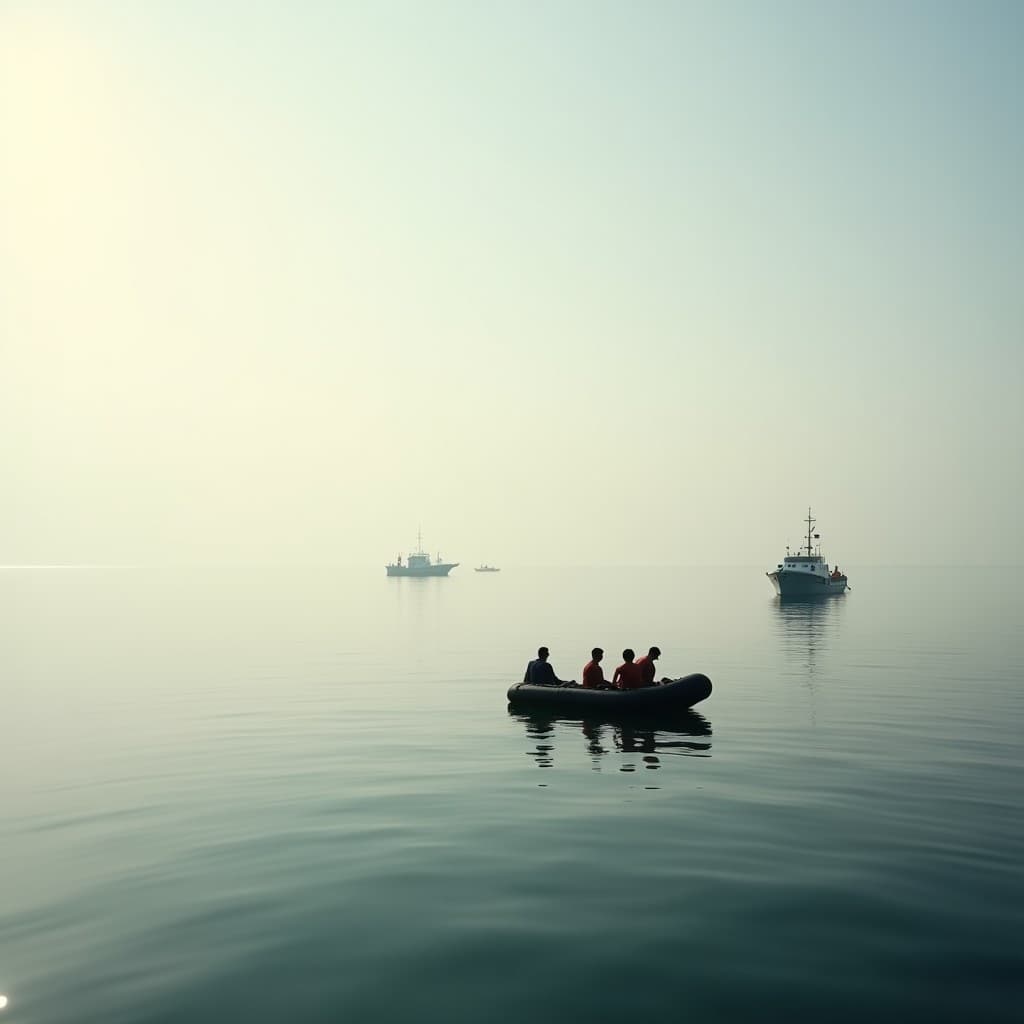
Italian coastguard rescuers recovered ten bodies after a migrant vessel capsized in waters off Malta on Sunday, according to a statement reported by the Guardian. The boat, which had departed from Libya carrying about 60 passengers, overturned during the crossing. Approximately 48 people were rescued alive, though the Guardian's reporting did not specify the exact circumstances of the capsizing or whether all survivors had been accounted for at the time of the initial rescue operation.
The incident represents the latest in a long series of maritime tragedies in the central Mediterranean, a route that remains one of the world's most dangerous migration corridors. The waters between Libya and southern Europe—including the approaches to Malta, Sicily, and the Italian mainland—have claimed thousands of lives over the past decade as migrants and refugees attempt to reach Europe. The route has become increasingly perilous as smuggling networks have grown more sophisticated and desperate, and as European border enforcement has intensified.
For Italy, which bears the primary responsibility for search and rescue operations in these waters, such incidents underscore the ongoing burden of managing migration at the Mediterranean frontier. The country's coastguard and navy conduct regular rescue operations, often at considerable cost and risk to their own personnel. Yet the scale of migration attempting to cross from North Africa means that many vessels are never intercepted, and many drownings go unrecorded.
The capsizing off Malta occurs within a broader context of intensifying migration pressure on southern Europe. The Guardian and other international outlets have reported extensively on the Mediterranean crossing as a central European policy challenge, with Italy, Greece, and Malta bearing the heaviest burden of arrivals. The European Union has tightened migration rules in recent months, placing greater responsibility on southern member states to manage arrivals and process asylum claims, even as the number of people attempting to cross has remained high.
Libya, from which this vessel departed, remains a key transit point for migrants from sub-Saharan Africa and the Middle East seeking to reach Europe. The country's weak state capacity, ongoing conflict, and the presence of smuggling networks have made it a launching point for thousands of crossings each year. Migrants gathered in Libyan ports often face exploitation, abuse, and dangerous conditions before boarding vessels that are frequently unseaworthy and overcrowded.
The route itself is treacherous. The central Mediterranean crossing from Libya to Italy or Malta covers roughly 300 kilometres of open water, with unpredictable weather, strong currents, and heavy maritime traffic. Vessels used by smuggling networks are often small fishing boats or inflatable dinghies, designed for coastal rather than open-water use. Overcrowding is routine, and safety equipment is frequently absent or inadequate. The combination of unseaworthy vessels, inexperienced crews, and dangerous conditions creates a recipe for disaster.
For Tuscany, which has no direct coastline and is situated in central Italy, the Mediterranean migration crisis is experienced primarily through its effects on the broader Italian state and society. Yet the region is not insulated from migration's consequences. Migrants who arrive in southern Italy are often transported northward to processing centres and reception facilities across the country, including in Tuscany. The region has hosted reception centres for asylum seekers, and the broader question of how Italy manages migration—and how the European Union distributes responsibility for processing asylum claims—affects Tuscan communities and local budgets.
The incident also reflects the gap between European migration policy and the reality of maritime rescue operations. The EU has tightened its borders and made it more difficult for migrants to enter legally, yet the desperation that drives people to attempt dangerous crossings has not diminished. Each tightening of border controls creates incentives for migrants to use smuggling networks and to attempt more dangerous routes. The result is a tragic arithmetic: stricter borders lead to more dangerous crossings, which lead to more deaths.
Italian rescue operations in the Mediterranean are coordinated by the coastguard and navy, with support from civilian rescue organisations. The Guardian and other outlets have reported on the significant resources Italy devotes to these operations, as well as the moral and political complexity of rescue work in the context of contested migration policy. Rescued migrants must be brought to Italian ports, processed, and either granted asylum or deported—a process that places strain on Italian administrative capacity and generates political controversy.
The ten deaths reported in this incident are part of a larger toll. The International Organization for Migration and other humanitarian organisations track Mediterranean crossings and fatalities. In recent years, thousands of people have died attempting to cross from North Africa to Europe. The exact number is difficult to establish, as many drownings occur in international waters and are never officially recorded. Yet the scale is undeniable: the Mediterranean has become a mass grave for migrants seeking to reach Europe.
The political response to such incidents varies across Europe. Some countries, particularly those on the Mediterranean frontier, have called for greater burden-sharing within the EU, arguing that southern member states should not bear the entire responsibility for processing asylum claims from migrants who arrive by sea. Other countries have resisted accepting migrants through relocation schemes, preferring to strengthen external borders. The result is a fragmented approach that has left Italy, Greece, and Malta managing the majority of arrivals while other EU members resist accepting responsibility.
For Pope Leo XIV, who is currently visiting Spain with a focus on migration and human dignity, such incidents exemplify the human cost of restrictive migration policies. The Washington Post reported that the Pope is drawing huge crowds and seems to be making a moral intervention on behalf of migrants and refugees. His encyclical and public statements have emphasised the dignity of migrants and the obligation of wealthy nations to respond with compassion rather than fortress mentality. The capsizing off Malta, occurring while the Pope is in Spain addressing migration, underscores the urgency of his message.
The incident also raises questions about the role of Libya in the migration system. As a transit country, Libya is crucial to understanding Mediterranean crossings. Yet Libya itself is a failed state with limited capacity to regulate its ports or prevent smuggling networks from operating. International efforts to strengthen Libyan state capacity have had limited success. Without addressing the conditions in Libya that make it a launching point for dangerous crossings, European border enforcement alone will not reduce migration pressure.
For the survivors of this capsizing, the immediate challenge is medical care and processing. The Guardian's report did not specify where the 48 rescued people would be brought or what their status would be. Typically, survivors of maritime incidents are brought to the nearest port—in this case, likely Malta or Sicily—where they are medically assessed and registered. Some may be eligible for asylum, while others may face deportation. The process is often lengthy and uncertain, adding psychological trauma to the physical ordeal of the crossing.
The incident also reflects the seasonal pattern of Mediterranean crossings. Summer months, with calmer seas and better weather, typically see higher numbers of crossing attempts. The capsizing occurred in early June, as the summer migration season was beginning. This pattern is well-established and predictable, yet European authorities have struggled to prevent deaths despite knowing when and where most crossings occur.
Looking forward, the capsizing off Malta is unlikely to be the last such incident. As long as the conditions that drive migration—poverty, conflict, persecution in origin countries—persist, and as long as Europe maintains restrictive border policies, migrants will continue to attempt dangerous crossings. Each incident represents a failure of the international system to manage migration in a way that protects human life and dignity. The ten deaths reported in this incident are a stark reminder of that failure.