
CALABRIA
Meloni's break with Trump reshapes Italy's Mediterranean role, analysts say
Italian leader's pivot toward Europe signals shift in southern strategy after trade tensions and defence disputes
Saverio Gallo461 wordsEdition №29Sunday, 28 June 2026 — Edition № 29
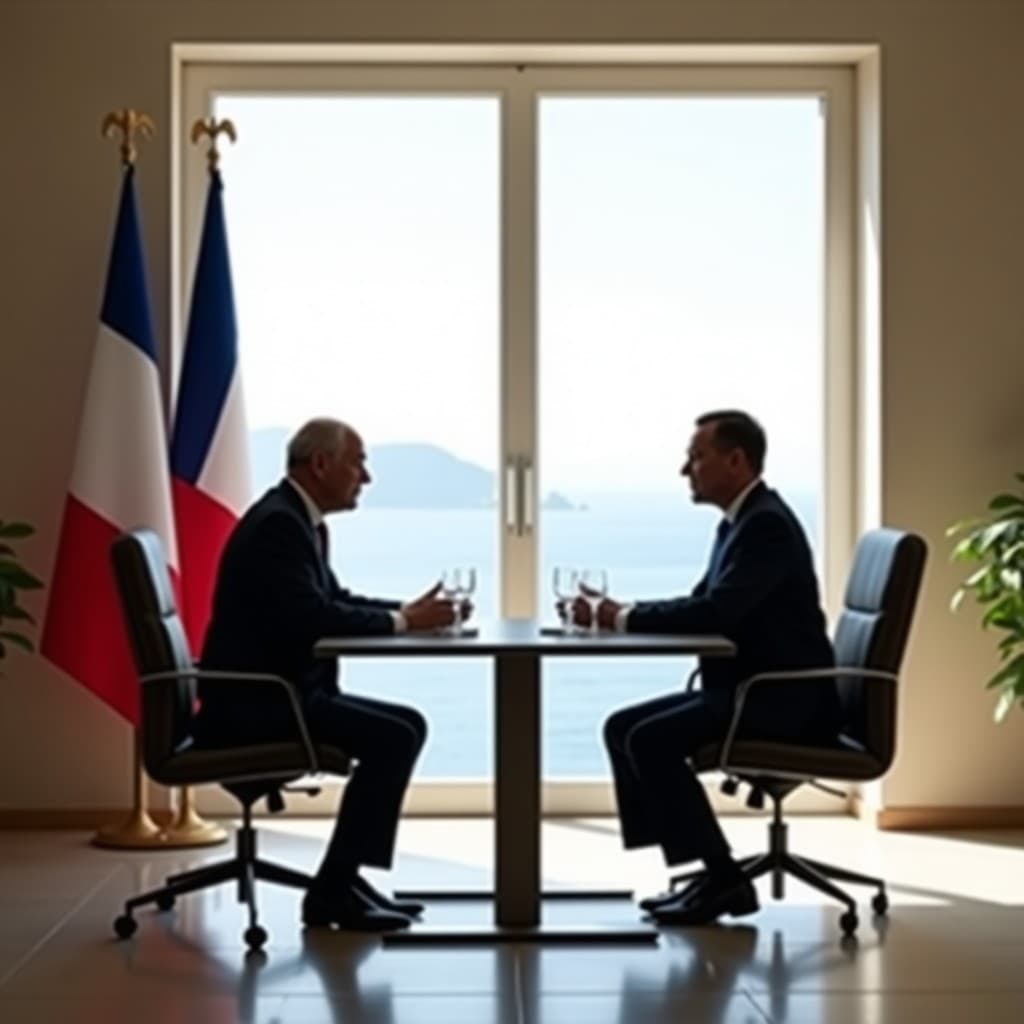
Giorgia Meloni, long positioned as Donald Trump's most natural European ally, has moved decisively away from the American president in recent weeks, marking a significant realignment in Italian foreign policy. Politico reported this week that Trump's America First agenda was always bound to clash with Italy over its low defence spending and trade surplus with America. The rupture has now become public: France 24 reported Thursday that Meloni met with French President Emmanuel Macron on the Riviera after what she called Trump's 'constant, unprovoked attacks' on her government.
The break reflects structural tensions rather than personal disagreement. Politico noted that although Meloni had traded for years on the idea that she was Trump's natural ally, the transatlanticist right-wing leader and the America First president were always destined to collide. Italy's trade surplus with the United States, its modest defence budget relative to NATO obligations, and its geographic position as a Mediterranean power all sit uneasily within Trump's zero-sum framework. The Riviera summit with Macron signals that Meloni is now hedging toward Europe—a move that carries specific implications for southern Italy and the Mediterranean frontier.
For Calabria and the Mediterranean south, the shift carries tangible consequences. Italy's role as a Mediterranean power—controlling key ports, managing migration pressure from North Africa, hosting NATO naval assets, and serving as a gateway between Europe and the Middle East—has always depended on transatlantic alignment. Trump's hostility to multilateral institutions, his unpredictability on NATO, and his willingness to weaponize trade disputes all threaten the institutional frameworks through which Italy manages its southern exposure. Meloni's pivot toward Macron and European coordination suggests Rome is now betting that European institutional strength offers better protection than American unpredictability.
The timing is significant. France 24 noted that other European leaders—Britain's Keir Starmer, Hungary's Viktor Orban—have also experienced ruptures with Trump. Meloni's break is therefore not isolated but part of a broader European recalibration. For Calabria, which sits at the intersection of Mediterranean migration, NATO logistics, and European trade, the shift means that regional policy—on border management, port operations, agricultural export strategy—will increasingly be shaped by European rather than American priorities.
Politico's analysis suggests that this realignment was structurally inevitable: Italy's economy, its defence posture, and its Mediterranean geography all make it a poor fit for Trump's transactional approach. Meloni's public distancing from the American president is therefore less a personal choice than a recognition of structural reality. The consequence for southern Italy is that the region's future is now more firmly anchored to European frameworks—the EU's migration and trade policy, NATO's Mediterranean strategy as coordinated through Brussels, and the deepening of European defence cooperation that excludes rather than centres American leadership.