
NATIONAL
Meloni's break with Trump exposes structural rift over defence and trade
Italy's low military spending and trade surplus collide with Trump's America First agenda, reshaping European alignments
Sergio Madrussan356 wordsEdition №28Saturday, 27 June 2026 — Edition № 28
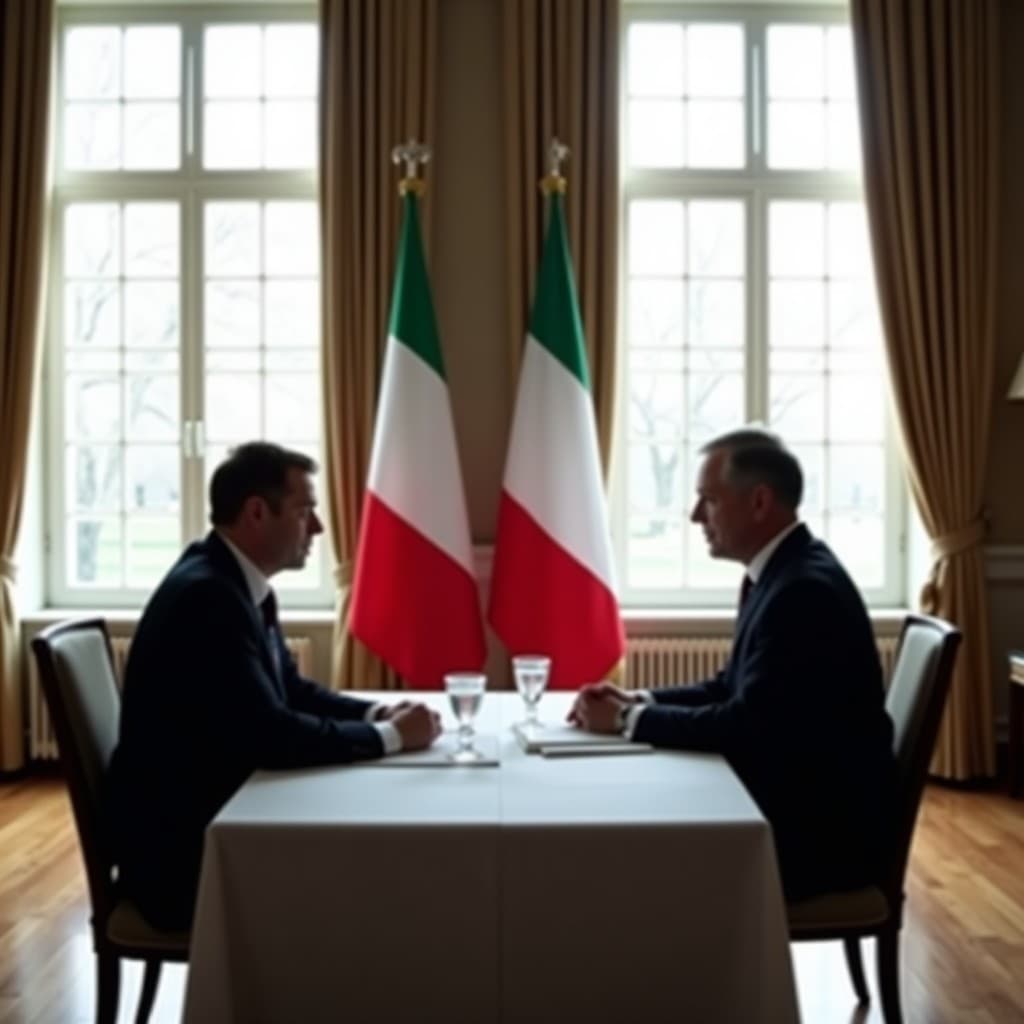
The rupture between Italian Prime Minister Giorgia Meloni and U.S. President Donald Trump marks a fundamental collision between Italy's economic model and Trump's America First agenda, according to Politico. Meloni, who had positioned herself for years as Trump's most natural European ally, has recently distanced herself from the U.S. leader. The clash centres on Italy's comparatively low defence spending and its persistent trade surplus with America—structural features that were always bound to trigger conflict with Trump's protectionist approach.
The disagreement reflects deeper fault lines that extend beyond personal diplomacy. Italy's defence budget remains below NATO targets, while its manufacturing base generates significant trade imbalances with the United States. These are not issues that Meloni can quickly resolve through negotiation; they are embedded in Italy's postwar economic model and its role within the European Union. Trump's demands for higher military spending and reduced trade deficits strike at the heart of how Italy has structured its economy since 1945.
For Trieste and the northeastern regions, the deterioration of the Meloni-Trump relationship carries strategic weight. The port city and its hinterland depend on transatlantic trade flows and European supply chains that could be disrupted by intensifying U.S. protectionism. Italy's eastern frontier has long depended on integrated European logistics networks and American defence guarantees. A sustained breakdown in Rome-Washington relations could reshape the geopolitical calculations that underpin regional trade patterns.
The fracture also opens space for Italy to reorient toward Europe. France 24 reported that Meloni met French President Emmanuel Macron on the Riviera shortly after the Trump tensions emerged, suggesting a pivot toward stronger European coordination. If this trend continues, Italy's foreign policy may shift from the transatlantic focus that has defined its postwar trajectory. For a region like Friuli-Venezia Giulia, which sits at the intersection of EU and Central European interests, such a reorientation could reshape investment patterns and strategic priorities in the years ahead.