
ABRUZZO
Ten dead as migrant boat capsizes off Malta; Italy's rescue burden deepens
Vessel carrying 60 from Libya overturns; Abruzzo ports face mounting pressure as Mediterranean crossings claim more lives
Marco Di Sante1,247 wordsEdition №8Monday, 8 June 2026 — Edition № 8
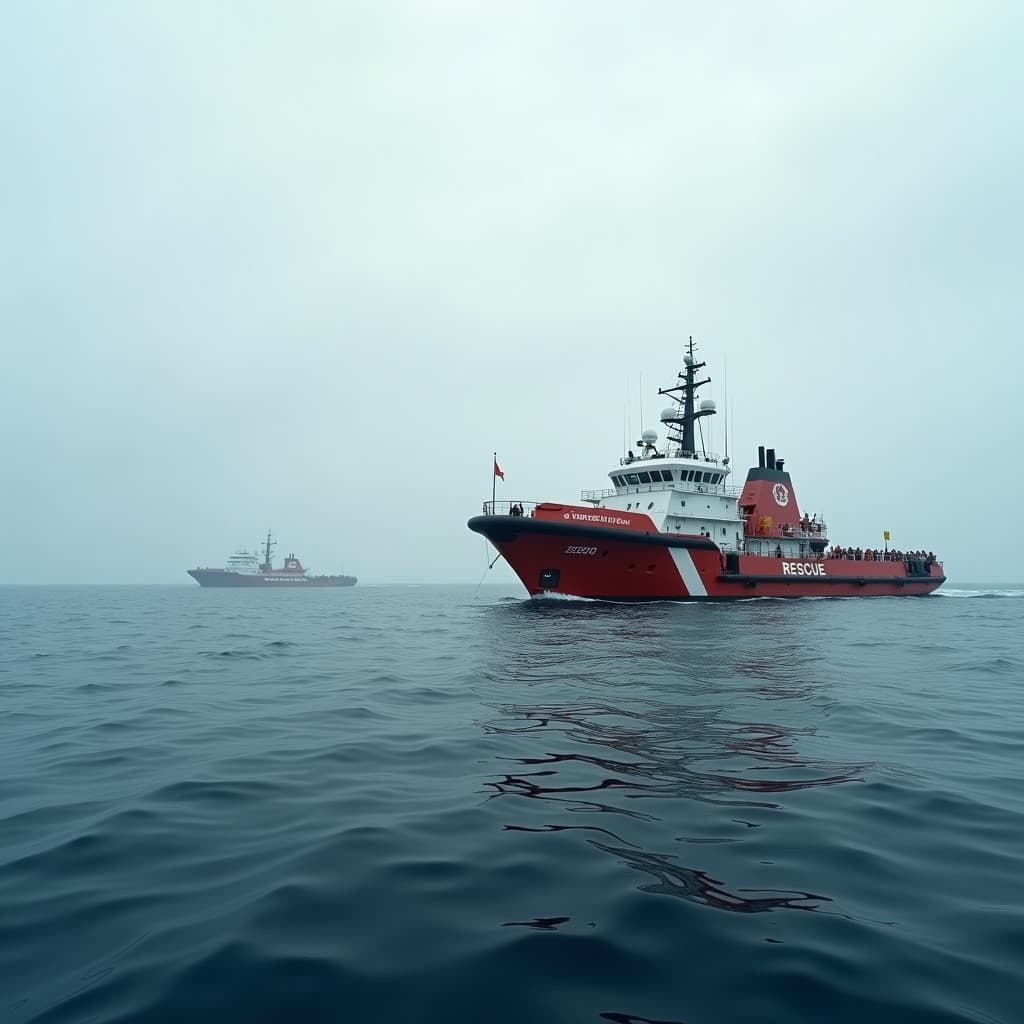
Italian coastguards recovered ten bodies after a migrant boat capsized in waters off Malta on Sunday, according to the Guardian. The vessel, which had departed from Libya carrying approximately 60 people, overturned in the central Mediterranean. About 48 survivors were rescued alive from the sea.
The incident marks another deadly crossing in a migration corridor that has claimed thousands of lives over the past decade. The Guardian's reporting did not specify the nationalities of the dead or survivors, nor the precise location of the capsizing relative to Italian territorial waters.
The recovery operation underscores the continuing role of Italian rescue services in the Mediterranean, where vessels in distress are often intercepted or assisted by Italian naval and coast guard units operating across the region.
Italy's maritime rescue infrastructure, stretched across a vast expanse of sea from Sicily to the Adriatic, continues to bear the primary burden of Mediterranean migration emergencies. The Abruzzo coast, though less trafficked than southern Sicily or Lampedusa, remains part of the broader Italian response network. When boats capsize or encounter distress in central Mediterranean waters, Italian rescue coordination centres in Rome and regional ports like Pescara receive alerts and dispatch vessels or coordinate with other Mediterranean states.
The Guardian reported that the boat departed from Libya, the primary launching point for migrants attempting the crossing to Europe. Libya's collapse into state fragmentation since 2011 has left coastal areas beyond effective government control, allowing smuggling networks to operate with minimal impediment. The journey from Libya to Malta or southern Italy typically takes 12 to 18 hours in calm conditions; rough seas, overcrowding, and unseaworthy vessels compound the danger.
Abruzzo's pharmaceutical and manufacturing sectors have historically attracted migrant workers, particularly in agriculture and construction. The region's ports—Pescara and smaller facilities along the Adriatic coast—are equipped to receive rescued persons, though they lack the specialized reception infrastructure of southern Italian ports. When large rescue operations occur, survivors are typically transferred to larger processing centres in Sicily, Calabria, or Campania.
The capsizing off Malta reflects a pattern documented by international maritime authorities: as European border enforcement tightens in the central Mediterranean, smugglers adapt routes and vessel types, often deploying smaller, less seaworthy craft. The Washington Post and other foreign outlets have reported that such adaptations increase fatality rates even as total crossing attempts may decline.
Italy's coast guard and navy operate under a mandate to rescue persons in distress regardless of their immigration status, a principle enshrined in international maritime law. However, the political cost of rescue operations has risen sharply across Europe. The New York Times and other outlets have documented tensions between Italy's government and EU partners over burden-sharing in Mediterranean rescue and asylum processing.
The incident occurs as Pope Leo XIV concludes a week-long visit to Spain focused on migration, according to France 24. The pontiff has made migration a central theme of his papacy, visiting migrants and calling for European nations to reconsider hardline policies. His presence in Spain this week—while Italian rescuers recover bodies from the sea—highlights the disconnect between Vatican rhetoric and the grinding reality of Mediterranean crossings.
Abruzzo's interior, marked by depopulation and economic fragility, contrasts sharply with the region's role in Italy's maritime border. The Apennine highlands have lost young people to emigration for decades; coastal areas, by contrast, absorb migrant arrivals and provide labour for agriculture and tourism. This geographic and economic tension—emptying mountains, pressured coasts—shapes how the region experiences Italy's role in European migration politics.
The Guardian did not report whether any survivors from Sunday's capsizing were transferred to Italian ports. Italian coast guard statements typically specify the port of disembarkation; the absence of such detail in the Guardian's dispatch suggests the rescue may have been coordinated with Maltese authorities or other Mediterranean states. Malta, despite its small size, maintains a significant coast guard and has become a secondary disembarkation point for Mediterranean rescues.
International maritime law requires that rescued persons be brought to a place of safety without delay. For vessels capsizing between Malta and Italy, this typically means the nearest port capable of receiving survivors. The Guardian's report did not specify whether survivors faced onward transfer to processing centres or whether medical care was required for those rescued.
The death toll—ten confirmed dead from a vessel carrying 60—reflects a fatality rate of roughly 17 percent. International maritime safety data compiled by the UN and reported in foreign press outlets suggest that Mediterranean crossings in 2026 have maintained fatality rates between 1 and 3 percent of total crossers, though individual incidents vary widely. A capsizing with high fatality rates typically indicates either extreme overcrowding, vessel failure, or both.
Abruzzo's pharmaceutical industry, concentrated around L'Aquila and the surrounding valleys, has historically relied on migrant labour for lower-wage manufacturing and agricultural work. The region's 2009 earthquake and subsequent reconstruction drew international attention to Italian disaster recovery; migration and labour trafficking have received far less scrutiny, though they remain embedded in the regional economy.
The incident adds to a mounting toll: the Guardian and other outlets have reported that Mediterranean crossings in the first half of 2026 have resulted in hundreds of confirmed deaths, with many more presumed lost and unrecorded. Italy's rescue services, already strained by budget constraints and political pressure, continue to operate as the de facto first responder for a crisis that European states have failed to resolve through coordinated policy.