
SICILIA
Ten dead as migrant boat capsizes off Malta; Sicily braces for summer surge
Italian rescuers recover bodies as Mediterranean crossing season peaks; 990 deaths recorded this year
Concetta Vassallo1,247 wordsEdition №8Monday, 8 June 2026 — Edition № 8
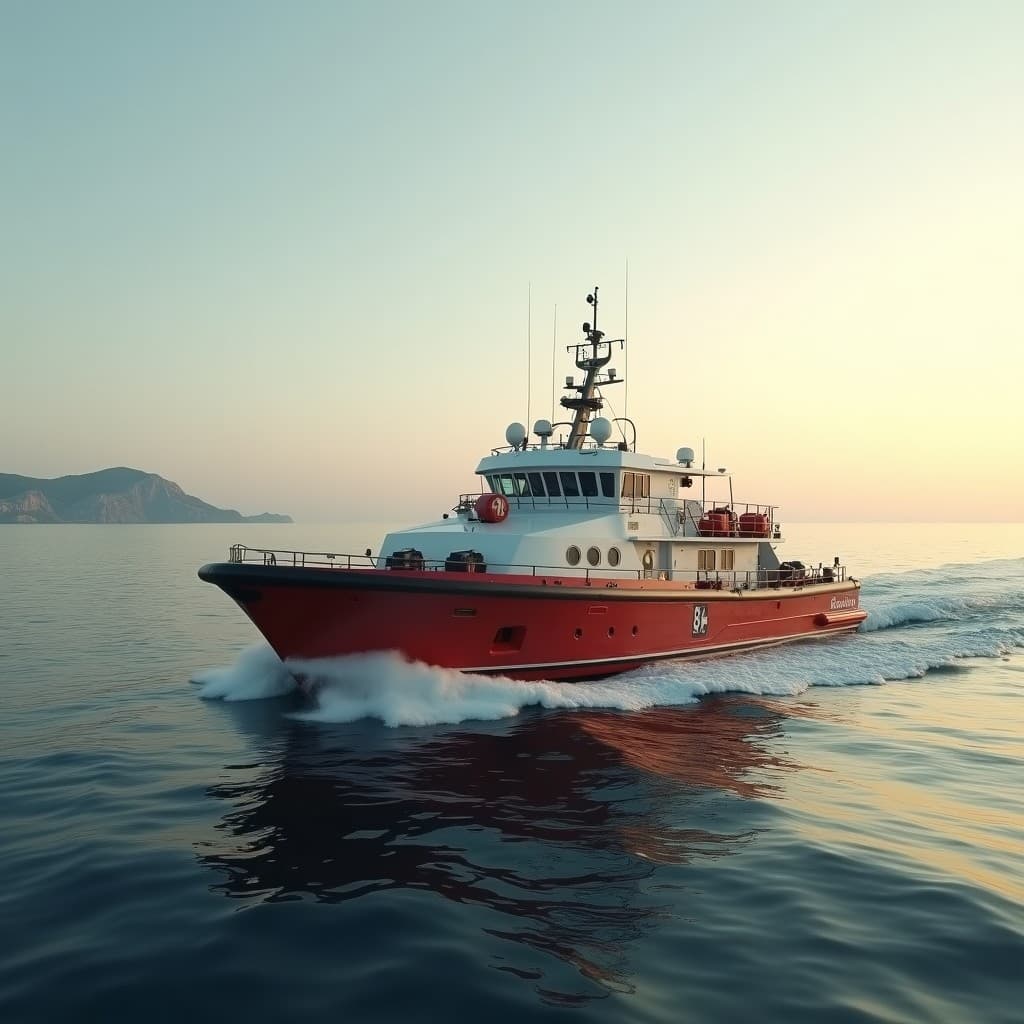
Italian rescuers recovered ten bodies on Sunday after a migrant boat capsized in waters off Malta, according to a coastguard statement cited by the Guardian. The vessel, which had departed from Libya carrying approximately 60 people, overturned in the central Mediterranean. About 48 people were rescued alive, the Guardian reported, though the full circumstances of the capsize remain unclear.
The deaths come as the Mediterranean crossing season enters its most dangerous months. Al Jazeera reported that at least 990 refugees and migrants have died this year while attempting the perilous journey across the Mediterranean—a toll that reflects the grinding human cost of Europe's migration frontier, which runs directly through Sicilian waters.
For Sicily, the tragedy underscores a recurring crisis. The island sits at the intersection of North African departure points and European asylum policy, making it the first landfall for thousands of people fleeing conflict, poverty and climate stress. The waters between Libya and Malta—and between Malta and Sicily—have become a graveyard.
The capsize occurred in international waters south of Malta, in a zone where Italian and Maltese rescue coordination overlaps. The Guardian's account did not specify whether the boat had been bound for Sicily or Malta, though the Italian coastguard's involvement suggests the vessel was within Italy's search-and-rescue responsibility zone. Rescue operations in the central Mediterranean are often coordinated between multiple national authorities, a system that has faced criticism from humanitarian organizations for delays and jurisdictional confusion.
The 990 deaths recorded so far this year, according to Al Jazeera, represent a continuation of the deadliest migration routes in the world. The Mediterranean crossing has claimed more lives annually than any other migration corridor, with the central route—from Libya and Tunisia toward Sicily and Malta—accounting for a disproportionate share of fatalities. The deaths occur despite increased European naval presence and surveillance; the danger lies not in detection but in the unseaworthiness of vessels, overcrowding, and the desperation of people willing to board them.
For Sicily, the summer months bring a predictable surge in arrivals. The island's ports—Palermo, Messina, Catania, and the smaller harbours of Lampedusa and Linosa—serve as processing points for thousands of people each year. The infrastructure is chronically strained. Migrant reception centres operate at or beyond capacity; local authorities struggle with medical care, documentation, and onward movement to the mainland. The island's role as Europe's southern frontier has become permanent and institutionalized, yet remains politically contentious.
The foreign press has long framed Sicily's migration crisis as a symptom of European policy failure. The Guardian, Reuters, and other outlets have repeatedly documented how EU border rules, asylum procedures, and burden-sharing agreements place disproportionate weight on southern member states. Italy, and Sicily in particular, absorbs the human consequences of policies made in Brussels and Berlin. The deaths at sea are the most visible tragedy; the less visible ones occur in overcrowded centres, in labour exploitation of undocumented migrants, and in the psychological toll on rescue workers and local communities.
The timing of this capsize—early June, as Mediterranean weather improves and crossings accelerate—suggests the season is only beginning. Weather conditions in the next months will determine the scale of departures from North Africa. Calm seas encourage more people to attempt the crossing; rough seas increase the risk of disaster for those who do. The calculus is brutal: people fleeing worse circumstances at home weigh the danger of the sea against the certainty of conditions they are fleeing.
Sicily's regional government and civil society organizations have called repeatedly for EU support in managing arrivals and integrating migrants into the local economy. Some migrants remain in Sicily; others move north to mainland Italy or elsewhere in Europe. The island's agriculture, tourism, and service sectors depend significantly on migrant labour, yet the legal status and working conditions of many migrants remain precarious. The deaths at sea are the most dramatic manifestation of this precarity, but they are not the only one.
The Guardian's reporting on the capsize included context about the broader migration season. The outlet noted that departures from Libya and Tunisia typically increase as summer approaches, driven by seasonal factors—better weather, the agricultural off-season in North Africa, and the desperation of people whose circumstances have deteriorated over winter. The crossings are not random; they follow patterns shaped by climate, economics, and conflict.
For Palermo and other Sicilian cities, the arrival of migrants is now a permanent feature of urban life. Rescue operations are coordinated from the Maritime Rescue Coordination Centre in Rome, but the human arrival points are Sicilian ports. The social integration of migrants, their housing, employment, and access to services, falls to local authorities and civil society. The burden is not evenly distributed across Italy; the South bears the weight.
The capsize also reflects the economics of migrant smuggling. The vessels used are typically old, overcrowded fishing boats or rubber dinghies, chosen because they are cheap and disposable. Smugglers have little incentive to invest in seaworthy vessels; their profit margins depend on volume and speed. The people aboard have little choice in the vessel they board; they pay what they can afford to smugglers who control the departure points. The result is a system optimized for profit, not safety.
International humanitarian organizations have documented the role of conflict and climate stress in driving departures from North Africa. The Guardian and other outlets have reported on drought in the Sahel, instability in Libya, and economic collapse in parts of North Africa. These are the push factors that send people toward the sea. European policy responses—tighter borders, deportation agreements with North African governments, naval interdiction—address the symptom, not the cause.
For Sicily, the question of what comes next is perpetual. The island cannot absorb indefinitely the arrivals that the Mediterranean geography and European policy direct toward it. Yet the alternative—closing ports, refusing rescue, pushing boats back—conflicts with international maritime law and the moral frameworks that have guided European civilization. The tension between these poles plays out daily in Sicilian waters and ports.
The deaths recorded this year—990 so far, according to Al Jazeera—are not anomalies. They are the predictable outcome of a system in which people fleeing desperation are forced to cross one of the world's deadliest maritime routes with minimal safety provisions. Sicily, as the island closest to North Africa and the first European landfall, bears witness to this system's human cost. The capsize on Sunday is one incident among many; it is also a reminder that the crisis is not seasonal, not temporary, and not solved.