
UMBRIA
Ten bodies recovered as migrant boat capsizes off Malta
Inland Italy's agricultural heartland faces reckoning over migrant labour as Mediterranean deaths mount
Niccolò Mariani1,547 wordsEdition №8Monday, 8 June 2026 — Edition № 8
Italian coastguard personnel recovered ten bodies on Sunday after a migrant boat overturned in waters near Malta, according to the Guardian. A fishing vessel rescued approximately 48 people from the capsized craft, which had reportedly departed from Libya with around 60 passengers aboard. The incident marks the latest Mediterranean crossing tragedy as migration pressures on southern Europe persist.
The deaths underscore a pattern that extends far beyond the sea. In recent weeks, Italian authorities have arrested two Pakistani nationals in connection with the burning deaths of four migrant farmworkers in a minivan, according to the Hindustan Times. Among those killed were three Afghans and one Pakistani, all employed in agriculture. The cases are linked: both involve migrants working in Italy's labour-dependent sectors, and both expose the vulnerability of workers who arrive through irregular routes.
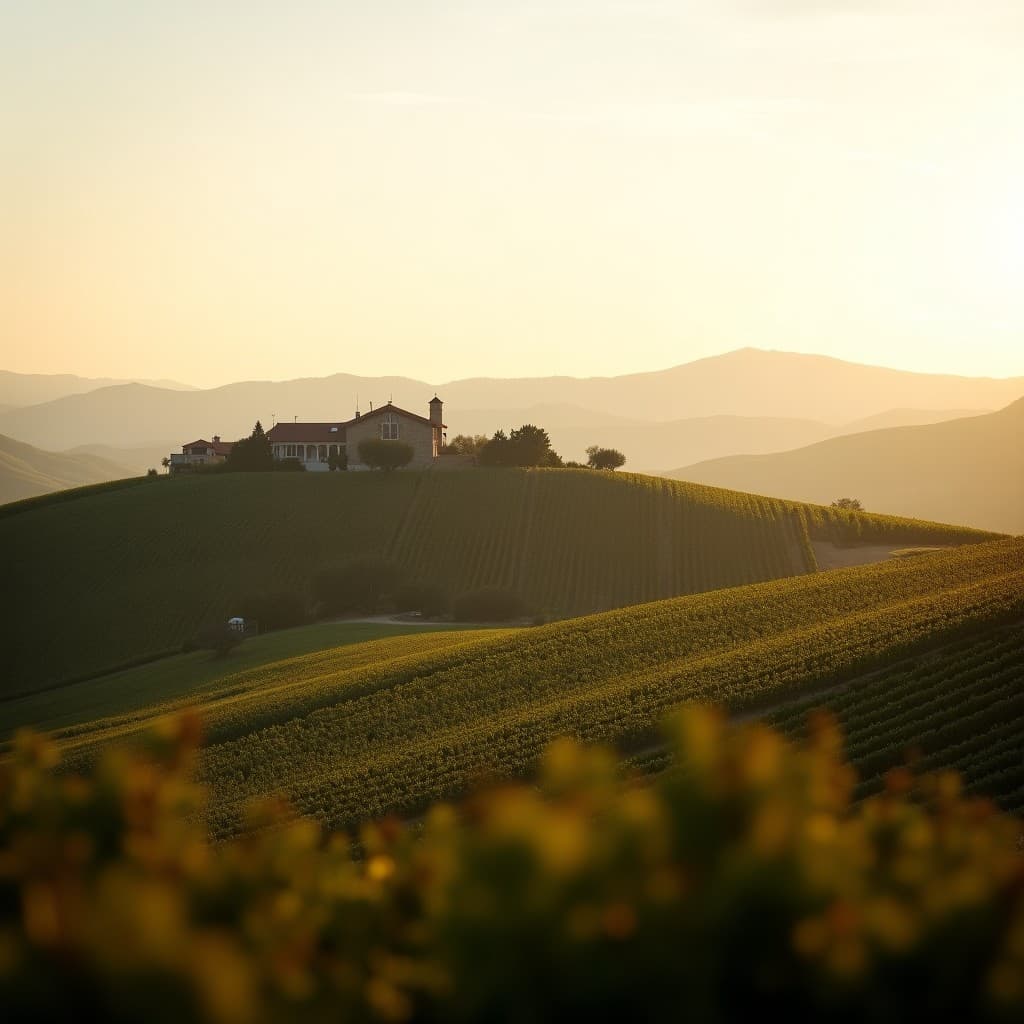
For Umbria, a region whose agricultural economy relies on seasonal labour, the pattern carries particular weight. The deaths of farmworkers in other parts of Italy—and now the capsizing off Malta—illustrate the human cost of supply chains that depend on migrants willing to work in conditions that domestic workers increasingly reject. The regional consequence is not abstract: Umbrian farms, like those across the Italian interior, depend on a steady flow of workers from North Africa, South Asia and Eastern Europe.
The Guardian's reporting on the Malta capsizing places the incident within a broader Mediterranean crisis. The vessel left Libya with approximately 60 people; the recovery of ten bodies and rescue of 48 survivors suggests that roughly two people remain unaccounted for, though the exact toll may shift as search operations continue. The boat's departure point—Libya—reflects the established migration corridor from North Africa across the Mediterranean toward Italy and Malta, two EU frontiers that have become the primary entry points for people fleeing conflict, poverty and climate stress in sub-Saharan Africa and the Middle East.
What distinguishes this week's deaths is their connection to a parallel crisis within Italy itself. The Hindustan Times reported that two Pakistani nationals were arrested after four migrant farmworkers were found burned alive in a minivan. The victims—three Afghan nationals and one Pakistani—were employed in agriculture, a sector that has become synonymous with labour trafficking and exploitation across southern Italy. The arrests suggest deliberate harm rather than accident, pointing to a criminal network that preys on migrants already rendered vulnerable by irregular status and economic desperation.
The two incidents—the maritime disaster and the farmworker deaths—are not separate stories. They form a continuum. Migrants who survive the Mediterranean crossing often enter Italy through irregular channels and lack legal protection. They are then funnelled into agricultural work, construction, domestic service and other low-wage sectors where employers can exploit their status. When workers attempt to organize, demand wages, or seek better conditions, they face retaliation. The deaths in the minivan suggest that retaliation can be lethal.
Umbria's agricultural sector mirrors this pattern. The region produces wine, olive oil, cereals, and increasingly, vegetables for export across Europe. Much of this production depends on seasonal labour—workers brought in for harvest, pruning and planting. Local farmers have long relied on migrant workers, particularly from Eastern Europe and North Africa. The economics are straightforward: migrant workers accept lower wages than Italian citizens, work longer hours, and rarely file complaints. For farmers operating on thin margins in a competitive market, this arrangement is rational. For workers, it is often the only available option.
The regional consequence of the Malta capsizing and the farmworker deaths is a deepening moral and economic reckoning. If Umbrian agriculture is to continue relying on migrant labour—and the demographic reality suggests it will—then the conditions under which that labour is supplied must change. The current system, in which workers arrive through irregular routes and enter exploitative employment, produces both the deaths at sea and the deaths in the minivan.
Foreign coverage of Italy's migration crisis has intensified in recent months. The Washington Post, the Guardian, and other international outlets have reported extensively on the Mediterranean crossing toll, on labour trafficking in the agricultural south, and on the political pressures these issues create within Italy and across the EU. What is less often reported is how these crises ripple through the inland regions—the small towns and agricultural valleys where migrants actually work.
Umbria's hill towns—Perugia, Assisi, Spoleto, Todi—are known to the world as heritage sites, pilgrimage destinations, and festival venues. The region markets itself as a place of art, faith, and slow living. But the economic reality is more complex. Agriculture remains a significant employer, and that employment increasingly depends on migrant workers. The contrast between Umbria's image as a cultural sanctuary and its role in a global labour supply chain is rarely acknowledged in the foreign press, yet it shapes daily life in the region's smaller towns.
The Hindustan Times report on the arrested Pakistani nationals suggests that criminal networks are now operating openly within Italy's agricultural sector. The burning of four workers in a minivan is not an isolated incident; it is part of a documented pattern. Earlier reporting by international outlets has documented similar cases in Basilicata, Calabria, and other southern regions. What distinguishes this case is its brutality and the apparent deliberateness of the harm. The arrests indicate that Italian authorities are pursuing prosecutions, but the underlying conditions that enable such exploitation remain.
The Guardian's coverage of the Malta capsizing places the incident within the context of EU migration policy. The newspaper notes that the vessel departed from Libya, highlighting the role of Libyan smuggling networks in organizing Mediterranean crossings. It also notes the rescue by a fishing vessel, underscoring the role of civilian actors in migration emergencies. What the Guardian does not extensively explore is the relationship between maritime deaths and labour exploitation on land. The two are connected: migrants who survive the crossing are often those most desperate and most willing to accept exploitative work.
For Umbria specifically, the question is whether the region's agricultural economy can be restructured to reduce dependence on exploited migrant labour. Some possibilities exist: mechanization, where feasible; higher wages to attract Italian workers; certification schemes that guarantee fair labour practices; cooperative models that give workers greater bargaining power. But all of these require investment and carry costs that many small and medium-sized farms cannot absorb. The result is a structural trap: farms need workers, workers need jobs, but the conditions under which they meet are often exploitative.
The regional lens also reveals a generational dimension. Young Umbrians, like young Italians generally, are increasingly unwilling to work in agriculture. They migrate to cities, to northern Europe, or abroad in search of better wages and conditions. This exodus has been extensively documented in international features on rural Italy's depopulation. The result is a labour vacuum that is filled by migrants from poorer countries. The system is self-reinforcing: as Italian workers leave, farms become more dependent on migrants; as farms become more dependent on migrants, wages and conditions deteriorate further, making the work even less attractive to Italian workers.
The deaths reported this week—ten in the Mediterranean, four in a minivan—are the visible casualties of this system. But the system itself is the story. It is a system in which geography, economics, and policy converge to create conditions where exploitation and death become routine. The Mediterranean crossing is dangerous because smugglers overload boats and take shortcuts. Farmworkers die because employers and traffickers view them as disposable. Both outcomes are predictable, and both are preventable—but only if the underlying system changes.
What happens next remains unclear. The Italian government has announced various initiatives to combat labour trafficking and improve migrant worker protections. The EU has tightened migration rules, though these rules often increase irregular migration rather than reducing it. International organizations have called for stronger enforcement and better coordination between countries. But structural change—the kind that would allow Umbrian agriculture to function without exploiting migrant labour—requires political will and investment that has not yet materialized.
The Malta capsizing and the farmworker deaths will likely fade from international headlines within days. The Guardian and other outlets will move on to the next crisis. But in Umbria, in the small agricultural towns where migrants work, the consequences will persist. The question for the region is whether these deaths will prompt genuine change or whether they will simply be absorbed into the ongoing tragedy of migration and labour exploitation that characterizes contemporary Italy.