
LAZIO
Ten Dead as Migrant Boat Capsizes Off Malta
Italian rescuers recover bodies after vessel from Libya overturns; about 48 survivors pulled from sea
Davide Ruspoli1,247 wordsEdition №8Monday, 8 June 2026 — Edition № 8
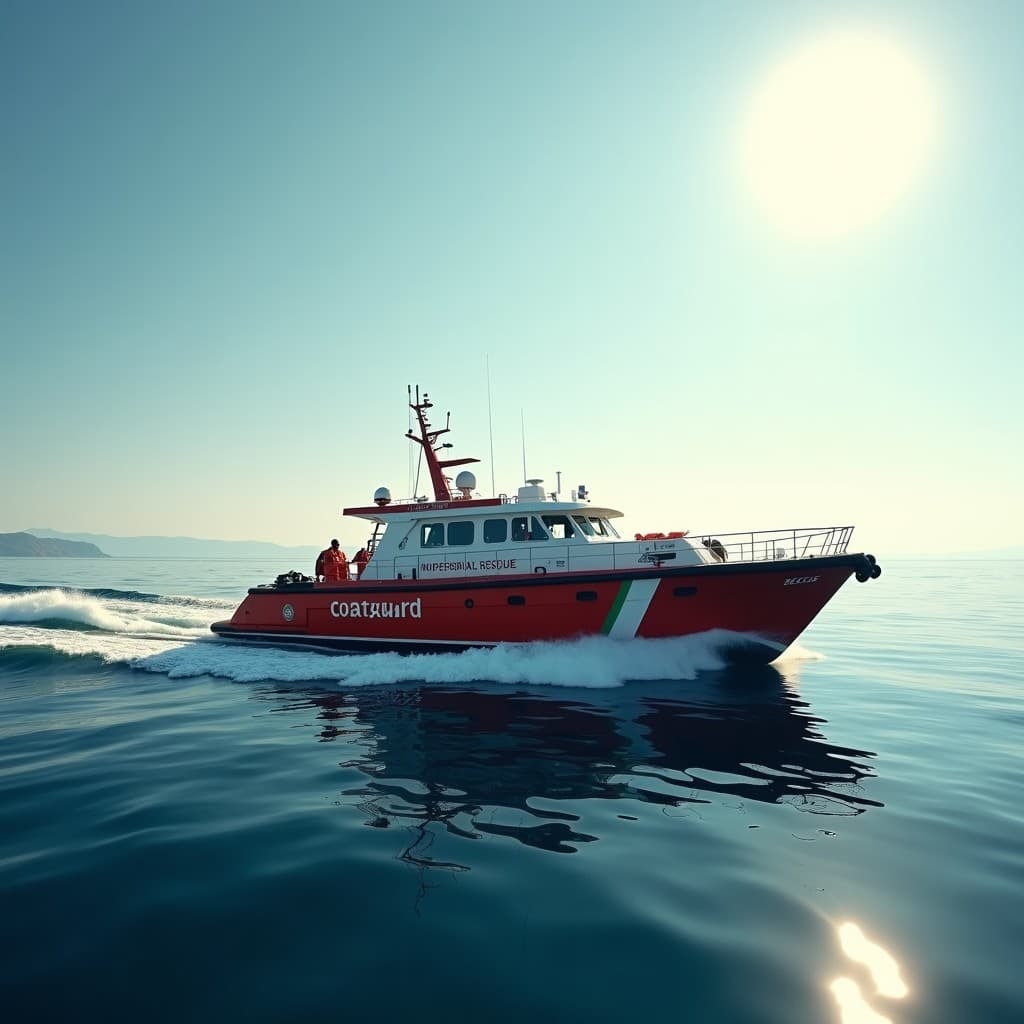
Italian rescuers recovered ten bodies on Sunday after a migrant boat capsized in waters off Malta, according to a coastguard statement reported by the Guardian. The vessel had departed from Libya carrying approximately 60 people when it overturned, leaving about 48 survivors to be pulled from the sea.
The incident marks the latest loss of life in the central Mediterranean, a route that has claimed thousands of migrants attempting to reach Europe. The timing underscores the ongoing strain on Italy's maritime rescue operations as summer months typically see a surge in crossing attempts.
For Rome and the wider Italian state, the recovery operation reflects the persistent burden placed on Italian naval and coastguard resources, which operate under EU coordination but shoulder a disproportionate share of rescues in this corridor. The incident occurs as Pope Leo XIV continues his tour of Europe focused on migration, having visited Spain this weekend to meet migrants who crossed dangerous Atlantic waters.
The capsizing follows a pattern of maritime disasters in the central Mediterranean that has defined European migration policy for more than a decade. According to the Guardian's reporting, the boat left Libya—a country where smuggling networks operate with minimal state oversight—and encountered trouble before reaching Malta's territorial waters, triggering Italian rescue protocols.
Italy's coastguard and navy maintain a permanent presence in these waters, coordinated through the Maritime Rescue Coordination Centre in Rome. The recovery of bodies and rescue of survivors represents routine operations for Italian maritime forces, yet each incident renews political pressure on Rome to manage migration flows that foreign governments view as an Italian responsibility.
The central Mediterranean route has been the deadliest crossing globally for migrants in recent years. The International Organization for Migration, cited regularly in foreign press coverage, has documented thousands of deaths along this corridor. The Guardian and other international outlets have reported extensively on the gap between rescue capacity and the volume of crossing attempts, particularly during warmer months when sea conditions improve.
Rome's position is institutionally complex. Italy is bound by international maritime law to rescue people in distress, yet faces criticism from some EU member states for what they characterize as a pull factor—the certainty that rescue will occur. Simultaneously, Italy argues that burden-sharing on migration should be Europe-wide rather than concentrated on southern frontline states.
The incident also intersects with Vatican diplomacy. Pope Leo XIV, who arrived in Spain on Saturday for a week-long visit, has made migration a central theme of his early papacy. The Washington Post reported that the pontiff is drawing large crowds in Madrid and appears to be making what the outlet called a star turn, with his focus on migrants who crossed dangerous Atlantic waters. The Pope's visibility on migration contrasts with the administrative reality facing Italian authorities managing Mediterranean rescues.
For Lazio and Rome specifically, the coastguard operations are coordinated from the capital's maritime authority, though rescue vessels operate from ports across southern Italy. The recovery of bodies and processing of survivors involves Italian hospitals, immigration authorities, and judicial systems—infrastructure that Rome has struggled to adequately resource as crossing volumes have fluctuated.
Foreign diplomatic correspondents in Rome have noted that Italian governments across the political spectrum have sought to frame migration as a European challenge requiring collective response, not an Italian problem. The New York Times and other outlets have reported on Italy's push for EU-wide defense and security cooperation; migration management sits alongside these broader arguments about burden-sharing.
The Guardian's coverage of Sunday's incident reflects a wider pattern in international reporting: individual tragedies are documented, but the systemic factors—smuggling networks in Libya, the absence of legal migration pathways, the economics of human trafficking—receive less sustained attention. Italian officials, when quoted in foreign press, typically emphasize the scale of rescue operations and the resource constraints they face.
The timing of this incident, occurring as Pope Leo XIV visits Spain with migration as his explicit focus, creates a narrative tension in international coverage. The pontiff's message about the dignity of migrants and the responsibility of wealthy nations contrasts with the immediate, material challenge facing Italian rescue services: recovering bodies and processing survivors with limited resources.
For Rome's standing in European capitals, each maritime incident reinforces arguments that Italy requires either greater EU financial support for border management or a more equitable distribution of asylum seekers across member states. Neither outcome has materialized despite years of Italian advocacy. The Guardian and other outlets have reported on the political stalemate within the EU over migration burden-sharing.
The incident also reflects broader geopolitical factors. Libya's state weakness means that smuggling operations continue with impunity; the absence of a functioning Libyan coast guard means that departures occur without interception. Italian officials have periodically called for international intervention in Libya to address root causes, but such proposals have gained limited traction in foreign capitals.
Sunday's recovery operation, while routine in operational terms, represents a moment when the abstraction of migration policy becomes concrete: ten bodies recovered, 48 people rescued, families notified, investigations launched. The incident will likely receive limited sustained coverage in international media, but it will contribute to the broader narrative about Mediterranean migration that shapes European political discourse.