
ABRUZZO
Ten Dead Off Malta as Italy's Migrant System Strains Under Summer Pressure
Mediterranean toll mounts while Abruzzo's agricultural sector faces reckoning on migrant worker safety
Marco Di Sante1,289 wordsEdition №9Tuesday, 9 June 2026 — Edition № 9
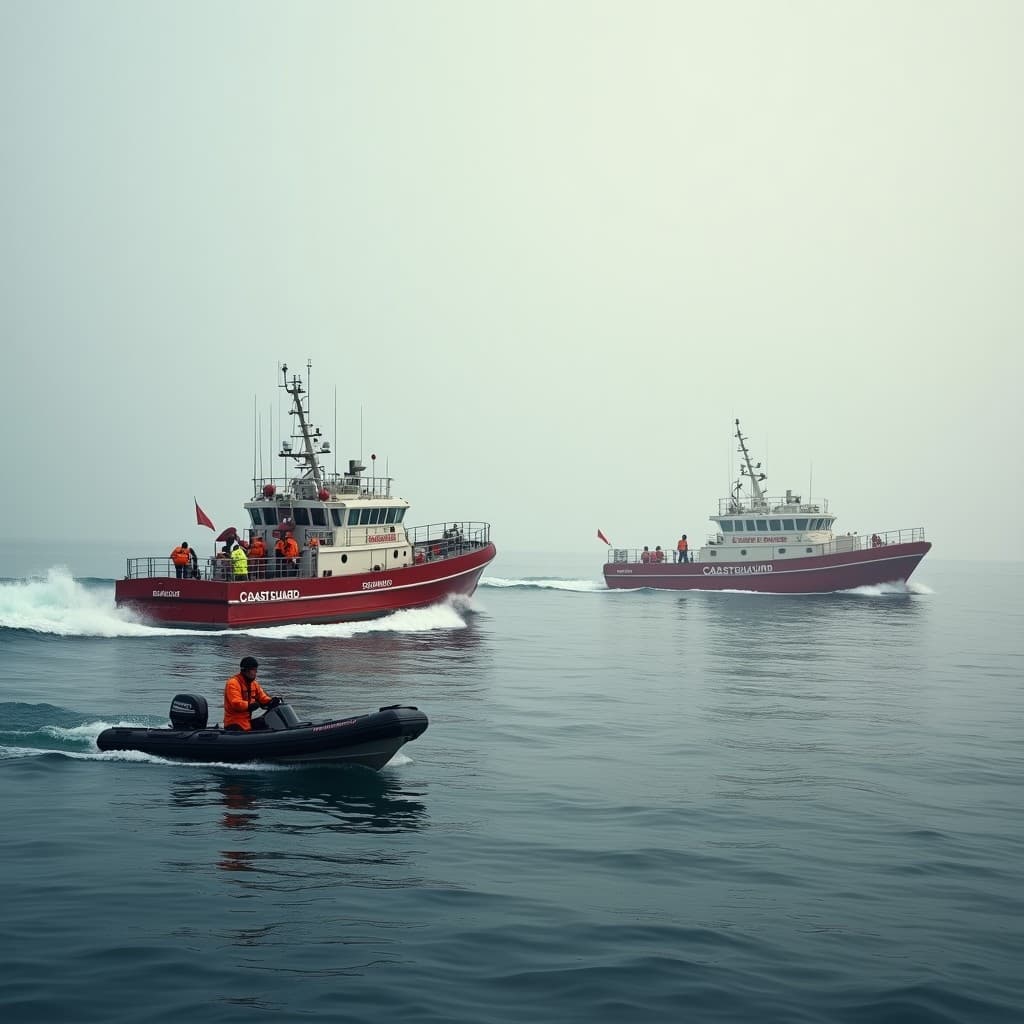
Italian rescuers recovered ten bodies after a migrant boat carrying approximately 60 people capsized in waters off Malta on Sunday, according to the BBC and the Guardian. About 48 people were rescued alive, but the incident marks another chapter in the Mediterranean's toll on those attempting to reach Europe. The vessel had departed from Libya, and the capsizing occurred in international waters near Malta, triggering a coordinated rescue response from Italian and Maltese authorities.
The timing of the disaster coincides with the summer migration season, when sea crossings intensify and the Mediterranean becomes increasingly congested with vessels carrying migrants and asylum seekers. The Guardian reported that the boat was carrying roughly 60 passengers when it overturned, suggesting it was significantly overcrowded—a common pattern in migrant trafficking operations where profit margins depend on maximising passenger numbers regardless of safety.
For Abruzzo, the maritime disaster carries a particular resonance. The region's agricultural sector, concentrated in the coastal plains and inland valleys, has become increasingly dependent on migrant labour over the past two decades. The same routes that bring migrants across the Mediterranean—often through exploitation and trafficking networks—feed into labour systems on land that have proven equally dangerous and unregulated.
The recovery of ten bodies from the capsized boat near Malta represents the latest in a long sequence of Mediterranean tragedies. The BBC reported that the vessel left Libya carrying about 60 people, suggesting it was overcrowded and potentially unseaworthy. The capsizing occurred in waters that are regularly patrolled by Italian and Maltese rescue services, yet the death toll indicates that the margin between rescue and disaster remains perilously thin.
The Guardian's reporting emphasised the scale of the rescue operation: Italian coastguard vessels and commercial shipping were mobilised to search for survivors and recover bodies. The coordination between Italian and Maltese authorities reflects the shared burden of Mediterranean rescue, though the political debate over responsibility for migrant arrivals has intensified in recent years.
Abruzzo's connection to this tragedy is not merely geographical. The region has become a significant destination for migrant workers, particularly in agriculture. The coastal plains of Teramo and Pescara provinces, and the inland agricultural areas of L'Aquila and Chieti, rely heavily on seasonal and permanent migrant labour for harvesting, processing, and packing operations.
The conditions facing migrant workers in Abruzzo's agricultural sector have been the subject of increasing international scrutiny. In early June, the Hindustan Times reported that four migrant farmworkers—three Afghans and one Pakistani—were found burned alive in a minivan in Basilicata, a region south of Abruzzo with similar agricultural labour patterns. Italian police arrested two Pakistani nationals in connection with the deaths, which investigators attributed to a labour dispute.
While that incident occurred in Basilicata, the labour dynamics that produced it are replicated across southern and central Italy, including Abruzzo. The foreign press has documented how migrant workers in Italian agriculture are often recruited through trafficking networks, transported in unsafe conditions, housed in substandard accommodation, paid below minimum wage, and subjected to physical and psychological coercion.
The connection between maritime trafficking and agricultural labour exploitation is not accidental. The same criminal networks that operate smuggling routes across the Mediterranean often control labour recruitment and placement in destination countries. Migrants who survive the sea crossing frequently find themselves in debt bondage, working to repay the cost of their passage while earning wages insufficient to escape their situation.
Abruzzo's pharmaceutical and manufacturing sectors have generally maintained higher labour standards than agriculture, but the region's agricultural heartland—particularly in the Peligna Valley and surrounding areas—has become increasingly reliant on migrant labour as Italian workers have moved to cities or emigrated. This structural dependence has created conditions in which exploitation can flourish.
The international press has begun to connect these two phenomena: maritime migration and labour exploitation. Reuters and the Guardian have reported on investigations into trafficking networks that operate across the Mediterranean and into European labour markets. The implication is clear: the ten people who died near Malta were not simply migrants attempting to reach Europe; they were part of a system that would have funnelled survivors into precarious labour situations had they reached shore.
For Abruzzo, the challenge is twofold. First, the region must grapple with its own complicity in labour exploitation, even as it benefits economically from migrant workers' contributions. Second, the region must confront the reality that its agricultural sector cannot sustain itself without migrant labour, yet the conditions of that labour remain dangerous and unregulated.
The Italian government has announced various initiatives to combat labour trafficking and exploitation, but the foreign press has noted that enforcement remains inconsistent and that penalties for employers are often insufficient to deter violations. The Hindustan Times report on the Basilicata deaths noted that the case had exposed systemic failures in labour protection, but it remained unclear whether the incident would prompt meaningful policy changes.
The summer months typically see an increase in both maritime crossings and agricultural labour demand. As migrant workers arrive in Abruzzo to participate in the harvest season, the region faces a test of its commitment to their safety and dignity. The ten bodies recovered near Malta represent a failure of the maritime system to protect migrants; the question for Abruzzo is whether the agricultural system will prove any more protective.
International organisations, including the International Labour Organisation and various human rights groups, have called for stronger regulation of agricultural labour in Italy. The foreign press has documented cases in which migrant workers have organised collectively to demand better conditions, but such efforts face significant obstacles, including fear of deportation and language barriers.
The timing of the Malta boat disaster—occurring as summer migration season accelerates—suggests that the coming months will bring further tragedies unless the underlying conditions that drive people to risk dangerous sea crossings are addressed. For Abruzzo, this means confronting not only the humanitarian crisis at sea, but also the labour exploitation that awaits survivors who reach land.