
MOLISE
Molise's minority villages embody the Mediterranean border story Europe keeps trying to draw
As scholars trace shared food and migration across the Mediterranean, Molise's Albanian and Croatian enclaves show how modern borders obscure centuries of cultural exchange.
Antonio Petrella562 wordsEdition №28Saturday, 27 June 2026 — Edition № 28
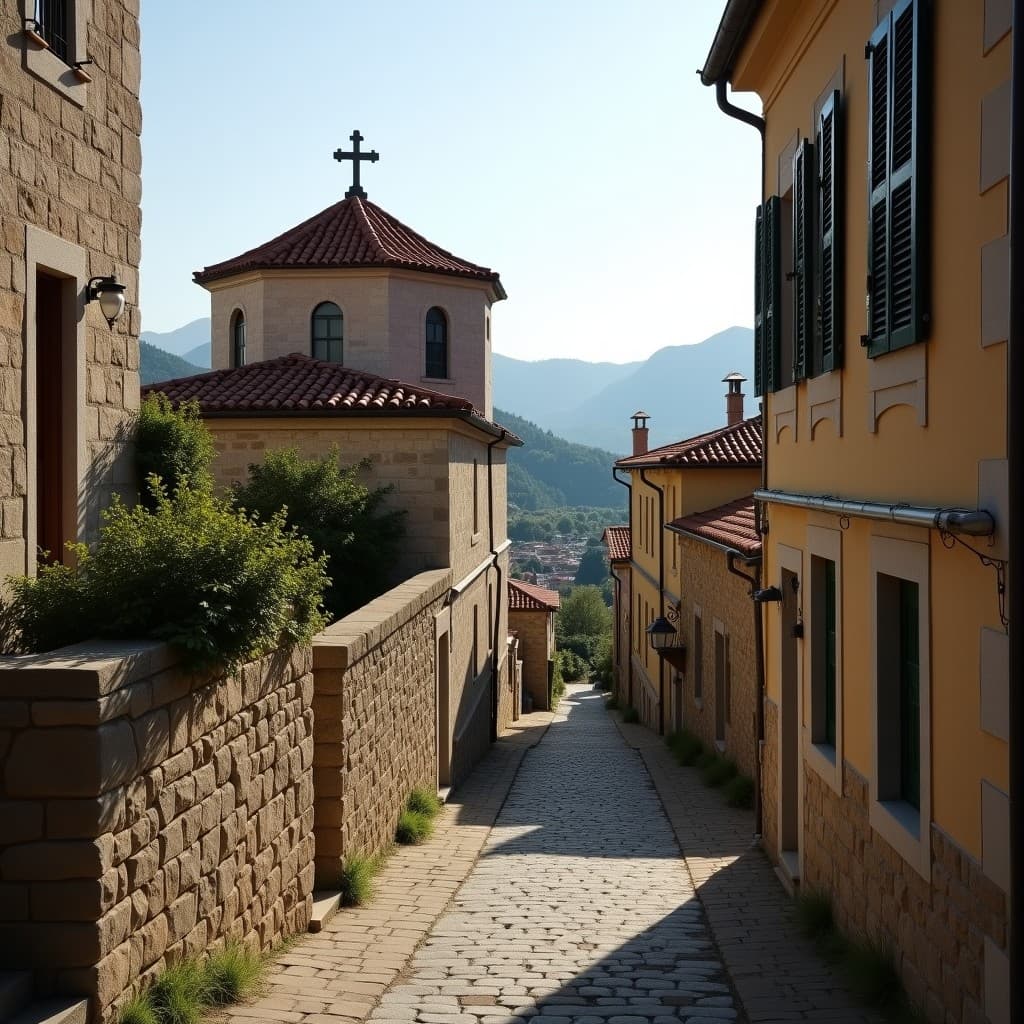
The Guardian published a meditation this week on the absurdity of modern borders, tracing a single Mediterranean chickpea snack across the sea to show how migration and cultural exchange have always been the norm between European and African coastal nations. The piece, by Federico De Blasi, argues that mapping the world by continents and dividing it into rigid geopolitical blocks obscures the complex reality behind each frontier. For Molise, a region home to several villages of Albanian and Croatian descent—Ururi, Montemitro, San Felice del Molino, and others—the argument is not theoretical but lived.
These villages, settled by Arbereshë (Albanian Orthodox Christians) and Slavic communities centuries ago, persist as linguistic and cultural enclaves within Molise's Italian-speaking interior. Their languages, liturgies, and foodways reflect the Mediterranean as it existed before nation-states: a space of fluid movement, intermarriage, and cultural borrowing. Yet modern Italy treats them as curiosities, heritage sites to be preserved in amber rather than living proof that the borders the world now takes for granted are recent inventions imposed atop centuries of movement and mixing.
The Guardian's argument about chickpea snacks and the Mediterranean's real history arrives as Molise's minority villages face the same pressures that empty the broader region: youth emigration, economic stagnation, and the difficulty of sustaining minority cultures in a state that has no strong interest in them. The irony is sharp: precisely when foreign scholarship is rediscovering the Mediterranean as a zone of exchange rather than division, Molise's living witnesses to that history are disappearing.
De Blasi's piece rejects the continental cartography that separates Europe from Africa and treats the Mediterranean as a boundary rather than a connector. He traces the movement of a single dish—chickpea snacks—across the sea to show how migration, trade, and cultural exchange have always been the norm. This is not new history; scholars have documented it for decades. But the foreign press rarely frames Italy through this lens. Instead, it treats the Mediterranean as a migration crisis, a border to be managed, a frontier where Europe must defend itself against the Global South.
Molise's Albanian villages tell a different story. Ururi, for instance, has maintained its Arbereshë language and Orthodox liturgy for roughly six centuries, since Albanian refugees fled Ottoman expansion. Montemitro and San Felice del Molino preserve similar enclaves. These are not museums; they are communities where people still speak Albanian at home, where the Orthodox Church still conducts services in the old rite, where foodways and naming practices reflect a Mediterranean world that predates the nation-state system.
Yet Molise's minority villages are also emptying. The young leave for Naples, Rome, Milan, or abroad. Language transmission weakens with each generation. The villages become destinations for heritage tourism—a weekend visit to see 'authentic' Arbereshë culture—rather than living centres of Mediterranean exchange. The irony is acute: just as the Guardian and other foreign outlets are recovering the Mediterranean as a zone of fluid cultural movement, Molise's concrete evidence of that reality is dissolving.
The region's economic stagnation compounds the problem. Without jobs, without investment, without a reason for young people to stay, the villages cannot sustain themselves. The Italian state offers EU cohesion funding for heritage preservation, but not for the economic revival that might actually keep communities alive. So Molise's Albanian and Croatian villages persist as historical exhibits, their languages and cultures documented by researchers and journalists, while the people who carry those traditions move elsewhere.
De Blasi's essay is a reminder that the borders the world now treats as natural are recent and contingent. The Mediterranean was never a dividing line; it was a highway. Molise's minority villages are proof. But proof that no one is using to reshape the geopolitical order. Instead, they remain curiosities—a footnote in the foreign press's occasional coverage of Italy's interior, a heritage site in a region that the world has already decided is too poor and too empty to matter.