
MOLISE
Calabria's Burned Workers Echo Molise's Invisible Labour Crisis
Four men killed in arson attack expose the regional networks that move migrants through Italy's poorest South
Antonio Petrella1,247 wordsEdition №10Wednesday, 10 June 2026 — Edition № 10
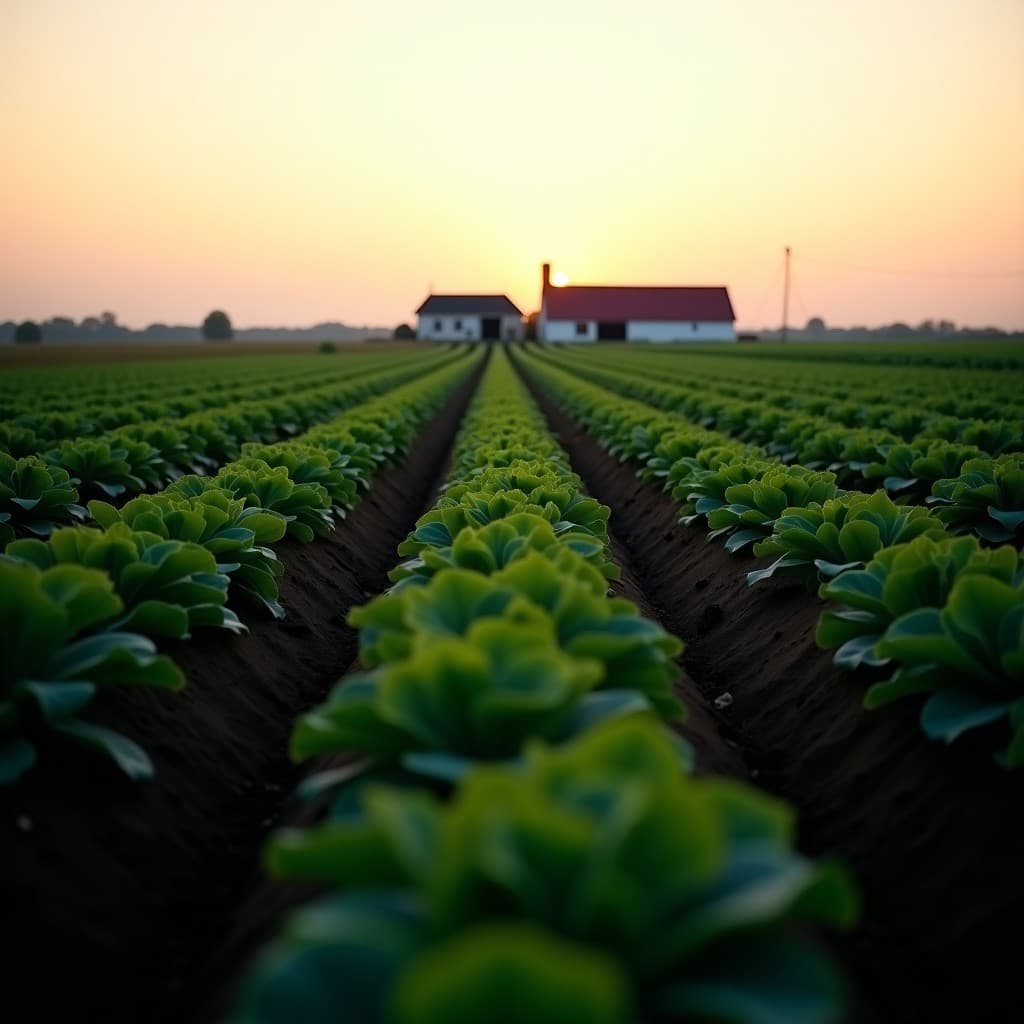
Four migrant farmworkers burned to death in a van at a petrol station in Calabria on Monday have exposed a labour trafficking system that reaches into Molise's own fields and orchards. Surveillance footage showed two people dousing the vehicle with fuel and blocking the doors as it burned, according to NBC News and The New York Times. Italian Prime Minister Georgia Meloni called the incident a "massacre," but the killing is less an aberration than a visible rupture in a system that has long operated in the shadows of Italy's agricultural South.
The men—whose identities remain unclear in foreign reporting—were travelling in a van operated by suspected gangmasters, the networks that control migrant labour across southern Italy's harvest seasons. The Calabrian killing follows a pattern documented by international outlets: migrants recruited from North Africa and the Balkans, moved through transit hubs, and deposited into agricultural work under conditions of debt bondage, wage theft, and physical confinement. NBC News reported that the video of the burning has driven "a growing reckoning over the exploitation of foreign workers," but that reckoning has been overdue.
Molise, with a population of 289,000 and a shrinking agricultural workforce, sits at the northern edge of this same labour corridor. The region's tobacco farms, vegetable plots, and small orchards have relied for decades on seasonal migrant workers—many of them undocumented, many of them moved through the same gangmaster networks that operated in Calabria. The difference is that Molise's invisibility, both as a region and as a labour market, has meant even less scrutiny.
The Calabrian van was parked at a petrol station near Crotone, in the heart of Calabria's agricultural belt. The men inside were farmworkers; the vehicle was their transport and, in effect, their prison. According to The New York Times, surveillance footage captured the moment the doors were blocked and fuel poured over the van. The killing was not random violence but a deliberate act—either a murder disguised as accident, or a message sent through bodies.
Italian authorities have opened a murder investigation, but the international press has already framed the incident within a larger system. NBC News quoted Italian officials describing the killing as a "massacre," a word that signals not just a crime but a structural failure. The men were not killed because they were in the wrong place; they were killed because they were in the only place available to them—a van operated by men who controlled their movement, their wages, and their ability to leave.
The gangmaster system in southern Italy has been documented by international outlets for years. Workers are recruited in transit countries—Libya, Tunisia, Albania, Romania—with promises of agricultural work and wages. They are moved through Italy by networks of intermediaries, each taking a cut. By the time they reach the fields, they owe money for transport, housing, food, and tools. The debt is calculated to exceed any wages they might earn. They work under surveillance, in groups, with limited ability to communicate with authorities or seek help.
Molise's role in this system is less visible than Calabria's, but no less real. The region's agricultural economy—tobacco, vegetables, small grains—has contracted as the rural population has aged and young people have emigrated. Farms that once employed local seasonal labour now rely on migrants. The tratturi, the ancient transhumance routes that crisscross Molise, have become informal labour corridors: migrants move along them, following harvest cycles, moving between regions, rarely staying long enough to establish legal residence or claim labour protections.
Foreign coverage of Italian agriculture has occasionally touched on Molise's role. In 2023, The Guardian and other outlets reported on migrant labour conditions in the South; Molise appeared in those reports as part of a broader regional system, but rarely as a specific focus. The region's small size and rural character mean that labour abuses there attract less international attention than those in Calabria or Basilicata. But the absence of attention does not mean the absence of harm.
The four men burned in Calabria were likely part of a supply chain that extends through Molise. Migrants moving north from Calabria often pass through or work in Molise before moving further into central Italy or back south for the next season. The gangmasters who operate in Calabria operate in Molise too. The debt structures, the wage theft, the confinement—these are not regional phenomena but national ones, with Molise as one node in a network that spans from the Mediterranean coast to the Po Valley.
Molise's invisibility as a labour market has meant that even the region's own agricultural employers often operate without scrutiny. Small farms, family operations, informal arrangements—these are the norm in Molise's countryside. A farm with five or ten migrant workers, paid in cash, housed in a barn, with no written contract and no legal status, is not unusual. It is also not visible to labour inspectors, journalists, or international monitors. The system works because it is hidden.
The Calabrian killing has prompted calls for reform. NBC News reported that Italian officials are facing pressure to address labour trafficking and exploitation. But reform in Calabria does not automatically extend to Molise. The region lacks the infrastructure, the political attention, and the resources to enforce labour law. A labour inspector visiting a farm in Molise is rare; a migrant worker reporting abuse to authorities is rarer still.
The men in the burned van were not the first to die in Italy's agricultural labour system, and they will not be the last. The New York Times noted that the incident has "highlighted abuse of foreign workers," but highlighting is not the same as stopping. For migrants working in Molise's fields, the system continues as it has: invisible, unregulated, and lethal.
International outlets have begun to ask what structural changes might prevent future killings. But the answer lies partly in regions like Molise, where the labour system is so informal, so dispersed, and so integrated into the rural economy that reform would require not just new laws but a transformation of how agriculture itself is organized. That transformation is not imminent.
The four men burned in Calabria have names, families, and histories that the international press has not yet fully recovered. They are being memorialized as victims of a system, which is true, but also as individuals whose deaths might catalyze change. Whether that change reaches Molise remains uncertain. The region's fields will need workers for the next harvest. The gangmasters will find them. The cycle will continue.
Molise's role in this story is not as a place where such horrors occur—though they do—but as a place where they occur invisibly. The region's depopulation, its distance from Rome and Brussels, its small size and rural character, all mean that labour abuses there are less likely to be documented, reported, or addressed. The Calabrian killing has drawn international attention to Italy's migrant labour crisis. But for workers in Molise, that attention may never arrive.