
REGIONAL
Medical deserts trap Italy's ageing rural South as doctors flee
Healthcare workforce shortage collides with Molise's demographic collapse, leaving elderly residents stranded in villages without physicians.
Antonio Petrella1,389 wordsEdition №7Sunday, 7 June 2026 — Edition № 7
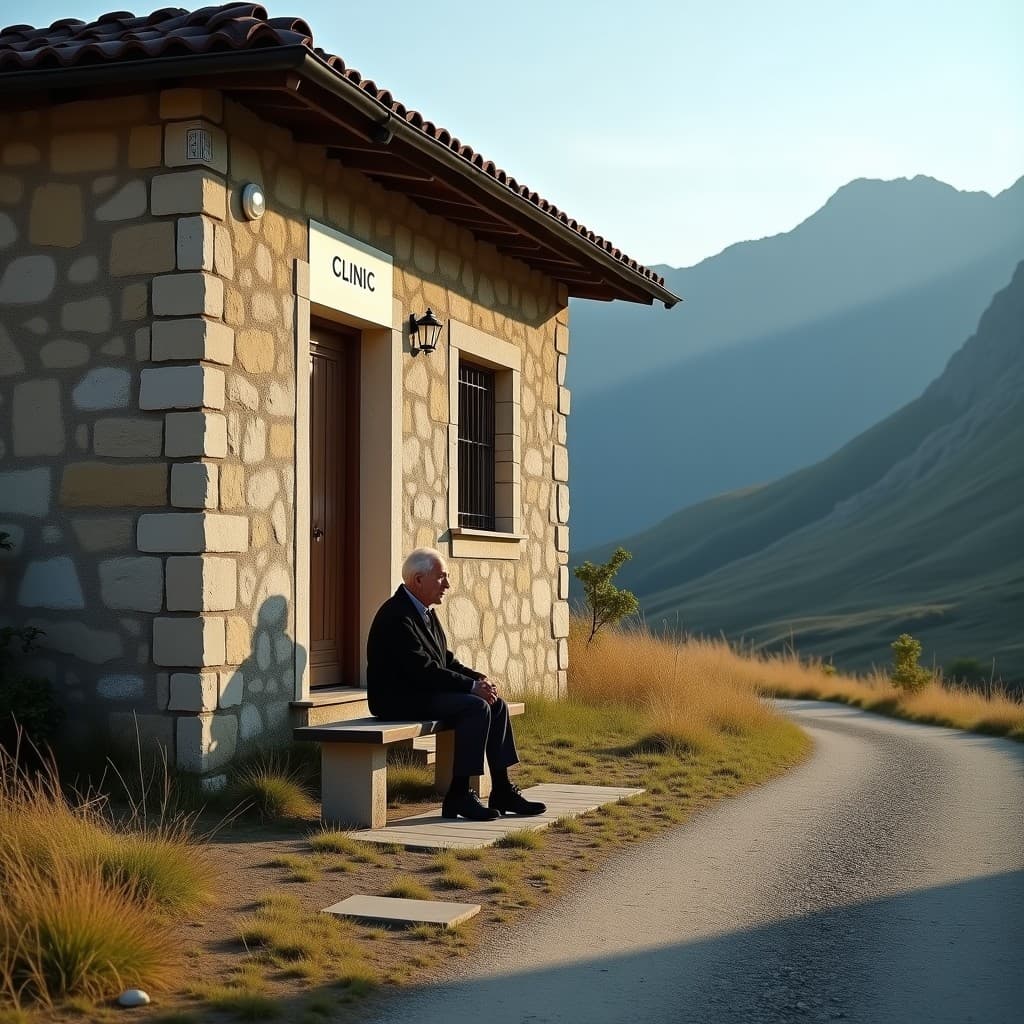
A healthcare workforce shortage of historic proportions is colliding with demographic collapse across rural Italy, leaving elderly residents in remote villages without access to physicians or basic medical services. Yahoo News and the Rogersville Review have documented how rural communities across the developed world are being abandoned by medical professionals, with projections showing the deficit will grow to 141,000 physicians by 2038 in the United States alone. Italy faces a parallel crisis: villages in Molise and across the South are emptying of both young people and doctors, creating what foreign observers call medical deserts—zones where emergency care is hours away and preventive medicine is impossible.
Molise exemplifies the problem in its most acute form. The region's population has declined by nearly 30 percent since 1980, with young adults emigrating to northern cities or abroad in search of work and opportunity. Those who remain are disproportionately elderly: more than 23 percent of Molise's population is over 65, compared to the Italian national average of 19 percent. Yet the region has lost physicians steadily over the same period. General practitioners retire or relocate to urban centres; specialists refuse to establish practices in villages where patient volumes cannot sustain a practice; and medical school graduates, facing debt and limited prospects, avoid the South entirely.
The consequence is a healthcare system fractured by geography. In Campobasso and other provincial towns, residents can access medical services. In villages of fewer than 500 people scattered across the Apennine foothills and the Biferno valley, elderly residents must travel 30, 40, sometimes 50 kilometres to see a doctor. For those without cars, without family to drive them, or with mobility limitations, this distance is insurmountable. Preventive care becomes impossible; chronic conditions go unmanaged; emergencies that could be handled in a clinic become life-threatening crises requiring ambulance transport and emergency room admission.
The healthcare crisis in rural Molise is not new, but it has accelerated dramatically in the past five years. Foreign coverage of Italy's healthcare system—particularly pieces examining regional inequality—has increasingly highlighted the North–South divide in medical access. Yahoo News's reporting on medical deserts in rural America applies equally to rural Italy: the housing crisis colliding with a shortage of healthcare workers creates conditions where seniors cannot age in place. They cannot remain in the villages where they have lived their entire lives because those villages have no doctors.
Molise's healthcare infrastructure was already fragile before the recent exodus of physicians. The region has one hospital in Campobasso and smaller facilities in Termoli and Isernia. Rural health centres—small clinics staffed by a general practitioner and a nurse—are scattered across the region, but many have closed in the past decade as their doctors retired without replacement. The national health service, the Servizio Sanitario Nazionale, theoretically guarantees healthcare to all citizens, but rural areas have become chronically understaffed.
The problem is structural and financial. A general practitioner in a village of 300 people cannot generate the patient volume necessary to sustain a practice and earn a competitive income. Medical school graduates, burdened with debt and facing years of low earnings in a rural practice, choose instead to relocate to Milan, Rome, or abroad. Older physicians, nearing retirement, see no incentive to remain in villages where they have no successors and face increasing isolation. The result is a vicious cycle: as doctors leave, remaining patients must travel further for care; as patient populations decline, the economic viability of rural practices deteriorates further; as viability declines, recruitment becomes impossible.
The Italian government has attempted various interventions—loan forgiveness programs for doctors who practice in underserved areas, housing subsidies, bonus payments—but these measures have proved insufficient. Foreign coverage of Italy's healthcare system suggests that the problem is not merely financial but cultural and structural. Young doctors trained in urban teaching hospitals have little interest in rural practice. The prestige and intellectual stimulation of urban medicine is difficult to replicate in a village clinic. Professional isolation is real.
Molise's elderly population bears the consequence directly. According to foreign reporting on healthcare access in southern Europe, elderly patients in rural areas experience delayed diagnoses, missed preventive screenings, and medication management problems. A woman in her seventies living in a village in the upper Biferno valley who develops chest pain must decide whether to call an ambulance—a process that takes 45 minutes—or drive herself 40 kilometres to the nearest hospital. A man with diabetes cannot see his doctor regularly for blood sugar monitoring and medication adjustment; he visits when the condition becomes acute and he has no choice.
The demographic context makes the crisis more severe. Molise's population is not only small but ageing. Young people have left; those who remain are increasingly elderly. The ratio of working-age adults to retirees is declining rapidly, which strains both the healthcare system and family support networks. Adult children who might otherwise care for elderly parents are absent, having emigrated for work. Elderly residents live alone or in couples, often without nearby family to help coordinate medical care or provide transport to distant clinics.
Some villages have responded by organizing cooperative transportation systems, where residents share rides to medical appointments in larger towns. Others have attempted to recruit retired physicians to volunteer part-time. These are band-aid solutions to a structural problem. According to the Rogersville Review's analysis of rural healthcare in America, the fundamental issue is that rural communities cannot compete with urban centres for professional talent and resources. The same applies to Molise.
The Italian government's commitment to addressing rural healthcare has been inconsistent. Foreign observers note that healthcare policy is set at the national level but implementation is devolved to regional governments. Molise's regional government, already struggling with limited resources and competing priorities, has not made rural healthcare recruitment a priority. Budgets for healthcare are constrained; incentives for rural practice remain modest; and the bureaucratic apparatus for managing physician recruitment is slow and inefficient.
Private healthcare has not filled the gap. Italy's private medical sector is concentrated in wealthy urban areas and serves affluent patients. Rural areas, where populations are poor and dispersed, do not attract private investment. Rural Molise residents depend entirely on the public system, which is increasingly unable to serve them.
The psychological toll on elderly residents is significant. To age in place—to remain in the village where one has lived one's entire life, surrounded by familiar landscapes and community—is a profound human need. Yet that need collides with the practical reality that the village can no longer provide basic healthcare. Some elderly residents migrate to cities to be closer to medical facilities and adult children. Others remain, accepting the risk of medical emergencies far from help. The choice is between exile and vulnerability.
What the foreign press calls the 'medical desert' is not a temporary condition but a structural outcome of decades of neglect and underinvestment in rural areas. Yahoo News and the Rogersville Review both document how this pattern emerged across the developed world: rural areas were never prioritized for healthcare infrastructure; as urbanization accelerated, resources flowed to cities; rural healthcare systems deteriorated; young professionals avoided rural practice; and the cycle became self-reinforcing. Breaking it requires sustained, substantial investment and policy changes that rural areas have historically lacked the political power to demand.
For Molise, the challenge is compounded by the region's broader economic collapse. Depopulation, emigration, low incomes, and limited economic opportunity create a context in which healthcare is only one of many failures. The region cannot attract investment, cannot retain young people, cannot sustain essential services. Healthcare is part of a larger pattern of abandonment. Unless that pattern reverses—unless Molise experiences economic revival and population stabilization—the healthcare crisis will deepen. Elderly residents will continue to face the choice between leaving their villages or accepting the risk of dying far from medical help.