
PIEMONTE
World's Oldest Bank Becomes Prize in Bidding War
Banca Monte dei Paschi di Siena's future ownership raises questions about Italian banking autonomy and regional economic identity
Lorenzo Ferraris1,289 wordsEdition №10Wednesday, 10 June 2026 — Edition № 10
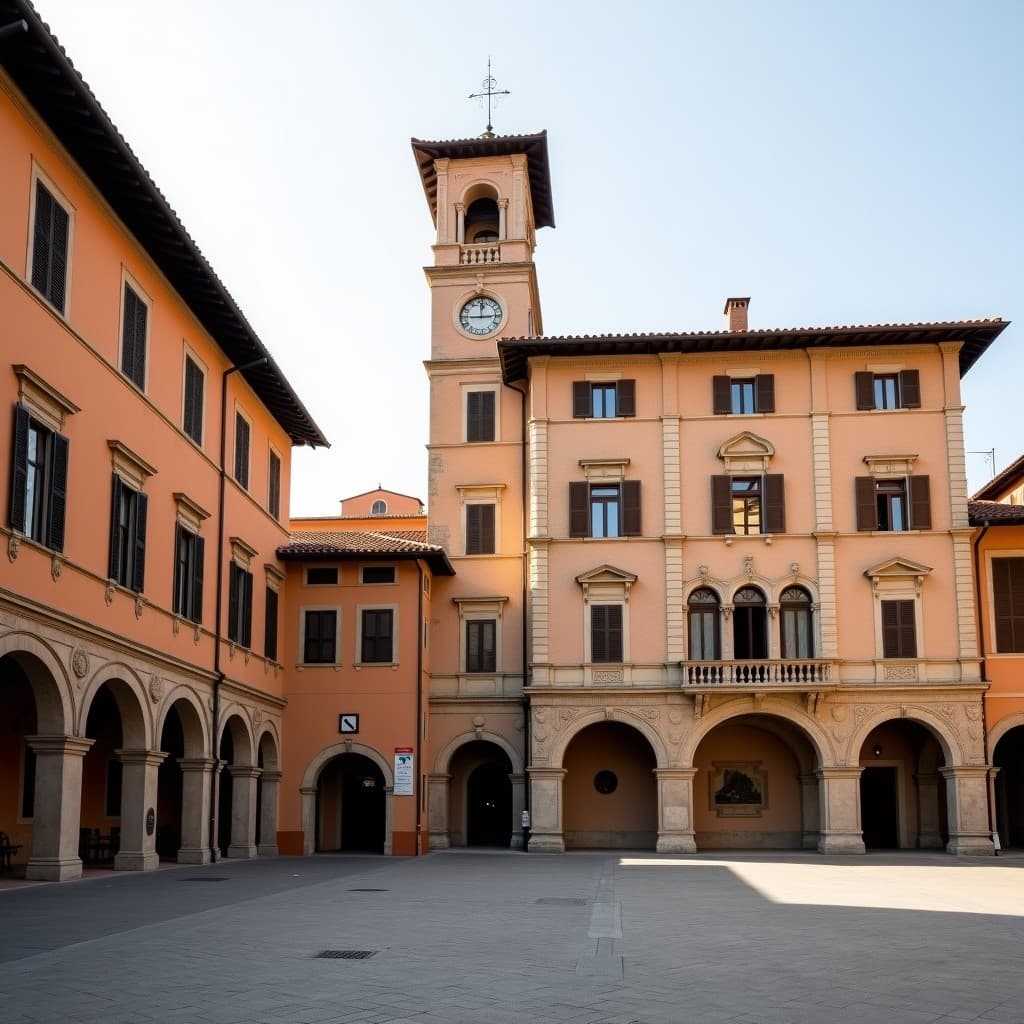
Banca Monte dei Paschi di Siena, the world's oldest continuously operating bank, has become the subject of a competitive bidding process that has alarmed Italian policymakers. According to CBS News, some Italian officials are reportedly seeking to ensure the institution stays in Italian hands, a concern that reflects deeper anxieties about foreign ownership of strategic financial assets and the concentration of banking power in fewer, larger groups.
The bank was founded in 1472 and has survived wars, economic crises, and repeated restructurings. Its current predicament—facing a takeover bid—is the latest chapter in a turbulent recent history. Monte dei Paschi required a government bailout during the 2008 financial crisis and has struggled with asset quality and profitability in the years since.
The bidding war signals that foreign investors see value in the institution, even if Italian regulators worry about the implications of foreign ownership. CBS News reported that the bidding process is active, though the outlet did not name the competing bidders or their proposed terms.
Monte dei Paschi's history is inseparable from Siena, a city in Tuscany that sits at the intersection of Italy's North-South economic divide. Siena is not an industrial powerhouse like Turin or Milan; it is a centre of medieval banking, art, and tourism. The bank's longevity reflects the city's historical importance as a financial hub, but also its vulnerability to broader economic shifts.
The 2008 financial crisis exposed severe weaknesses in Monte dei Paschi's management and risk controls. The bank had accumulated large holdings of Italian government bonds and had made risky derivative bets that soured when interest rates fell. By 2013, the Italian government was forced to inject capital to prevent collapse. A second rescue followed in 2017, after which the European Central Bank took a more active supervisory role.
The bank's troubles were not unique to Monte dei Paschi. Italian banking as a whole has faced headwinds: low interest rates compressed margins, non-performing loan ratios remained elevated, and consolidation pressure mounted. Larger European banks—particularly French and German institutions—have acquired Italian peers, raising concerns about the loss of Italian control over the financial system.
For Piemonte, the Monte dei Paschi bidding war has indirect but real significance. The region's banking sector is dominated by Intesa Sanpaolo, Italy's largest bank, which is headquartered in Turin. Intesa has itself been a consolidator, acquiring smaller regional banks and rationalizing branch networks. If Monte dei Paschi falls to a foreign buyer, it would represent a further erosion of Italian banking independence and a signal that Italian financial institutions are no longer capable of competing at scale.
The concern about foreign ownership of Italian banks reflects a broader pattern. According to international financial press coverage, European banking has consolidated dramatically over the past two decades. German and French banks have grown larger and more dominant, while Italian banks have struggled to achieve the scale needed to compete in capital markets and investment banking. A foreign takeover of Monte dei Paschi would accelerate this trend.
Italian officials' desire to keep Monte dei Paschi in Italian hands is not merely sentimental. Control of a major bank provides influence over credit allocation, employment decisions, and the direction of capital investment. If foreign owners take control, they may prioritize returns to shareholders over the bank's role as a lender to local businesses and communities. This is especially true in regions like Tuscany, where small and medium-sized enterprises depend on relationship banking and local credit availability.
The bidding war also raises questions about Italian banking regulation and the European Central Bank's role in approving or blocking acquisitions. The ECB has authority to approve or reject significant ownership changes at eurozone banks. In recent years, the ECB has been more permissive toward cross-border consolidation, viewing it as a way to strengthen the European banking system. However, Italian regulators may push back if they believe a foreign takeover would harm the Italian economy.
Monte dei Paschi's current valuation is uncertain. CBS News did not disclose the bids or the expected price range. However, the bank's market capitalization has fluctuated widely, and its profitability remains modest. If the bank is sold at a low price, it will be seen as a failure of Italian banking policy; if the price is high, it will suggest that foreign investors see genuine value in the franchise.
The bank's brand and customer base are valuable assets. Monte dei Paschi has deep roots in Tuscany and maintains a significant retail deposit base. A foreign buyer would likely retain these customers but might rationalize operations, close branches, and reduce employment. For Siena and the surrounding region, a change in ownership could mean job losses and reduced local investment.
The bidding war also reflects the broader consolidation of the European financial system. According to international financial press, the number of significant banks in Europe has declined sharply over the past two decades. This concentration raises concerns about systemic risk and the loss of diversity in banking models and strategies. A foreign takeover of Monte dei Paschi would further reduce the number of independently Italian-controlled major financial institutions.
Italian policymakers face a dilemma. They can attempt to block a foreign takeover by imposing regulatory obstacles, but this risks violating European Union rules on freedom of capital movement and competition. Alternatively, they can allow the sale to proceed and accept the loss of Italian control. A third option—finding an Italian buyer—would require identifying a domestic bank or investor willing and able to acquire Monte dei Paschi at a competitive price.
Intesa Sanpaolo is the most obvious potential Italian buyer, but the bank may not be interested. Intesa has already consolidated several regional banks and may face regulatory resistance to further acquisitions that would increase its market share. Additionally, Intesa's leadership may judge that Monte dei Paschi's asset quality and profitability do not justify the acquisition price.
The outcome of the bidding war will signal whether Italian banking can remain independent and competitive in a consolidating European market. If Monte dei Paschi is sold to a foreign buyer, it will confirm a trend that has been underway for years: the gradual loss of Italian control over major financial institutions. For Piemonte and Turin, which house Intesa Sanpaolo and a dense ecosystem of financial services firms, the message will be clear: Italian banking power is concentrated in fewer hands, and those hands are increasingly subject to pressures and priorities that may not align with Italian economic interests.