
ECONOMY
A 500-year-old bank becomes the prize in Italy's banking consolidation
An unsolicited bid for Banca Monte dei Paschi di Siena puts questions of ownership and sovereignty at the centre of Italian finance.
Economy Desk620 wordsEdition №10Wednesday, 10 June 2026 — Edition № 10
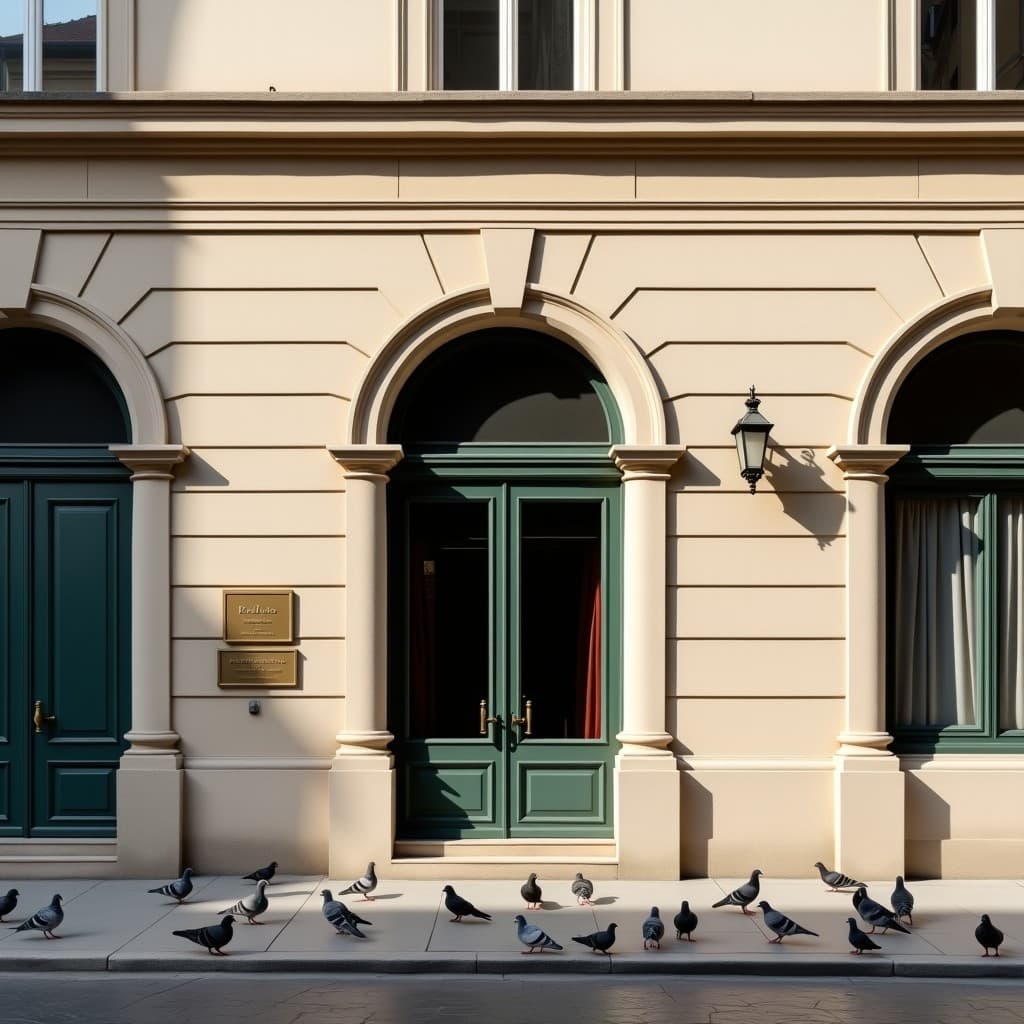
A bidding war has opened for Banca Monte dei Paschi di Siena, the Tuscan institution that has operated continuously since 1472, making it the oldest bank in the world still in existence. CBS News reported on Tuesday that an unsolicited offer is now on the table, and that some Italian officials are pressing to ensure the bank remains in domestic hands. The story has arrived at a moment when Italy's broader economic indicators offer little cushion for political manoeuvre.
Italy's GDP grew by 0.69 percent in 2024, a pace that leaves the economy with almost no margin for error. That rate is not a crisis, but it is slow enough that a major disruption to the banking sector — a contested takeover, a prolonged period of uncertainty at a systemically significant lender — would be felt in credit conditions and business confidence well beyond Siena.
Inflation, at 0.98 percent in 2024, is close to flat. For households that is welcome relief after years of price pressure, but for a bank trying to rebuild its net interest margin it is a less comfortable environment. The ECB's rate cycle and the direction of the euro matter here: the single currency has slipped from 1.1765 against the dollar on 11 May to 1.1573 on 9 June, a move of roughly 1.6 percent in thirty days. A softer euro raises the cost of any cross-border transaction denominated in dollars or sterling, and makes Italian assets marginally cheaper for foreign acquirers — relevant context for any foreign party eyeing Monte dei Paschi.
Unemployment stands at 6.39 percent as of 2025, which is low by Italian historical standards and suggests the labour market is not the immediate pressure point. The concern is structural: Italy's workforce is ageing, its birth rate is among the lowest in the EU, and the young continue to leave. A banking sector that consolidates efficiently could, in principle, direct more capital toward productive investment and slow that drain. A sector paralysed by contested ownership achieves the opposite.
The political dimension is impossible to separate from the financial one. Italian officials quoted by CBS News want the bank to stay Italian — a reflex that echoes decades of debate about strategic assets and foreign ownership. That instinct is understandable, but it carries a cost: ring-fencing a weakened institution from the market can entrench fragility rather than resolve it. The European Commission has, over many years, pushed Italy to allow market forces to work through its banking sector, and any state intervention to block a bid would draw scrutiny from Brussels.
The euro's exchange rate against the Swiss franc — 0.9206 as of 9 June — is a reminder that Italian banks operate in a continental system where capital moves freely. A bidder based in a eurozone country faces no currency friction; one based in Switzerland or the United Kingdom faces a modest but real conversion cost. The EUR/GBP rate of 0.8634 and EUR/CHF of 0.9206 mean that a British or Swiss acquirer would be buying at a slight discount relative to a year ago, all else being equal.
What the CBS News report does not yet resolve is who the bidder is, what price is being discussed, or what regulatory timeline applies. Those details will determine whether this is a genuine consolidation play or a tactical move designed to force a restructuring on terms favourable to existing shareholders. Until that clarity arrives, Monte dei Paschi sits at the intersection of three forces that define Italian economic life: a slow-growth domestic economy, a political class reluctant to cede control of institutions it regards as national patrimony, and a European financial system that has little patience for prolonged ambiguity at a bank of this size.