
UMBRIA
Bidding war for world's oldest bank raises stakes for Siena and central Italy
Italian officials want Monte dei Paschi to remain in Italian hands as foreign bidders circle the 500-year-old Sienese institution.
Niccolò Mariani1,521 wordsEdition №10Wednesday, 10 June 2026 — Edition № 10
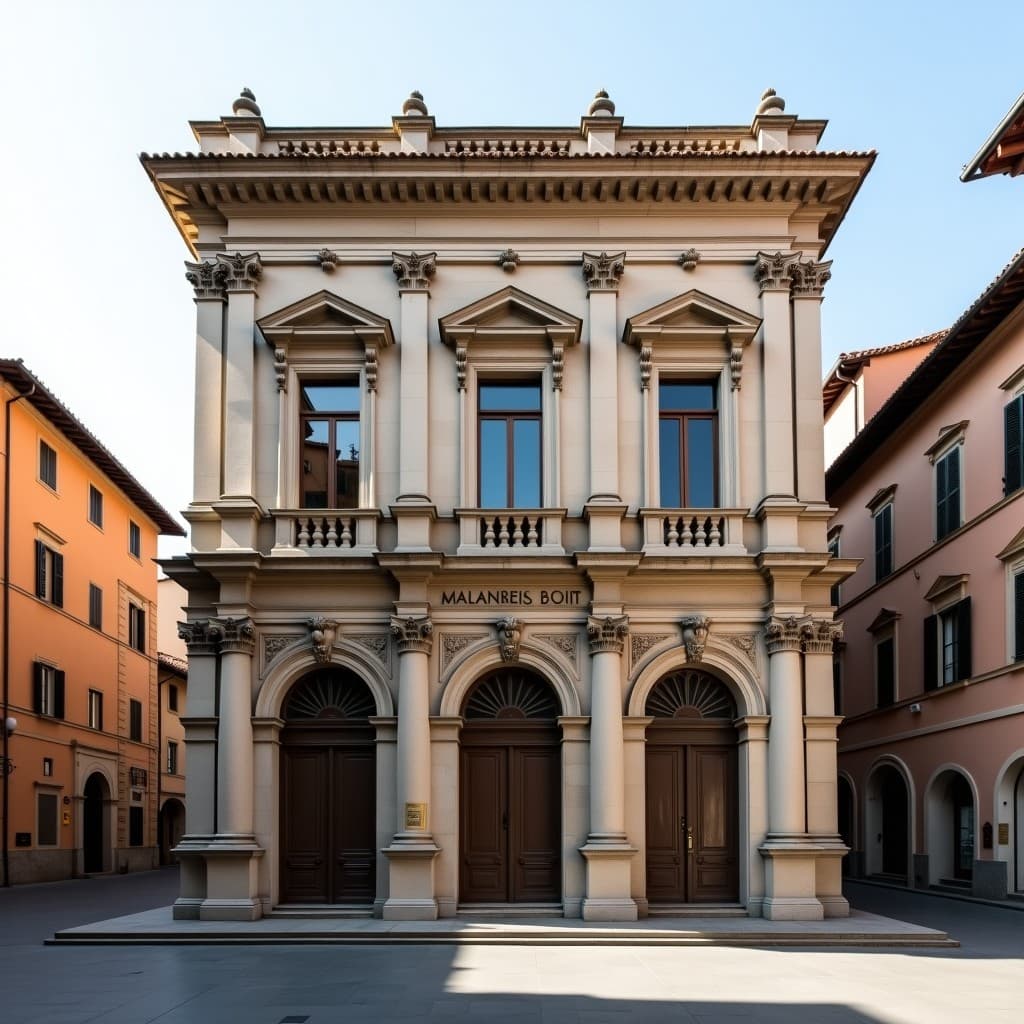
A bidding war is underway for Banca Monte dei Paschi di Siena, the world's oldest continuously operating bank, according to CBS News. The institution, founded in 1472 in Siena, has survived Renaissance intrigues, wars, financial collapses, and centuries of Italian political upheaval. Now, as foreign bidders circle, Italian officials are reportedly determined to ensure the bank remains under Italian control—a statement about national pride, financial sovereignty, and the symbolic weight that a single institution can carry.
The story matters for Umbria because Siena, though technically in Tuscany, sits on the border of the region and shares deep economic and cultural ties with the Umbrian interior. Monte dei Paschi is not simply a bank; it is a symbol of Siena's identity as a medieval city-state that built wealth and power through commerce and finance. Its future ownership will shape not just Siena's economy, but the fate of central Italy's historic centres as they compete for investment and relevance in the modern financial system.
CBS News reported that Italian officials want to keep the bank Italian, a position that reflects broader anxieties about foreign ownership of national assets and the gradual shift of economic power away from the Italian interior toward larger European financial centres. The bidding war is a test of whether a historic Italian institution can remain rooted in its place of origin, or whether it must follow the logic of global capital and relocate its centre of gravity northward, toward Milan or beyond the Alps.
Monte dei Paschi was founded in 1472 by the Magistrato delle Biccherne, the civic magistracy of the Sienese Republic. It is the oldest continuously operating bank in the world—a distinction that CBS News emphasised as the bidding war intensified. The bank survived the decline of Siena itself, which fell from independence in the 16th century to become a secondary city in the Grand Duchy of Tuscany. It weathered the Napoleonic wars, Italian unification, fascism, and the post-war republic. It even survived a near-catastrophic financial crisis in the early 2010s, when the bank required a government bailout and a restructuring that lasted years.
For much of the 20th century, Monte dei Paschi was a symbol of Siena's resilience and historical importance. The bank's headquarters, housed in the Palazzo Salimbeni in the heart of Siena's medieval centre, became a landmark of civic pride. The building itself is a Renaissance palace, with frescoes and architectural details that reflect Siena's golden age as a financial and artistic power. The bank was not merely an economic institution; it was a keeper of Siena's identity.
But the 2008 global financial crisis exposed vulnerabilities in Monte dei Paschi's business model. The bank had made risky investments and had become entangled in complex derivative trades that obscured its true financial position. When the crisis hit, the bank's losses mounted rapidly. By 2013, the Italian government, under Prime Minister Mario Monti, was forced to inject public capital to prevent the bank's collapse. The rescue was controversial—Italian taxpayers were effectively subsidising a historic institution that had been poorly managed—but the alternative was the failure of the world's oldest bank.
The restructuring that followed was painful. The bank shed assets, closed branches, and laid off thousands of employees. Its role in the Italian financial system was diminished. By the early 2020s, Monte dei Paschi had become a regional player rather than a national institution. It still held significant deposits and managed substantial assets, but it had lost the prestige and influence it once commanded.
Now, as CBS News reported, foreign investors are circling. The bank is attractive to international bidders because of its size, its deposit base, its brand heritage, and the regulatory environment in which it operates. A foreign takeover would likely mean the relocation of senior management to a larger financial centre—Milan, London, Frankfurt, or New York. It would mean the integration of Monte dei Paschi's operations into a larger corporate structure. The bank would survive, but its identity as a Sienese institution would be fundamentally altered.
For Italian officials, the prospect of foreign ownership is unacceptable. CBS News reported that officials want to ensure the bank stays in Italian hands, a position that reflects both nationalist sentiment and genuine concern about economic sovereignty. If Monte dei Paschi is acquired by a foreign firm, it becomes another piece of Italian economic infrastructure controlled from outside the country. The foreign press has long noted Italy's vulnerability to foreign capital flows and the gradual shift of decision-making power away from Rome and toward Brussels, Frankfurt, and international financial centres.
The bidding war for Monte dei Paschi is, in this sense, a proxy battle over the future of central Italy. The region—Umbria, Tuscany, the Marches—has long been economically marginalised compared to the industrial north. Milan and the Lombardy-Veneto corridor dominate Italian finance and manufacturing. Central Italy's economy has traditionally been built on small and medium-sized enterprises, on agriculture, on tourism, and on heritage. The presence of a major financial institution like Monte dei Paschi, even a diminished one, provides some counterweight to northern dominance.
If Monte dei Paschi is sold to foreign bidders, it signals that central Italy's institutions are no longer capable of competing at the national and international level. It suggests that the future of the region lies in tourism, in small-scale manufacturing, and in the preservation of heritage—important, but not the kind of economic activity that drives investment and employment growth. The bank's fate will send a message about whether the Italian interior can retain control of its own economic destiny.
The foreign press has not yet fully engaged with this story, but CBS News's initial report suggests that the bidding war will attract international attention in the coming weeks. Financial journalists will focus on the mechanics of the deal—the valuations, the competing bids, the regulatory hurdles. But the deeper story, the one that matters for Umbria and central Italy, is about what it means for a historic institution to pass out of local control.
Siena itself is watching closely. The city has suffered from depopulation and economic decline in recent decades, much like many of Umbria's hill towns. The presence of Monte dei Paschi, even as a regional bank, has provided some economic anchor. If the bank is sold to foreign owners, Siena loses not just an employer and a source of local investment, but a symbol of its own historical importance. The city becomes a museum of its own past, rather than a living centre of economic activity.
For Umbria, the lesson is clear: historic institutions cannot be taken for granted. They require investment, management, and strategic direction to remain viable in a competitive global market. The region's own economic institutions—its agricultural cooperatives, its small manufacturing firms, its tourism boards—are all vulnerable to the same pressures that have weakened Monte dei Paschi. The bidding war for the bank is a warning that without active effort to preserve local control of economic assets, the interior of Italy will become increasingly dependent on decisions made elsewhere.
The outcome of the bidding war will likely be determined by Italian government policy. If officials are serious about keeping Monte dei Paschi Italian, they will need to identify a domestic buyer with the capital and the strategic vision to revitalise the bank. This could be another Italian bank, a state-controlled investment fund, or a consortium of Italian institutional investors. The government may also impose regulatory restrictions on foreign ownership, a move that would be controversial within the EU but that reflects the broader tension between national economic sovereignty and the rules of the single market.
Whatever the outcome, the bidding war for Monte dei Paschi is a reminder that the future of central Italy is not predetermined. The region's fate depends on decisions made by investors, by policymakers, and by the institutions themselves. The bank's 550-year history is a testament to the resilience of Sienese and central Italian society. But history alone will not be enough to secure the bank's future. In the coming weeks, as the bidding war intensifies, Monte dei Paschi will become a symbol of whether central Italy can compete in the modern global economy, or whether it must accept a diminished role as a heritage destination and a source of raw materials for larger economic actors elsewhere.