
INTERNATIONAL
MSC container ship hit by projectiles in Iraqi port; Iran claims responsibility
Mediterranean Shipping Company vessel struck twice while departing Umm Qasr; incident underscores risks to global container trade
Marina Doria1,398 wordsEdition №8Monday, 8 June 2026 — Edition № 8
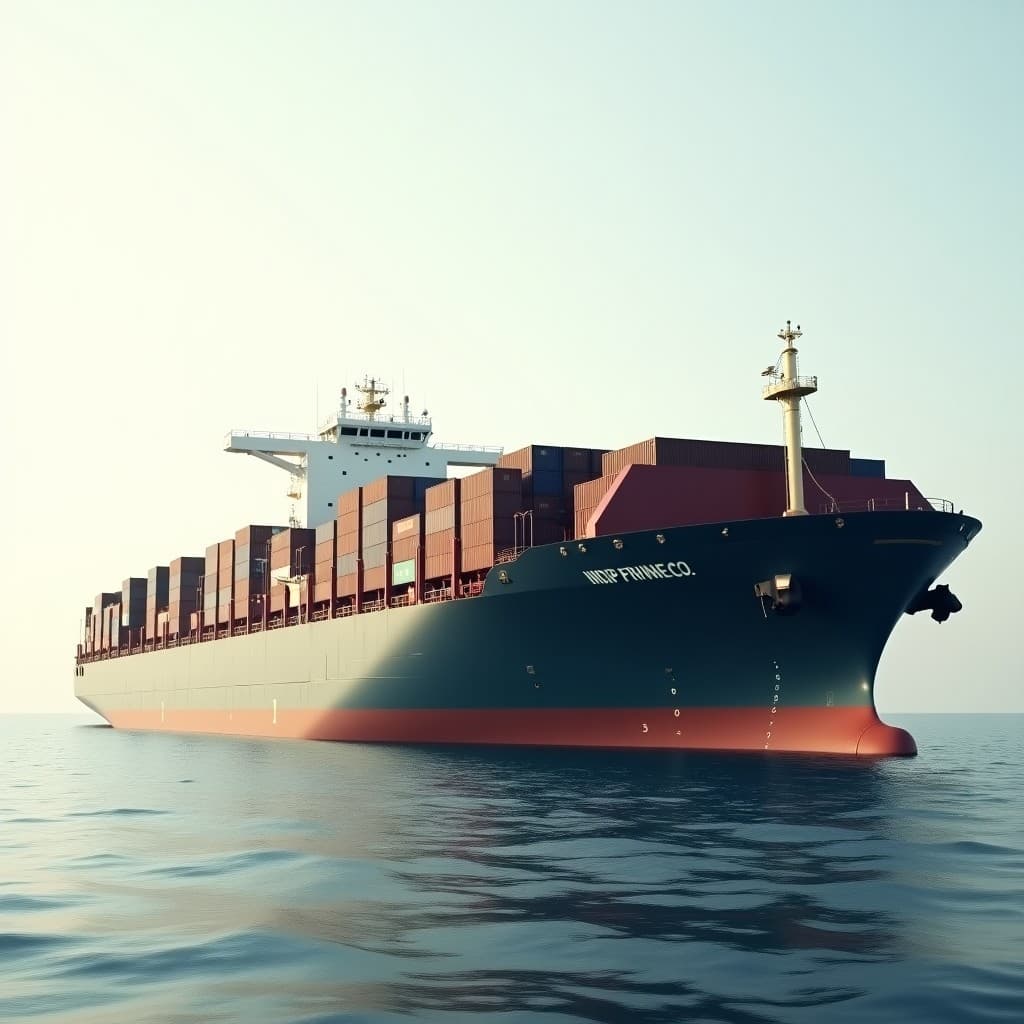
MSC Mediterranean Shipping Company confirmed that its container vessel MSC Sariska V was struck by two projectiles while departing the port of Umm Qasr in Iraq on June 1, according to reports from the New York Times, Marine Link, and Seatrade Maritime News. The first projectile hit the vessel while a pilot was onboard during departure from the port; a second struck the crew accommodation area shortly after. MSC condemned the attack as unprovoked, and no crew members were injured.
Iran claimed responsibility for the strike, according to the New York Times, linking the incident to broader US-Iran tensions and the ongoing conflict affecting the Middle East. The attack underscores the vulnerability of commercial shipping to regional military escalation, even as diplomatic efforts continue. The New York Times noted that the incident illustrates the threat to ships operating in the region even as the US and Iran attempt to negotiate.
For Genoa and Liguria's port economy, the incident carries immediate implications. MSC is one of the world's largest container shipping operators and a major user of Mediterranean ports, including Genoa. Disruptions to shipping routes, increased insurance costs, and the diversion of vessels away from the Middle East directly affect the throughput and profitability of the Port of Genoa, which depends on reliable global container flows. The attack on an MSC vessel signals that regional instability can quickly translate into pressure on European port operations.
MSC, headquartered in Geneva, operates one of the world's largest container shipping fleets and maintains significant operations in Mediterranean ports. Genoa, as Italy's primary container hub and one of Europe's busiest ports, relies heavily on the stability of global shipping routes and the confidence of major operators like MSC. The company's vessels regularly transit through Genoa, loading and unloading containers bound for or originating from European markets.
The attack on MSC Sariska V occurred in the context of escalating military tensions in the Middle East, where shipping has become a contested space. The New York Times reported that Iran's claim of responsibility reflects broader strategic calculations in the region, where maritime chokepoints and commercial shipping have become targets in proxy conflicts. The Strait of Hormuz, through which a significant portion of global oil flows, has been a focal point of these tensions, but attacks on commercial vessels in Iraqi ports represent a new dimension of the conflict.
Seatrade Maritime News, which covers shipping industry developments, noted that MSC's statement condemned the attacks and called for international action to protect commercial vessels. The company's public response reflects the shipping industry's concern about the security of maritime routes and the potential for further escalation. Insurance costs for vessels transiting the region have already risen, and some shipping companies have begun rerouting vessels away from the Middle East, adding time and expense to global supply chains.
For Genoa's port authority and the broader Ligurian logistics sector, the incident raises questions about the resilience of global container flows. The port has invested heavily in infrastructure to accommodate larger vessels and increase throughput, but these investments depend on the assumption of stable, predictable shipping routes. Disruptions in the Middle East can cascade through the Mediterranean, affecting port scheduling, labour requirements, and the timing of cargo arrivals.
The Port of Genoa has long been sensitive to geopolitical disruptions affecting Mediterranean shipping. The closure of the Suez Canal during the 2021 blockade of the Ever Given container ship demonstrated how regional incidents can rapidly reshape port operations across Europe. Vessels diverted around Africa added weeks to transit times and created bottlenecks in Mediterranean ports. The attack on MSC Sariska V, while not yet causing major diversions, signals that similar disruptions could occur if Middle Eastern tensions escalate further.
Container shipping is the lifeblood of modern trade, and Mediterranean ports like Genoa are critical nodes in the global supply chain. The New York Times reported that the attack occurred as the US and Iran were attempting to negotiate, suggesting that military escalation could undermine diplomatic efforts. If attacks on commercial shipping increase, shipping companies may permanently reroute vessels, bypassing the Suez Canal and the Middle East entirely, with significant consequences for Mediterranean ports.
The incident also reflects broader vulnerabilities in global maritime security. Seatrade Maritime News noted that the attack demonstrated the difficulty of protecting commercial vessels in contested waters, even with international naval presence. The International Maritime Organization (IMO) and national navies have established protocols for reporting attacks and coordinating responses, but enforcement remains inconsistent, particularly in regions where multiple state and non-state actors operate.
For Liguria's economy, the stakes extend beyond the port itself. The region's logistics sector—warehousing, trucking, rail connections—depends on the reliable flow of containers through Genoa. Disruptions to shipping routes or increases in transit times can reduce the competitiveness of Genoa relative to other Mediterranean ports, such as Rotterdam or Hamburg, which benefit from alternative supply chain routes. The port authority has repeatedly argued that infrastructure investment and operational efficiency are necessary to maintain Genoa's position in global trade networks.
MSC's response to the attack reflects the shipping industry's pragmatic approach to regional risks. The company operates vessels globally and has experience navigating geopolitical tensions. However, the New York Times reported that the attack raises questions about the long-term viability of certain shipping routes if military escalation continues. Insurance markets are already pricing in increased risk, and some shipping companies have begun diversifying their routes and port calls.
The regional consequence for Liguria is twofold: immediate pressure on port operations if shipping patterns change, and longer-term uncertainty about the stability of global trade flows. The port authority has invested in capacity and efficiency improvements, but these investments assume a certain volume and predictability of container traffic. If geopolitical tensions cause sustained diversions away from Mediterranean routes, Genoa's competitive position could be undermined.
Historical precedent suggests that regional military conflicts can have lasting effects on shipping patterns. The closure of the Suez Canal during the 1967 Six-Day War redirected shipping around Africa for years, fundamentally altering Mediterranean port economics. While modern shipping is more flexible and routes can be adjusted more quickly, the principle remains: geopolitical instability in key maritime regions can reshape global trade flows and disadvantage ports dependent on traditional routes.
The attack on MSC Sariska V also highlights the role of private shipping companies in global security. MSC, like other major operators, coordinates with international maritime authorities and reports incidents through established channels. However, the company's primary obligation is to its shareholders and customers, not to broader geopolitical stability. If regional instability makes certain routes unprofitable or risky, shipping companies will divert vessels, regardless of the consequences for dependent ports like Genoa.
Looking ahead, the incident is likely to prompt discussions within the Port of Genoa and the Italian government about the resilience of Mediterranean shipping routes and the need for international coordination on maritime security. The port authority may also face pressure to invest in contingency planning for scenarios in which Middle Eastern disruptions reduce container traffic through Genoa. These discussions reflect the reality that regional conflicts, even thousands of miles from Liguria, can directly affect the port's operations and the region's economic prospects.