
CAMPANIA
Naples Marks Shift to Cleaner Shipping with First LNG Cruise Refuel
The port's bunkering of Princess Cruises vessel signals growing demand for low-emission fuel infrastructure in Mediterranean tourism.
Rosaria Esposito1,247 wordsEdition №3Wednesday, 3 June 2026 — Edition № 3
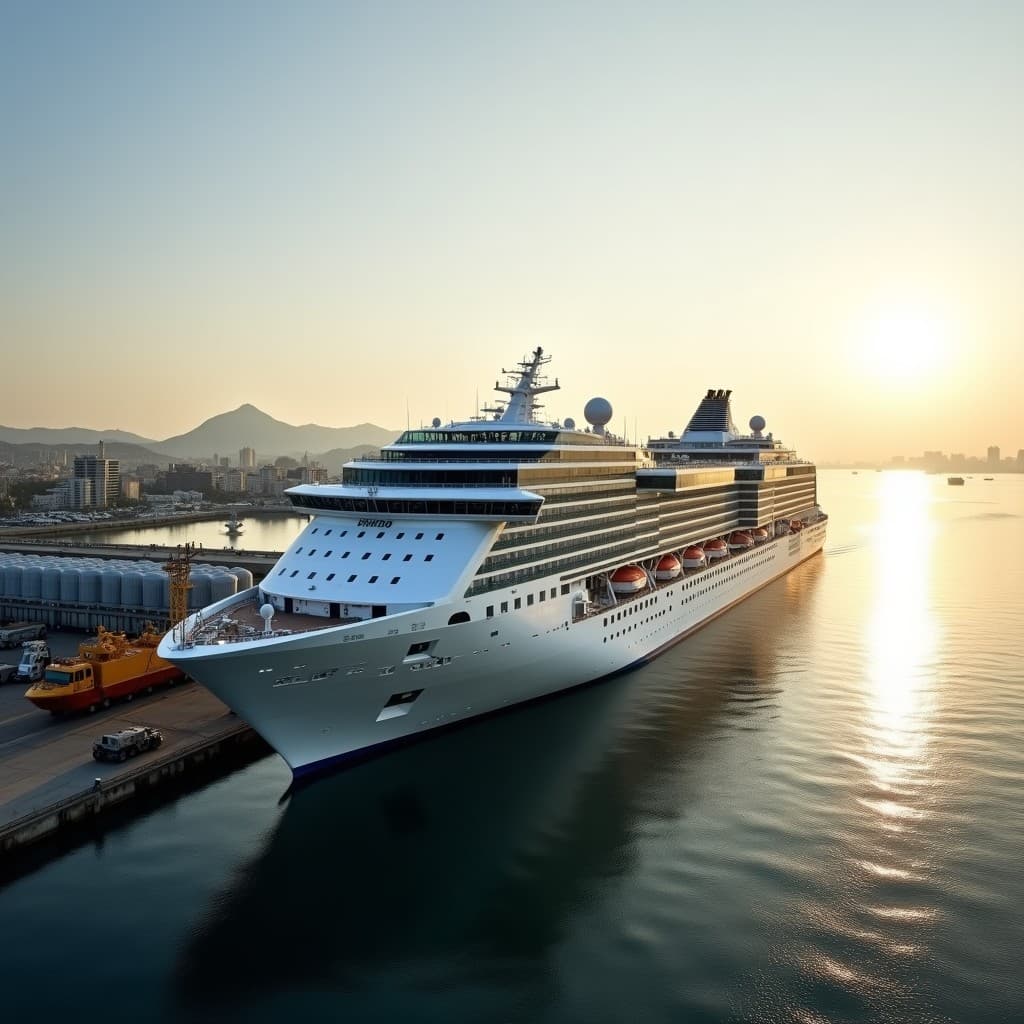
On 24 May, the Sun Princess, operated by Princess Cruises and part of Carnival Corporation, received liquefied natural gas (LNG) fuel in a ship-to-ship bunkering operation in Naples. According to the Maritime Executive, Axpo completed the refueling—a first for the port and a marker of the infrastructure shift underway across European maritime hubs.
The operation reflects a broader push by cruise operators and port authorities to reduce emissions from one of tourism's largest carbon sources. LNG produces fewer greenhouse gases than conventional marine fuel oil, though it remains a transitional technology rather than a zero-emission solution.
For Naples, the milestone carries weight beyond environmental compliance. The port, already Italy's busiest and a linchpin of Mediterranean cruise tourism, now competes with northern European ports—Rotterdam, Hamburg, Marseille—that have offered LNG bunkering for years. The ability to refuel large vessels at sea positions Naples as a strategic node in cruise itineraries that span the Mediterranean and beyond.
The cruise industry's scale in Campania is immense. Naples and the nearby ports of Salerno and Civitavecchia together anchor Mediterranean tourism, drawing hundreds of thousands of passengers annually. The foreign press has long tracked Naples as a site of tourism's contradictions: a city romanticised for its street life, food and history, yet strained by the volume of visitors and the environmental footprint they leave.
LNG bunkering addresses one visible pressure point. Cruise ships are among the largest consumers of heavy fuel oil in European waters. A single large vessel can burn tonnes of fuel daily. The shift to LNG—which burns cleaner and produces lower nitrogen oxide and particulate emissions—has become a regulatory expectation in European ports, driven by the International Maritime Organization's 2030 and 2050 emissions targets.
The timing of Naples' first LNG operation is significant. The port has invested in terminal infrastructure to handle LNG cargo for years, but bunkering—refueling ships—requires different equipment and protocols. Ship-to-ship operations, where fuel transfers between vessels at anchor, bypass the need for fixed shore-based infrastructure and allow ports with emerging capacity to serve the market faster.
Princess Cruises' decision to refuel the Sun Princess in Naples, rather than waiting for a northern European port, suggests the operator sees value in the route and the port's readiness. Carnival Corporation, which owns Princess, operates multiple vessels in the Mediterranean and has committed publicly to reducing the carbon intensity of its fleet by 2030.
For Campania's port authority and the broader regional economy, the development opens a revenue stream. Bunkering fees, port charges and the logistical support required to handle LNG operations generate income and employment. The port of Naples, already handling container traffic, automobiles and general cargo, now positions itself as a fuel hub for the cruise industry—a higher-margin business than traditional cargo handling.
Yet the regional context complicates the narrative. Naples has struggled for decades with air quality, particularly in the port zone and surrounding neighbourhoods. The foreign press has documented how cruise tourism concentrates pollution in specific areas: the port itself, the historic centre where passengers disembark, and the streets leading to major attractions like Pompeii and the waterfront. LNG is cleaner than heavy fuel oil, but it is not zero-emission, and the shift does not address the broader congestion and air pollution that cruise tourism generates on land.
The Guardian and other international outlets have reported on the tension between tourism revenue and environmental strain in Mediterranean ports. Venice has become the symbol of this conflict—overtourism, flooding, and the environmental impact of cruise ships dominating coverage. Naples, less famous internationally for this particular crisis, nonetheless faces similar pressures. The city's narrow streets, dense neighbourhoods and already-stressed air quality mean that the arrival of thousands of cruise passengers daily has measurable public health consequences.
Axpo, the Swiss energy company that conducted the refueling, operates LNG bunkering services across northern Europe and is expanding into the Mediterranean. The company's presence in Naples reflects a broader trend: energy infrastructure providers are following cruise operators southward, betting that Mediterranean ports will demand LNG capacity as emissions regulations tighten.
The regulatory backdrop is the EU's revised Energy Taxation Directive and the International Maritime Organization's Carbon Intensity Indicator, which penalises ships that do not meet efficiency standards. These rules create incentives for cruise operators to use cleaner fuels, and they make ports that can supply those fuels more competitive. Naples, with its natural advantage as a Mediterranean hub and its existing port infrastructure, stands to benefit.
However, the LNG transition also carries risks. LNG is a fossil fuel, and its expansion could entrench dependence on natural gas infrastructure rather than accelerating the shift to genuinely zero-emission technologies like hydrogen or ammonia. The International Energy Agency has warned that LNG can become a 'lock-in' technology if ports and operators invest heavily in infrastructure designed to last decades.
For Campania, the question is whether LNG bunkering represents a genuine step toward sustainability or a way for the cruise industry to appear greener while maintaining high-volume tourism. The foreign press has become more sceptical of such claims in recent years, particularly as climate science has clarified the urgency of emissions reductions. A ship that burns LNG instead of heavy fuel oil produces fewer local pollutants but still contributes to global carbon emissions.
The Sun Princess refueling is nonetheless a practical milestone. It demonstrates that Naples' port infrastructure can handle the operation, that cruise operators see value in the route, and that the city is integrated into the supply chains of modern maritime commerce. Whether it signals a genuine transition to cleaner shipping or merely a cosmetic adjustment to the status quo remains an open question—one that the foreign press will likely revisit as LNG bunkering becomes routine in Mediterranean ports.