
UMBRIA
Norcia quake 10 years on: Umbrian town's slow recovery
Decade after deadly tremor, Norcia still rebuilds as seismic risk endures
Niccolò Mariani380 wordsEdition №66Monday, 3 August 2026 — Edition № 66
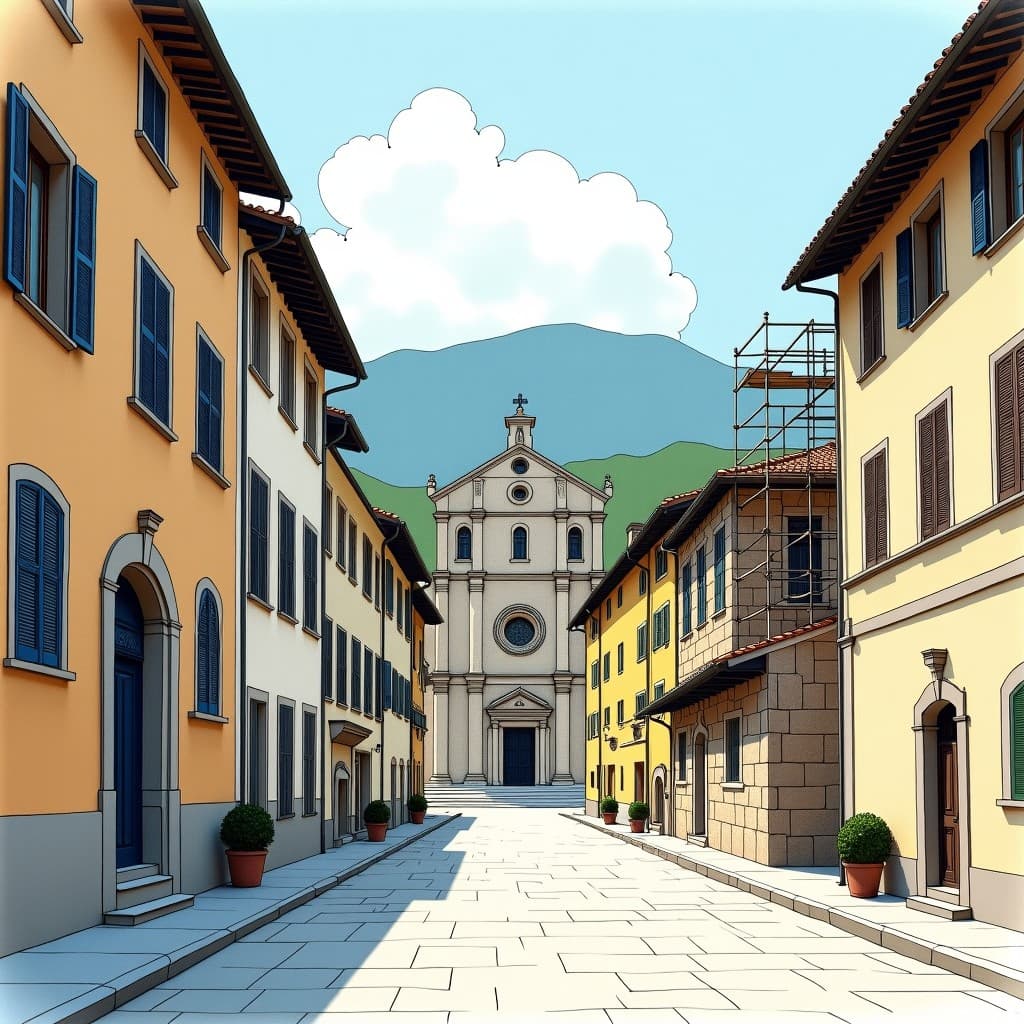
Ten years after the earthquake that devastated the historic Umbrian town of Norcia, the community continues its slow and unfinished recovery. The 6.6-magnitude tremor that struck on the morning of 30 October 2016 killed several people, injured dozens and forced the evacuation of hundreds, according to foreign news reports at the time. The Guardian Australia, reporting on the anniversary, recalled that the quake hit near the walled town in the province of Perugia, collapsing buildings and crushing cars.
Norcia, known across Italy and abroad for its Franciscan heritage and its prized black truffles and cured meats, became a symbol of the destruction that inland seismic zones can suffer. The 2016 earthquake was part of a sequence that also damaged other towns across the Apennines, including Amatrice and Accumoli, where the death toll was far higher. In Norcia, the basilica of Saint Benedict, the town's patron saint, was reduced to rubble, an image that circulated around the world.
A decade on, the reconstruction is far from complete. Many residents remain in temporary housing, and the town's historic centre is still partly off-limits. The slow pace of rebuilding has become a recurring theme in foreign coverage of post-earthquake Italy, with reports noting that bureaucratic delays and funding disputes have hampered recovery in the central regions.
The anniversary comes as Italy again confronts its seismic vulnerability. This week, a 4.7-magnitude earthquake near Naples injured 26 people and forced around 300 evacuations, according to the Guardian, in the strongest tremor to hit that volcanic region in 40 years. While the Campi Flegrei area west of Naples is a different geological setting — a volcanic caldera rather than an Apennine fault line — the event is a reminder that Italy's entire peninsula remains exposed to earthquakes.
For Umbria, the lesson of 2016 remains urgent. The region sits on the same mountain chain that runs the length of the Italian peninsula, and small tremors are common. Foreign geologists have noted that the 2016 sequence was not exceptional in magnitude but was unusually destructive because it struck densely built medieval towns with stone and masonry structures ill-suited to shaking.
The recovery of Norcia has also become a case study in the tension between preserving heritage and ensuring safety. International conservation experts have debated whether to rebuild historic centres as they were or to introduce modern anti-seismic techniques. In Norcia, some buildings have been reconstructed with hidden steel frames and base isolators, while others remain in a state of arrested decay.
Local officials have repeatedly called for more national attention and funding, arguing that inland areas like Umbria are often overlooked in favour of the richer north. Foreign correspondents have echoed this framing, describing the post-earthquake reconstruction as a test of whether Italy can protect its small towns and their cultural identity. For the people of Norcia, the answer is still being written.