
VALLE D'AOSTA
Ancient Alpine mummy yields yeast for modern bread
Scientists extract living microbe from 5,300-year-old remains found on the Austro-Italian border, reviving interest in the Iceman and Alpine prehistory
Camille Bréan1,356 wordsEdition №5Friday, 5 June 2026 — Edition № 5
Scientists have extracted living yeast from the preserved gut of Ötzi the Iceman, the mummified human remains discovered in 1991 on the border between Austria and Italy, and used the microbe to produce sourdough bread. According to CBS News, the yeast has survived in Ötzi's frozen remains for more than 5,300 years—predating the Egyptian pyramids—and remains viable for fermentation. The discovery adds a new dimension to one of archaeology's most celebrated finds and reinforces the Austro-Italian Alpine border as a site of scientific and historical importance.
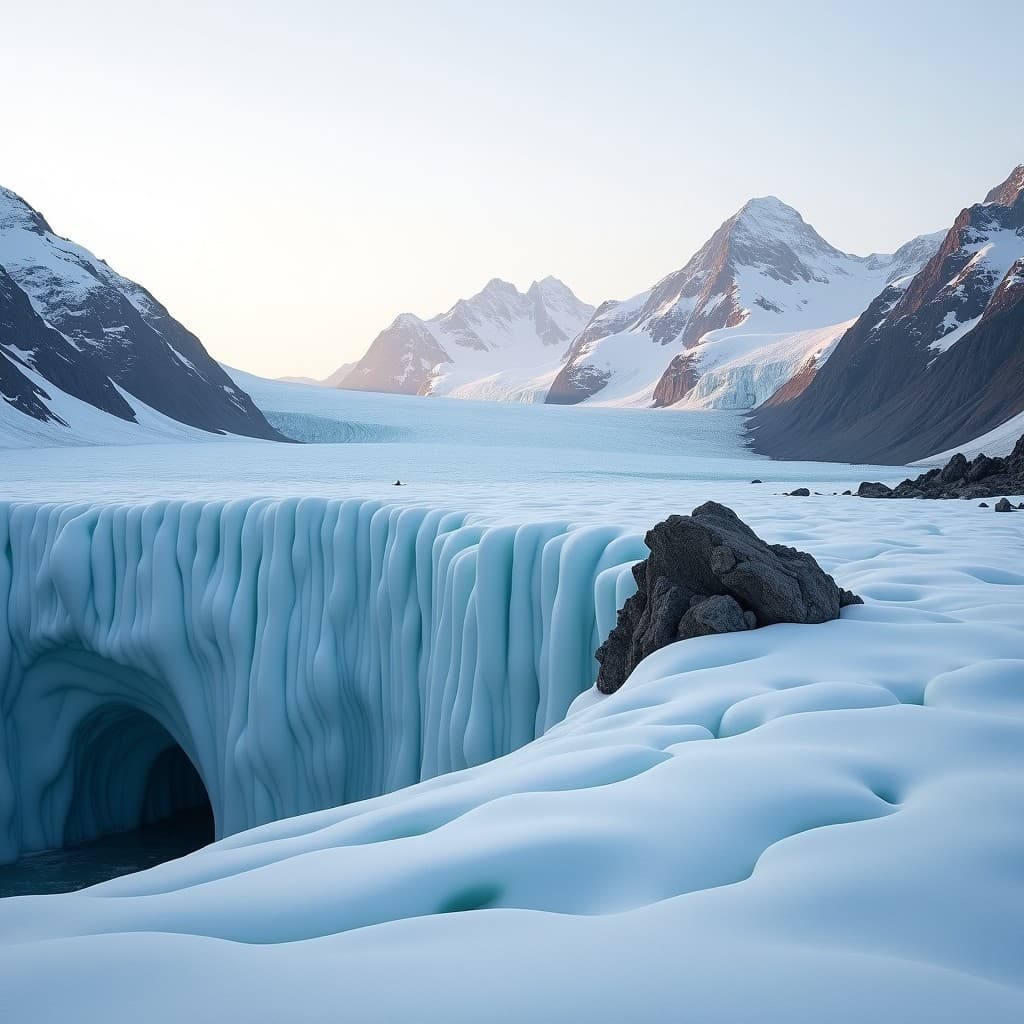
Ötzi was found in the Ötztal, a valley in the Austrian Tyrol roughly 150 kilometres north of the Aosta Valley. The remains, preserved in glacial ice at an altitude of 3,200 metres, have provided unprecedented insight into Chalcolithic Alpine life: his clothing, tools, diet, and even the copper-tipped arrow that killed him. The yeast discovery extends that knowledge into the microbial world—revealing not only what Ötzi ate but what microorganisms inhabited his body and the Alpine environment he moved through.
The finding has reignited international interest in Ötzi and the broader question of how humans adapted to high-altitude Alpine environments in prehistory. For Valle d'Aosta, which sits at similar elevations and shares the same Alpine ecology, the discovery underscores the region's role in European archaeological understanding. The Aosta Valley has its own Neolithic and Bronze Age sites, though none as dramatically preserved as Ötzi. The Iceman's yeast story draws global attention to the Alps as a place where ancient life can be recovered and studied in extraordinary detail.
The yeast was identified as a species of Saccharomyces, the same genus used in modern bread-making and brewing. According to CBS News, researchers cultured the microbe from Ötzi's intestinal contents and successfully used it to ferment dough, producing functional sourdough bread. The feat required careful laboratory work to isolate and grow the ancient yeast without contamination, then test its fermentation properties. The resulting bread was reportedly edible, though the experiment was primarily scientific rather than culinary.
This discovery raises intriguing questions about the microbial ecology of the Chalcolithic Alps. The yeast found in Ötzi's gut may have come from fermented foods he consumed—possibly a primitive beer or fermented grain product—or from the environment itself. Either way, it demonstrates that fermentation technology existed in Alpine communities 5,300 years ago, far earlier than previously documented in some regions. The finding suggests that Alpine peoples possessed sophisticated knowledge of food preservation and processing.
Ötzi himself remains a figure of intense scientific interest. Since his discovery, researchers have extracted his DNA, analyzed his clothing and tools, studied his final meals, and even examined the arrow wound that killed him. He appears to have been a shepherd or hunter who died in the high mountains, possibly fleeing conflict or pursuing game. His body was naturally mummified by the cold and dry conditions of the high-altitude glacier, preserving soft tissues that normally decay within years.
The Ötztal, where Ötzi was found, sits on the modern border between Austria and Italy—a frontier that has shifted multiple times over the past century. The valley is now part of the Italian autonomous province of South Tyrol (Trentino-Alto Adige), though it was part of Austria until 1919. The ambiguity of the border has occasionally created diplomatic complexity around Ötzi's ownership and display. The remains are housed in the South Tyrol Museum of Archaeology in Bolzano, Italy, but the discovery site and much of the surrounding landscape remain in Austria.
For Valle d'Aosta, Ötzi's yeast discovery is a reminder of the region's deep human history. The valley has been inhabited since the Mesolithic period, and archaeological surveys have uncovered Neolithic settlements, Bronze Age burial sites, and evidence of transalpine trade routes. However, the Aosta Valley's archaeological record is less dramatically preserved than Ötzi's remains. The region's warmer, wetter climate and lower elevations do not naturally mummify organic material as the high glaciers do.
The yeast story also highlights the role of international scientific collaboration in Alpine research. The Iceman has been studied by researchers from Italy, Austria, Germany, Switzerland, and beyond. The yeast analysis involved microbiologists, archaeologists, and food scientists working across borders. This collaborative model reflects the reality of Alpine science: the mountains are a shared laboratory, and major discoveries require coordination among the nations and regions that share them.
The broader significance of Ötzi lies in what he reveals about Alpine adaptation. At 5,300 years ago, the Alps were not empty wilderness but inhabited landscape. Communities lived at high elevations, moved seasonally between valleys, traded across passes, and possessed sophisticated technology for survival in harsh conditions. Ötzi's clothing—made from leather, plant fibres, and fur—demonstrates engineering knowledge. His tools show metallurgical skill. His presence at 3,200 metres suggests familiarity with high-altitude terrain.
The yeast discovery also touches on the history of fermentation and food culture in Europe. Bread-making and beer-brewing are among humanity's oldest biotechnologies, relying on the controlled use of microorganisms. The presence of viable yeast in Ötzi's gut suggests that fermented foods were part of Alpine diet in the Chalcolithic. This pushes back the documented history of fermentation in Europe and raises questions about how widely such techniques were practiced.
For Valle d'Aosta's cultural identity, Ötzi represents a kind of deep Alpine ancestry. The region's current population is descended from waves of settlement and migration—Celtic peoples, Romans, Franks, and later Italian and French populations. But beneath all these layers lies the prehistoric Alpine world that Ötzi inhabited. The yeast discovery makes that ancient world tangible in an unusual way: through a living microorganism that has survived millennia.
The scientific interest in Ötzi shows no sign of diminishing. Advanced techniques in DNA analysis, isotope chemistry, and microbiology continue to yield new information from the mummified remains. Each discovery adds texture to the picture of Chalcolithic Alpine life. The yeast finding, while modest in scale, exemplifies how even small details preserved in the ice can illuminate the past.
The Ötztal itself has become a destination for tourists interested in Ötzi and Alpine archaeology. The valley's museums, hiking trails, and archaeological sites attract visitors from across Europe. For Valle d'Aosta, which also markets itself as an Alpine destination with deep historical roots, the Iceman's fame offers both inspiration and a measure of comparison. The region has its own archaeological heritage and its own story to tell about human adaptation to the mountains, though it lacks a single figure as iconic as Ötzi.
Looking forward, the yeast discovery may inspire further investigation of microbial remains in other ancient Alpine sites. If other mummified or well-preserved remains exist in glacial or permafrost environments, they too might yield viable microorganisms. As climate change causes Alpine glaciers to retreat, more ancient material may be exposed—creating both scientific opportunity and the risk of loss if the remains are not properly documented and preserved.
The story of Ötzi's yeast also resonates with current concerns about Alpine ecology and climate. The glaciers that preserved the Iceman for 5,300 years are now melting rapidly due to warming temperatures. The same processes that have revealed Ötzi and his yeast are destroying other glacial archives. For Valle d'Aosta and the broader Alpine region, the Iceman's story is a poignant reminder of what the mountains hold—and what may be lost if climate change continues to accelerate.