
BASILICATA
Oil Prices Fall to Multimonth Lows as Iran Deal Nears
Energy transition pressure mounts on Italy's onshore fields as crude futures settle amid U.S.–Iran negotiations
Pietro Lasorsa362 wordsEdition №14Saturday, 13 June 2026 — Edition № 14
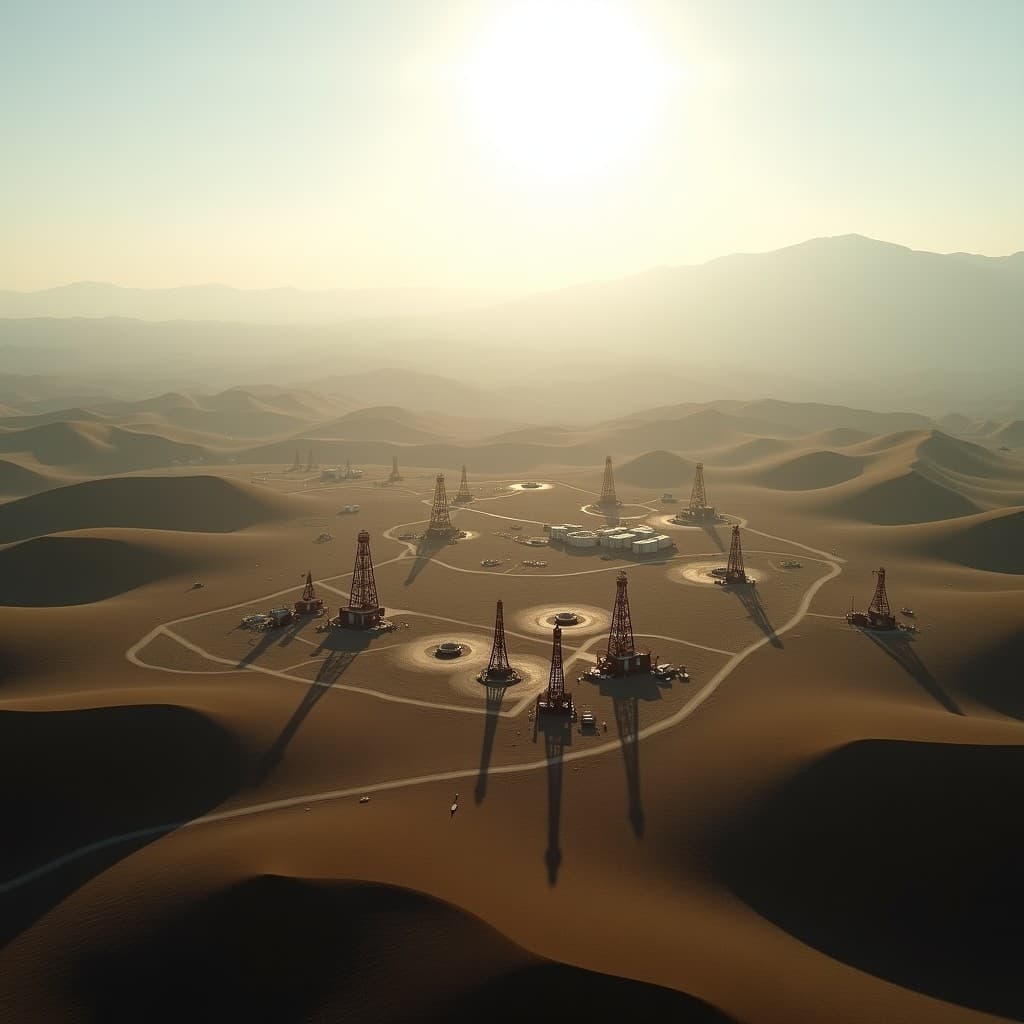
Crude oil futures fell sharply this week as the United States and Iran moved closer to an agreement to end their conflict and reopen diplomatic channels, according to the Wall Street Journal's energy roundup. The decline sent oil to its lowest levels in months, a shift that ripples directly through Basilicata's energy sector, where Italy's most productive onshore field continues to operate amid a broader European push toward renewables.
The price collapse reflects a fundamental tension in global energy markets: traders and analysts have long warned that supply disruptions—including the effective blockade of the Strait of Hormuz that occurred three months ago—would drive oil toward catastrophic highs. Yet Bloomberg reported this week that oil has not approached $200 a barrel despite what it termed 'the biggest supply shock in history,' suggesting that demand destruction and accelerating renewable capacity have fundamentally altered the calculus of energy scarcity.
For Basilicata, the pressure is acute. The region's onshore oil production, concentrated in the Val d'Agri field near Potenza, has long been the engine of regional investment and tax revenue. Yet as crude prices contract and European climate policy tightens, the field faces a narrowing window. Foreign energy analysts have increasingly framed Italy's onshore reserves not as strategic assets but as stranded capital—productive infrastructure whose economic life shortens with each decline in the price floor needed to justify continued extraction.
The broader European energy crisis that drove prices upward in 2022 and 2023 has given way to a new regime. Renewable capacity across the continent has surged; Italy itself set solar records this year, according to foreign energy coverage. The combination of lower oil prices, faster renewable deployment and tightening carbon accounting has begun to shift the risk calculus for producers operating in mature, politically sensitive basins like Basilicata's.
What comes next for the region remains contested. The onshore field employs hundreds directly and supports regional infrastructure through tax and licensing revenue. Yet the economics that once justified continued expansion are deteriorating. Foreign energy analysts now focus on how Italy will manage the transition—not whether it will occur. For Basilicata, that transition will define the next decade of regional development as thoroughly as oil extraction has defined the past forty years.