
SICILIA
Dua Lipa's Palermo wedding exposes Sicily's tourism dilemma
Three-day celebration in historic centre divides residents over city's transformation into 'theme park'
Concetta Vassallo1,348 wordsEdition №8Monday, 8 June 2026 — Edition № 8
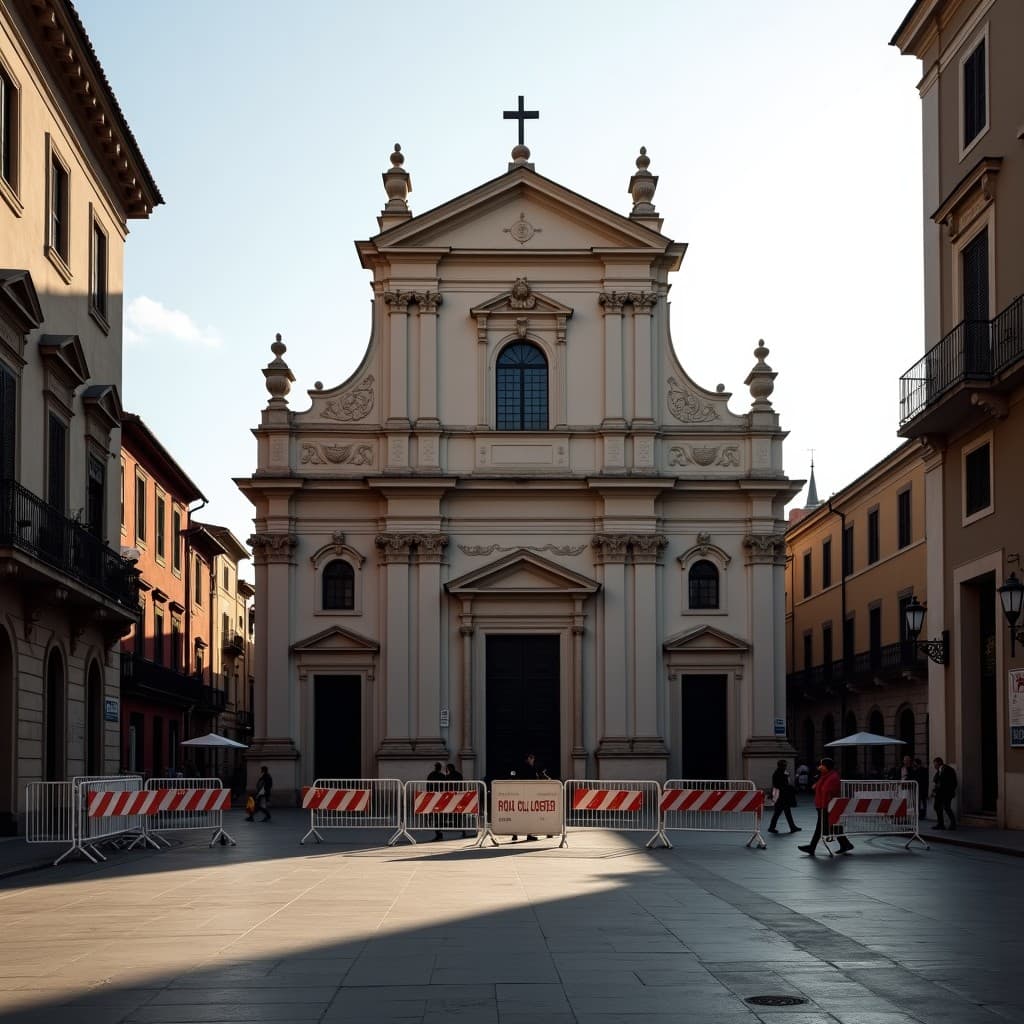
Pop star Dua Lipa and actor Callum Turner celebrated their wedding in Palermo, Sicily over a three-day weekend, according to reporting from CNN, Euronews, and Vogue. The couple, who had married in a civil ceremony in London on May 31, held a second celebration in the Sicilian capital, with CNN reporting that the festivities took place at the Villa Valguarnera in Palermo's historic centre and drew approximately 300 guests. The event was covered extensively by international entertainment media, with details emerging about venues, guest lists, and the logistics of hosting a high-profile wedding in one of Europe's most visited historic cities.
The wedding's presence in Palermo, however, exposed a deeper fracture in the city. The Guardian reported on Friday that the celebration divided residents: while some took pride in hosting the event, others lamented road closures, security cordons, and the city's transformation into what one resident described as a 'theme park.' Concetta Chillemi, a shop owner near Palermo's gallery for modern art housed in a baroque church in the historic centre, was quoted by the Guardian expressing frustration with the disruption. The tension between tourism revenue and quality of life for residents has become acute in Palermo, as it has in Venice, Florence, and Rome.
The wedding illustrates a paradox that has come to define Mediterranean heritage cities. International attention and celebrity events bring prestige and economic activity; they also displace residents, close streets, and transform public spaces into stages for private consumption. For Palermo, a city with profound historical layers—Greek, Arab, Norman, Spanish—the question of who the city is for has become urgent.
Palermo's tourism boom is recent and accelerating. The city, long overshadowed by Venice, Florence, and Rome in the international imagination, has become fashionable among wealthy travellers seeking authenticity and history away from the most crowded circuits. The Vucciria market, the Mondello waterfront, the Quattro Canti intersection, and the baroque churches of the historic centre have become Instagram destinations. Property prices have risen; short-term rental platforms have proliferated; residents have begun to move out.
The Guardian's reporting on the wedding captured this tension directly. The outlet noted that some residents were proud to host celebrations of international stature, seeing it as validation of Palermo's emergence as a world-class destination. Others, however, saw the event as symptomatic of a larger problem: the city's transformation from a place where people live into a place where tourists and celebrities perform. The Guardian quoted one resident saying, 'I could understand if it was for the pope'—a comment that reveals both the scale of disruption and the hierarchy of legitimacy in Sicilian life.
For a city with Palermo's history, the stakes are high. The capital of Sicily has been a crossroads of Mediterranean civilizations for nearly three thousand years. Its architecture, food, dialect, and culture are products of Greek, Arab, Norman, Spanish, and Italian layers. The city's identity is not primarily touristic; it is civic, historical, and deeply rooted. Yet tourism now shapes how the city is experienced by outsiders and, increasingly, how it is managed by authorities seeking to capitalize on international interest.
The short-term rental crisis in Italian cities has become a focus of international reporting. The Local Italy reported in early June that Florence had extended a ban on tourist lets beyond the historic centre to nine residential neighbourhoods, becoming the first Italian city to implement such a freeze at scale. The outlet noted that the expansion was driven by concerns that Airbnb-type listings were displacing residents and degrading neighbourhood life. Similar restrictions are being debated in Venice, Rome, and other heritage cities. Palermo, however, has not yet implemented comparable measures, leaving the city vulnerable to the same dynamics that have hollowed out other Mediterranean centres.
The economics of tourism in Palermo are significant. The city's economy depends partly on visitors: hotels, restaurants, guides, transport, and retail all benefit from the approximately two million tourists who visit annually. Yet the distribution of this revenue is uneven. Property owners and hospitality businesses capture most of the gains; residents bear most of the costs—noise, congestion, rising rents, the loss of neighbourhood character. The wedding of Dua Lipa and Callum Turner, while brief, exemplifies this dynamic: international attention and revenue for some, disruption for many.
The Guardian's framing of the wedding as a dividing event is significant. International outlets have increasingly reported on the tension between tourism and resident welfare in Mediterranean cities. The outlet's decision to lead with the division, rather than the spectacle, reflects a shift in how foreign media covers heritage tourism. The story is no longer simply about the glamour of famous people choosing a beautiful location; it is about what that choice means for the people who live there.
Palermo's position as Sicily's capital adds another layer. The city is not just a tourist destination; it is a regional government seat, a university centre, a port, and a working city. The presence of tourism does not replace these functions; it overlays them, creating friction. Street closures for a celebrity wedding affect not just tourists but residents going about daily life. The disruption is real, even if temporary.
The wedding also reflects a broader pattern in how wealthy individuals and corporations use Mediterranean heritage cities. Palermo, Venice, Florence, and Rome have become venues for private events—weddings, fashion shows, corporate retreats—that treat public and semi-public spaces as stages. The Guardian's reporting suggests that residents are increasingly questioning whether this use of their city serves the public interest or merely extracts value from it.
For Sicily specifically, the tourism question intersects with the island's economic challenges. Sicily has lower per capita income than mainland Italy and higher unemployment, particularly among the young. Tourism is presented as a solution to economic stagnation. Yet the jobs created are often seasonal, low-wage, and precarious. The wealth generated by tourism flows largely to external investors and property owners, not to local workers. The wedding of Dua Lipa and Callum Turner created temporary employment and revenue; it also, according to the Guardian, created resentment.
The international coverage of the wedding is itself part of the story. CNN, Vogue, Euronews, and other outlets gave the event extensive coverage, amplifying Palermo's profile as a destination for the wealthy and famous. This coverage drives further tourism, further property investment, and further pressure on the city's infrastructure and character. The cycle is self-reinforcing: media attention attracts visitors and investors, which changes the city, which attracts more media attention.
Palermo's response to this pressure will shape its future. The city could follow Florence's path, implementing restrictions on short-term rentals and attempting to preserve neighbourhood character. It could embrace tourism fully, accepting the transformation that comes with it. Or it could attempt a middle path, managing tourism while protecting resident welfare. The Guardian's reporting suggests that residents are not waiting passively; they are expressing their views about what kind of city they want Palermo to be.
The wedding of Dua Lipa and Callum Turner, in the end, is a small event with large implications. It is not the cause of Palermo's tourism pressures; it is a symptom of them. The international media coverage, the disruption to residents, the celebration of the city as a destination for the wealthy—these are features of a larger transformation. The Guardian's decision to report on the division the wedding caused, rather than simply celebrating the event, reflects a recognition that the story is not about the wedding itself, but about what the wedding reveals about how Mediterranean heritage cities are being remade.