
ABRUZZO
7.8 Quake in Philippines Echoes L'Aquila's Unfinished Lesson
As Mindanao rebuilds, Abruzzo's 17-year recovery offers a cautionary tale on state capacity and time
Marco Di Sante1,247 wordsEdition №9Tuesday, 9 June 2026 — Edition № 9
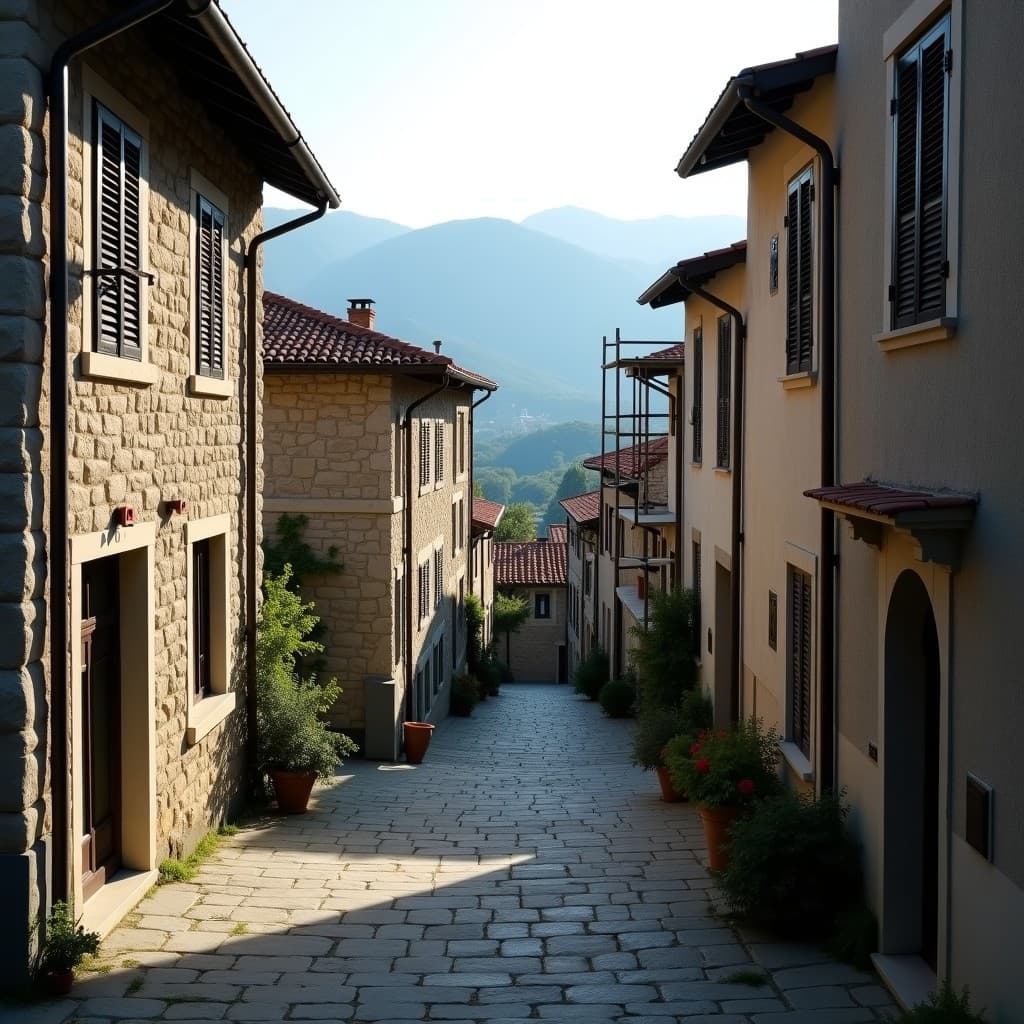
A 7.8-magnitude earthquake struck the Mindanao region in the southern Philippines on Monday, killing at least 35 people, collapsing buildings and triggering a tsunami alert, according to reports from AP News and CNN. The disaster has drawn international scrutiny to the mechanics of earthquake response and recovery—a subject that carries particular weight in Abruzzo, where the 2009 L'Aquila earthquake killed 309 people and set in motion a reconstruction process that remains incomplete seventeen years later.
The Philippines quake struck a region with a population of roughly 28 million across Mindanao and nearby islands. Initial reports indicate widespread structural damage and displacement, with rescue operations ongoing. The international press has focused on the immediate humanitarian response: the scale of casualties, the search for survivors, and the adequacy of early warning systems.
For Abruzzo, the story carries a deeper resonance. The 2009 quake that devastated L'Aquila and surrounding villages was magnitude 6.3—smaller than Monday's Philippine event, but concentrated in a densely built medieval city. The recovery has become a case study in the foreign press on how state capacity, political will, and time intersect in post-disaster reconstruction.
The L'Aquila earthquake of April 6, 2009, killed 309 people and left 65,000 homeless. It destroyed or severely damaged thousands of buildings in the city centre and surrounding Apennine villages. The initial response was swift: emergency shelters, medical aid, search and rescue operations. But the reconstruction that followed has become a study in the limits of state action.
Seventeen years on, large sections of L'Aquila's historic centre remain closed to residents. According to international coverage of the reconstruction process, the city's population has fallen from roughly 73,000 before the quake to around 55,000 today. The foreign press has attributed this decline to a combination of factors: the slow pace of building repairs, the cost of reconstruction borne by residents, the migration of young people to other cities, and a loss of faith in the state's ability to restore normal life.
The reconstruction has been complicated by bureaucratic delays, disputes over building standards, and the fragmentation of responsibility across multiple levels of government. Reuters and the Guardian have reported on the frustration of residents waiting years for their homes to be repaired or rebuilt. The process has also been marked by political controversy: the city became a symbol of both state failure and, for some, of the resilience of Italian communities.
What the international press has documented is that earthquake recovery is not a linear process. The immediate phase—rescue, emergency aid, temporary shelter—lasts weeks or months. The second phase, reconstruction of housing and infrastructure, typically spans years. The third phase, the restoration of economic and social life, can take decades. L'Aquila is still in the second and third phases simultaneously.
The Philippines earthquake will follow a similar trajectory. The immediate crisis will dominate the news cycle for days or weeks. International aid agencies will deploy. The Philippine government will announce reconstruction plans. But the real test will come in the months and years ahead, when the initial international attention fades and the long work of rebuilding begins.
Abruzzo's experience offers several lessons that the foreign press has begun to articulate. First, the cost of reconstruction is enormous and often falls disproportionately on local residents and regional governments. Second, the process is vulnerable to political change: a new administration may reprioritize spending or alter reconstruction strategies. Third, the psychological impact of displacement and loss can drive permanent migration, particularly among younger people with economic options elsewhere.
The Apennine region has also grappled with a secondary consequence of the L'Aquila quake: depopulation. The earthquake accelerated a trend that was already underway—the migration of young people from mountain villages to cities. The foreign press has noted that this demographic shift has weakened the social fabric of rural Abruzzo, making recovery harder and slower.
The Philippines faces similar demographic pressures. Mindanao has experienced internal migration for decades, with young people moving to Manila or abroad in search of economic opportunity. A major earthquake could accelerate this trend, particularly if reconstruction is slow or if residents lose confidence in the state's ability to rebuild.
The international response to the Philippines quake has emphasised the importance of building codes and early warning systems. The BBC and Reuters have reported on the collapse of buildings in the affected areas, raising questions about construction standards and enforcement. This mirrors the debate in Italy after 2009, when the focus shifted to why medieval buildings in L'Aquila had not been retrofitted to withstand seismic activity.
Abruzzo's reconstruction has also been shaped by EU cohesion policy and funding. The region received substantial European support for rebuilding, but the process of accessing and deploying these funds has been slow and bureaucratic. The Guardian has reported on the frustration of residents navigating the application process and waiting for reimbursement of reconstruction costs.
For the Philippines, international aid will be crucial. The World Bank, Asian Development Bank, and bilateral donors will likely announce support packages. But the effectiveness of this aid will depend on the capacity of Philippine institutions to absorb and deploy it efficiently. Abruzzo's experience suggests that international funding, while essential, is not sufficient on its own to ensure rapid recovery.
The foreign press has also highlighted the role of civil society and local communities in reconstruction. In L'Aquila, grassroots organisations, religious institutions, and neighbourhood associations have played a crucial role in supporting residents and advocating for faster reconstruction. The Philippines will likely see similar mobilisation, but the outcome will depend on the strength of local institutions and the willingness of the state to listen to community voices.
As the Philippines begins its recovery, the international press will be watching to see whether the country can avoid some of the pitfalls that have prolonged L'Aquila's reconstruction. The scale of the disaster, the capacity of Philippine institutions, and the political will to prioritise reconstruction will all be decisive factors. Abruzzo's seventeen-year journey suggests that the real challenge lies not in the immediate response, but in sustaining the effort and resources needed to restore normal life in the years ahead.