
MOLISE
Pope's migration plea reaches southern Italy's forgotten frontier
As pontiff defends migrants in Lampedusa, Molise's agricultural heartland faces its own exodus of the young
Antonio Petrella687 wordsEdition №36Sunday, 5 July 2026 — Edition № 36
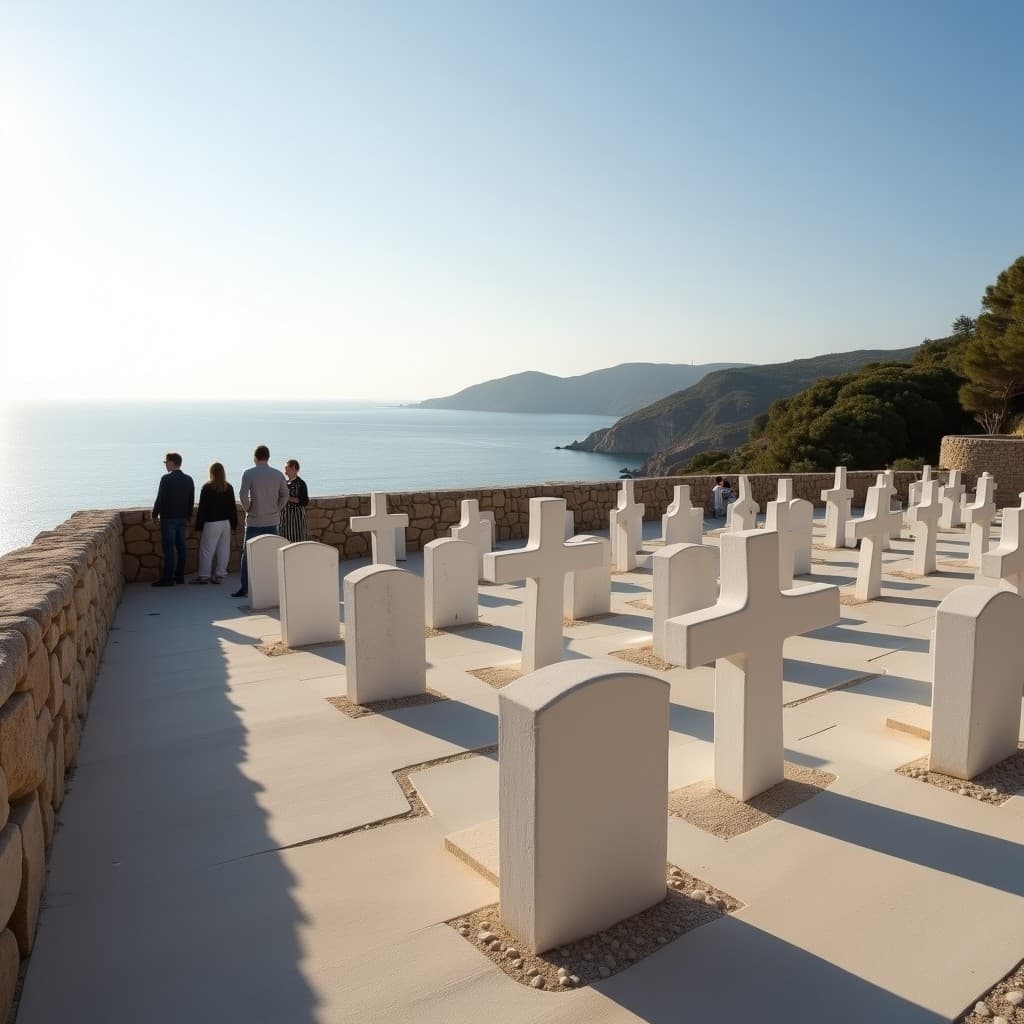
Pope Leo spent July Fourth in Lampedusa, the Sicilian island that has become the symbol of Europe's migration frontier, visiting a cemetery where migrants who died at sea are buried and delivering a message to the United States and Europe: welcome and protect those seeking freedom and prosperity. According to the Washington Post and the BBC, the American-born pontiff urged the U.S. to live up to the ideals of the Declaration of Independence by embracing immigration, while calling on Europe to do more for migrants risking the perilous Mediterranean crossing. The visit was framed by international outlets as a symbolic rebuke to anti-immigrant rhetoric from the Trump administration and European political factions.
The Pope's focus on migration, however, illuminates a crisis that extends far beyond the island gateway. Southern Italy—and Molise in particular—has been hemorrhaging population for decades, not through maritime crossings but through the quiet, steady emigration of the young to northern cities and abroad. According to France 24 and Le Monde, the Pope's visit highlighted the moral dimensions of migration policy; what it did not address is the mirror image playing out across the agrarian South: regions like Molise, with a population of 289,000 and shrinking, lose their young not to war or persecution but to the absence of opportunity. The tratturi—the ancient transhumance routes that once defined Molise's pastoral economy—now lead outward rather than inward.
The Pope's message on human dignity and the right to seek a better life resonates differently when heard from a region where that same dignity is expressed through departure. Molise's agricultural workers, like those in the rice-growing Pavia province now battling drought, face not only climate stress but the structural reality that their region offers them little economic future. The migration the Pope defended at Lampedusa and the emigration that empties villages in Molise are two expressions of the same desperation: the search for a place where work and dignity coexist.
Foreign coverage of the Pope's Lampedusa visit has focused on its geopolitical symbolism—a direct challenge to Trump's immigration crackdown and a call for European solidarity with migrants. The Guardian reported that Leo praised the U.S. tradition of welcoming immigrants, while CBS News noted that he received a Liberty Medal from the National Constitution Center in recognition of his stance. But the visit also exposed the fracture within Italy itself: a wealthy, developed north and a struggling south where the young have few reasons to stay.
Molise's depopulation is not new. The region has lost roughly a third of its population since 1951, according to foreign demographic analyses. What distinguishes it now is the acceleration. Young people leave for Rome, Milan, Turin, or abroad entirely—to Germany, Switzerland, the United States. The region's economy depends on agriculture, small manufacturing, and increasingly on wind energy, but none of these sectors generates the wages or career prospects that compete with urban centers. The 'pay-you-to-move-here' schemes that have drawn American families to villages in the region—buying homes for €13,000, as the New York Post reported in June—are a symptom of abandonment, not revival.
The Pope's visit to Lampedusa was an act of moral witness. But from Molise's perspective, it raises a harder question: what happens to regions that people leave not because they are fleeing danger but because they are pursuing survival? The migrants the Pope defended crossed the sea; Molise's young cross regional borders, invisible to the international press, their departure no less consequential for being domestic. The Pope called on the world to recognize the humanity of those seeking a better life. Molise waits for the world to recognize that some of its own are seeking the same thing—and that the region's future depends on whether it can offer them a reason to stay.