
MOLISE
Pope's AI Encyclical Raises Questions for Italy's Forgotten Regions
As the Vatican calls for technology directed toward human flourishing, Molise confronts its own digital isolation and the limits of techno-optimism in the abandoned South.
Antonio Petrella1,189 wordsEdition №5Friday, 5 June 2026 — Edition № 5
Pope Leo XIV has issued his first encyclical, Magnifica Humanitas, making artificial intelligence the subject of his opening statement to the Church and the world. According to Project Syndicate, the Pope has called for more thought and action about AI among policymakers and publics, religious or secular everywhere. The encyclical is described as clear-eyed about the limits of techno-utopianism and advocates for technology directed toward human flourishing rather than profit or power.
The Vatican's intervention in the AI debate reflects growing concern about the social and economic transformation that artificial intelligence is bringing to developed economies. Project Syndicate notes that the world is dangerously unprepared for this shift. The Pope's framing—technology in service of human dignity—echoes arguments made by international observers about the need for ethical guardrails on AI development and deployment.
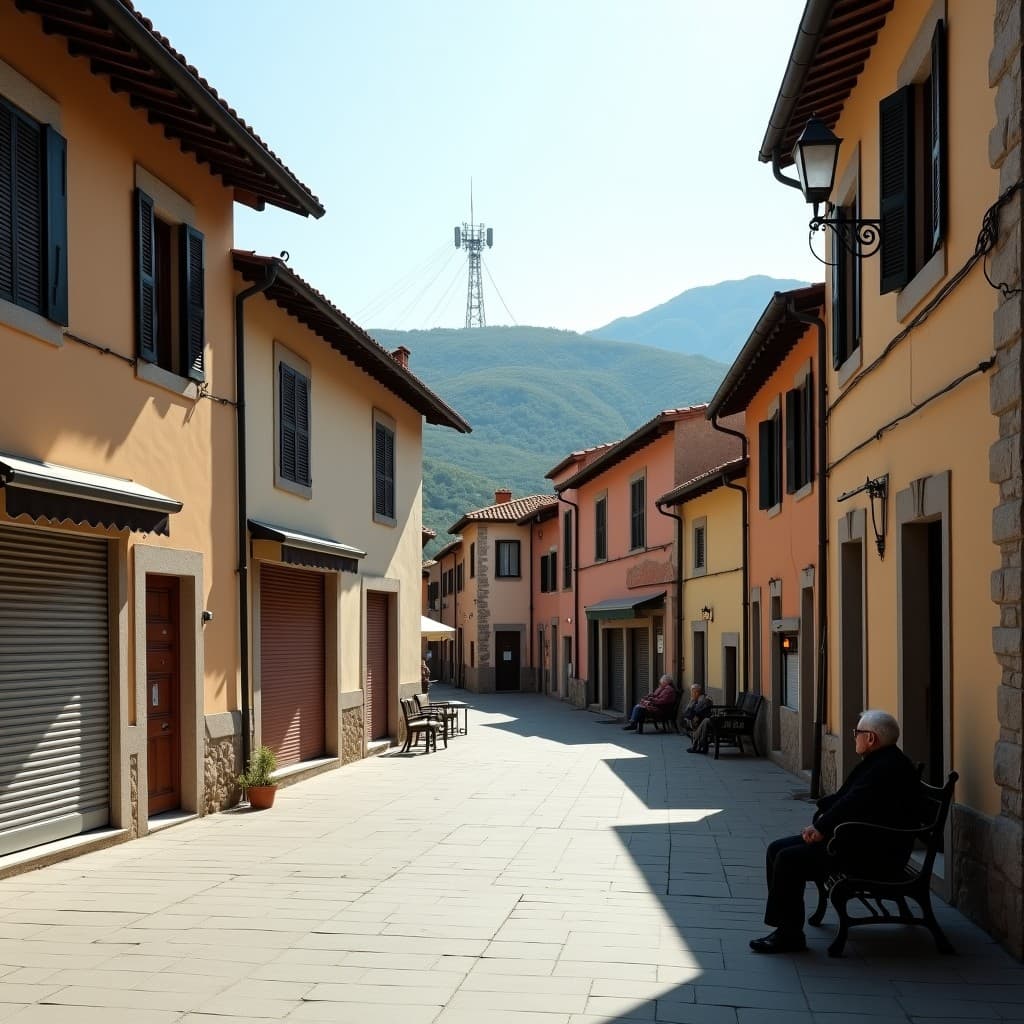
For Molise, a region where emigration has accelerated and digital infrastructure remains uneven, the Pope's call for technology directed toward human flourishing reads as a distant abstraction. The region's population has declined from 320,000 in 1971 to 289,000 today, with young people leaving for opportunities in the North and abroad. The digital divide between Molise and wealthier Italian regions has widened as tech investment concentrates in Milan, Rome, and the industrial North. The Pope's vision of AI serving humanity offers little guidance for regions being left behind by technological progress itself.
The encyclical arrives at a moment when artificial intelligence is reshaping labor markets, administrative systems, and economic opportunity across Europe. Project Syndicate reports that Leo XIV deserves credit for raising the issue when global policymakers and publics remain unprepared. The Pope's emphasis on human flourishing rather than techno-utopianism suggests a skepticism toward claims that AI will automatically improve human welfare or solve structural problems.
This skepticism is warranted, particularly when viewed from the periphery. Foreign coverage of rural depopulation in Southern Europe has documented how technological change often accelerates the abandonment of marginal regions rather than revitalizing them. Molise exemplifies this pattern: as agricultural mechanization has reduced the need for farm labor, and as digital services have concentrated in urban centers, the region has lost both economic function and population. The young leave because opportunity is elsewhere—in cities with tech jobs, universities, and cultural infrastructure.
The Pope's call for technology directed toward human flourishing implicitly raises a question: whose flourishing? In Molise, the introduction of new technologies has often meant the elimination of local jobs without the creation of alternatives. Agricultural mechanization displaced farmworkers. Digital banking reduced the need for bank branches in small towns. E-commerce has hollowed out local retail. Foreign correspondents covering rural decline in Southern Europe have documented this pattern repeatedly: technology arrives, but it serves distant markets and distant interests, not local communities.
The digital divide within Italy is significant and widening. Molise has lower broadband penetration than wealthier regions, fewer tech startups, and limited investment in digital infrastructure outside the regional capital, Campobasso. Young people with digital skills tend to leave the region for opportunities in Milan, Rome, or abroad. The result is a self-reinforcing cycle: as the young and educated leave, the region becomes less attractive to tech investment, which accelerates further emigration. The Pope's vision of technology serving human flourishing offers no remedy for this structural problem.
Project Syndicate notes that Leo XIV's encyclical is described as clear-eyed about the limits of techno-utopianism. This clarity is important: it suggests the Vatican understands that technology alone cannot solve problems rooted in economics, geography, and political will. Yet the encyclical's emphasis on human flourishing remains vague about how to ensure that technological progress benefits those in marginal regions rather than concentrating wealth and opportunity further.
The regional context in Molise adds another layer of complexity. The region's economy depends on agriculture, small manufacturing, and increasingly on wind energy projects. None of these sectors is particularly tech-intensive, and none has attracted significant AI investment or development. Foreign coverage of rural Southern Italy has noted that the region's economic future remains uncertain: agriculture is declining, manufacturing cannot compete with Northern Europe or Asia, and renewable energy projects generate revenue but few jobs. Technology, in this context, is more likely to be a threat to existing livelihoods than an engine of new opportunity.
The Pope's encyclical comes at a moment when AI is beginning to reshape white-collar work in Italy—administrative jobs, legal research, financial analysis, and other services that have traditionally been concentrated in Rome and Milan. If AI accelerates the automation of these roles, the impact will likely be felt first in wealthy regions with the capital to invest in new technologies and the educated workforce to adapt. Molise, with limited tech infrastructure and a shrinking population of young professionals, will be left further behind.
There is also a question about who controls AI development and deployment. The Pope's call for technology directed toward human flourishing assumes some degree of democratic or ethical control over technological systems. In practice, AI development is dominated by large corporations and wealthy nations. Italy, and particularly Southern Italy, has limited influence over these decisions. Molise has virtually none. The region is a consumer of technology, not a shaper of it.
The encyclical's emphasis on human dignity is welcome, but it does not address the structural inequalities that shape who benefits from technological progress. Foreign observers covering rural decline in Europe have noted that technological change often exacerbates existing disparities rather than reducing them. Regions with capital, infrastructure, and educated populations can adapt to and benefit from new technologies. Regions like Molise, lacking these advantages, tend to be left behind.
The Vatican's intervention in the AI debate may influence Church teaching and Catholic social thought, but it is unlikely to change the trajectory of technological development or its distribution across regions. The Pope's vision of technology serving human flourishing is ethically sound, but it remains disconnected from the material conditions that shape opportunity in places like Molise. The region's future will be determined not by papal encyclicals but by investment decisions made in Brussels, Rome, and Silicon Valley.
Molise's regional government has not yet issued a response to the Pope's encyclical, according to available foreign coverage. The silence is telling: it reflects the region's limited capacity to shape national or international policy debates. The region's concerns—depopulation, economic decline, the flight of young people—do not figure prominently in discussions of AI ethics or technological governance at the Vatican or in Brussels.
The broader irony is that the Pope's call for technology directed toward human flourishing arrives at a moment when technological change is actively undermining human flourishing in marginal regions. Molise is not unique in this experience: rural areas across Southern Europe, the Mediterranean, and beyond are experiencing similar patterns of technological displacement and economic marginalization. The encyclical offers moral guidance but no practical path toward ensuring that the benefits of AI reach regions that have already been left behind by earlier waves of technological change.