
LAZIO
Pope Leo ends Spain tour with call for legal migration paths
Pontiff balances defence of migrant dignity with acknowledgement of national border rights, signalling shift in Vatican messaging
Davide Ruspoli618 wordsEdition №14Saturday, 13 June 2026 — Edition № 14
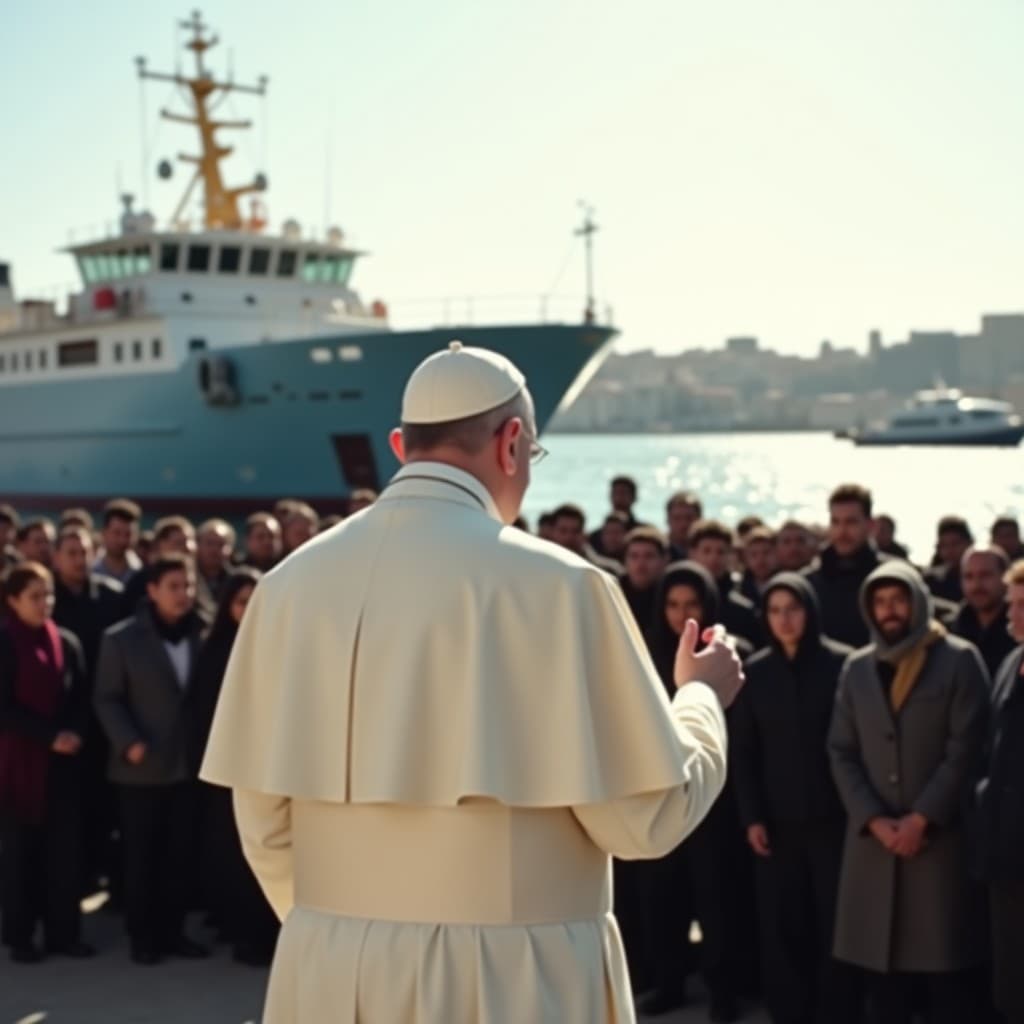
Pope Leo XIV wrapped up his visit to the Canary Islands on Friday with a fuller articulation of the Vatican's position on migration, one that acknowledges both the dignity of migrants and the sovereignty of nation-states. The Washington Post reported that the pontiff called for "legal" pathways for migration while defending migrants against what he termed Europe's "indifference" to their plight. Speaking from the port of Las Palmas, according to Politico Europe, the pope stated that "human dignity has no passport and does not lose its value when crossing a border."
The messaging represents a deliberate calibration of the Vatican's migration stance at a moment of acute Mediterranean crisis. The Chicago Tribune reported Sunday that Italy's coast guard recovered ten bodies after a fishing vessel rescued 48 migrants from a capsized boat near Malta—one of several such incidents that have marked the Mediterranean crossing route in recent weeks. The pope's visit to the Canary Islands, the primary landing point for migrants crossing from West Africa, placed him at the geographical and political heart of Europe's migration debate. According to the BBC, the pontiff met migrants who had survived the perilous journey, including a 19-year-old from the Gambia who spent seven days at sea.
The Vatican's framing—defending migrants' humanity while affirming states' right to border control—reflects Rome's diplomatic position as the Church seeks to influence European policy without appearing to undermine national sovereignty. Northern Public Radio reported that Leo spoke directly to European states, underlining their "duty to promote and protect migrants," while also addressing traffickers directly, telling them to "repent or face God's wrath." The pope's words carry weight in Rome, where the Italian government faces sustained pressure from the international press over its Mediterranean rescue operations and migration policy.
The trip concluded Friday after the Vatican's chartered plane suffered engine failure, forcing the pope to accept a ride home on King Felipe VI's private jet, according to the Washington Post. The incident, while logistical, underscored the mobility challenges facing the Holy See's diplomatic operations—a detail that resonates in Rome, where the Vatican's ability to project influence depends partly on its capacity to move freely across the world stage.
For the Italian capital, the pope's migration messaging carries institutional weight. Rome hosts both the Vatican and the Italian government; the latter faces ongoing scrutiny from foreign media over its coast guard operations and its cooperation with Libya on migrant interdiction. The pope's insistence on legal pathways, reported by the Washington Post, implicitly endorses the principle that nations may regulate entry—a position that does not clash with Italian government policy, even as it reframes the moral language around enforcement. The Vatican's dual emphasis on dignity and legality suggests Rome's diplomatic class will continue to navigate migration as a question of both humanitarian principle and state prerogative.
The Canary Islands visit also highlighted the Mediterranean as a shared European crisis rather than an Italian problem alone. According to the BBC and Northern Public Radio, migrants from across West Africa converge on Spanish territory; Italy's coast guard operates further east, in the Central Mediterranean. Yet the pope's tour treated migration as a continental challenge requiring a unified European response—a framing that may influence how Rome positions itself within EU discussions on asylum and border policy in coming months.