
MOLISE
Pope Leo in Spain Confronts Migration; Molise's Faithful Ask Why He Doesn't Come Home
The pontiff's week-long visit to Madrid focuses on migrants and AI ethics, but his absence from Italy's depopulating interior raises questions about the Church's role in the South's abandonment.
Antonio Petrella1,389 wordsEdition №9Tuesday, 9 June 2026 — Edition № 9
Pope Leo arrived in Spain on Saturday for his first visit to an EU country outside Italy, according to France 24 and The Washington Post. The week-long trip includes the inauguration of a new tower in Barcelona's Sagrada Familia basilica and meetings with migrants who crossed dangerous Atlantic waters to reach Europe. The Washington Post reported that the previously stoic pontiff has drawn huge crowds in Madrid, appearing to make what amounts to a "star turn," enthralling the faithful with emotive assurance. The New York Times noted that both the Pope and Prime Minister Pedro Sánchez of Spain have recently clashed with President Trump, though their motivations differ.
The Pope's focus on migration and technological ethics—themes explored in his first encyclical, Magnifica Humanitas, which Project Syndicate described as a direct challenge to market-driven approaches to AI—reflects the Vatican's evolving priorities. Yet the choice to spend a week in Spain, rather than visiting Italy's depopulating interior, underscores a broader absence of the Church from regions where faith communities are collapsing under the weight of emigration.
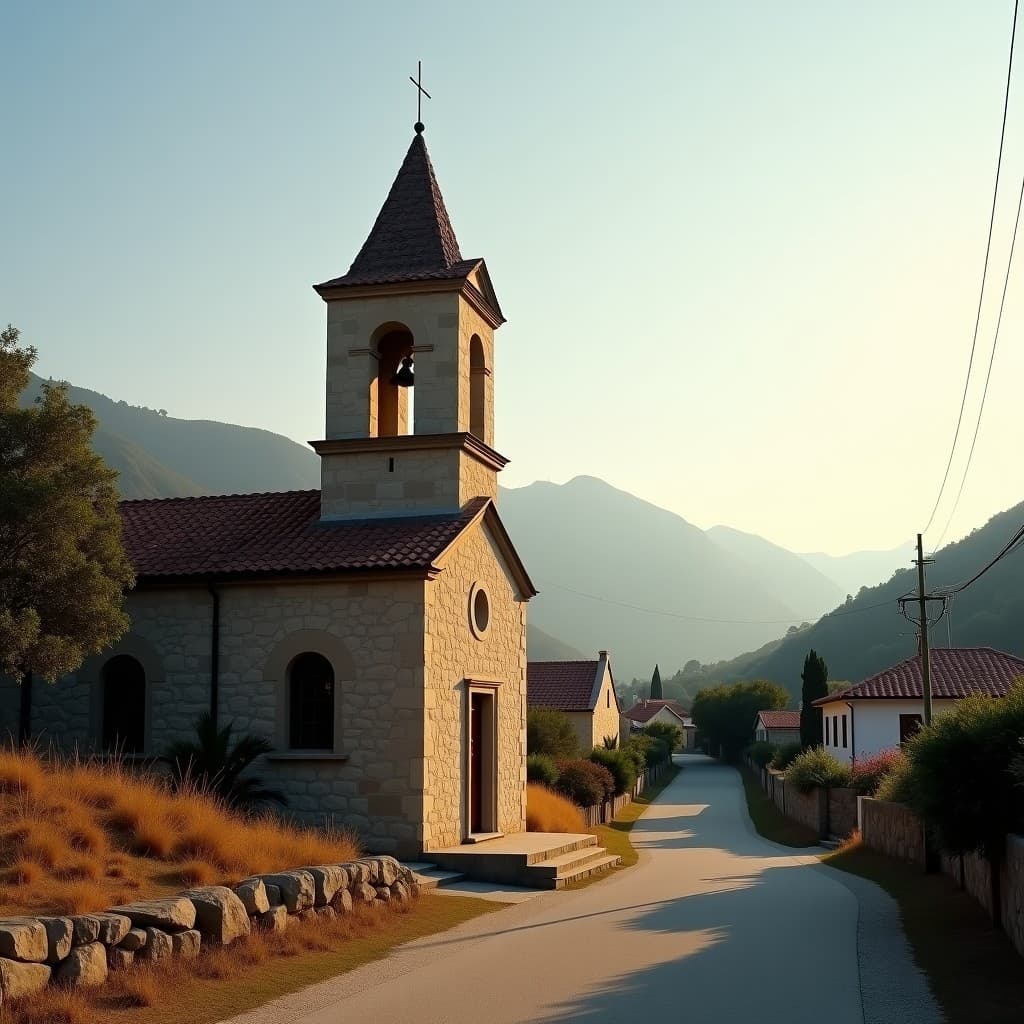
For Molise, a region where the Church has historically anchored community life, the Pope's Spanish itinerary feels like a missed opportunity. The region's parishes are closing or merging. Young people leave for northern cities or abroad, taking their families and their faith with them. The Church in Molise faces a crisis not of doctrine but of demography—a shortage of priests, dwindling congregations, and the slow disappearance of the villages and towns where Catholicism once defined daily life.
The Pope's visit to Spain is his first to an EU member state outside Italy since his election. According to France 24, he will spend the week inaugurating architectural and religious landmarks, meeting with migrants, and addressing questions of technological ethics and human dignity. The Washington Post reported that the Pope has drawn crowds comparable to those attracted by Bad Bunny, the reggaeton artist also touring Madrid, suggesting that his public presence and message are resonating with Spanish audiences in unexpected ways.
The encyclical Magnifica Humanitas, which Project Syndicate analysed in detail, represents a significant intervention in global debates about artificial intelligence. The commentary noted that Pope Leo explicitly invokes the biblical Tower of Babel—the story of humanity's hubris in attempting to build toward heaven, only to be fragmented by God into different languages and cultures—as a parable for AI. The Pope's argument, according to Project Syndicate, rejects the notion that markets alone can be trusted to shape technology's future, instead asserting that AI raises questions that prices and profits cannot answer. This positions the Chicago-born pontiff in direct opposition to market-fundamentalist economics.
The choice of Spain for this visit carries symbolic weight. Spain has long been a centre of Catholic influence and a major destination for migrants crossing the Atlantic. The Pope's decision to meet with migrants there, rather than in Italy, reflects the Vatican's awareness of migration as a defining issue for contemporary Christianity. Yet it also highlights the Church's relative inattention to internal Italian crises—particularly the depopulation of the South.
Molise exemplifies that crisis. The region's population has declined by nearly 10 percent since 1971. Young people leave in their twenties and thirties, seeking education, employment, and opportunity in northern cities or abroad. The Church has followed them, or rather, failed to follow them, leaving behind parishes with ageing congregations and priests who serve multiple villages. The Diocese of Campobasso-Boiano, which covers Molise, has struggled to recruit new priests and to maintain the infrastructure of parish life.
The departure of young people from Molise is not primarily a crisis of faith but a crisis of economic survival. The region's agricultural economy has contracted as mechanisation advanced and rural populations declined. Manufacturing never took root on the scale it did in Emilia-Romagna or Veneto. Tourism remains minimal, confined to heritage sites and rural agritourism. Young people with education leave for jobs in Rome, Milan, or abroad. Those without education often leave too, seeking work in construction, hospitality, or other sectors in northern cities.
The Church in Molise has no answer to this exodus. It cannot create jobs or reverse demographic decline. It can only witness the slow emptying of villages and the closure of churches. Some parishes have been deconsecrated and converted into private homes or storage facilities. Others remain open but serve only a handful of elderly worshippers. The priesthood itself has become precarious; young men from Molise rarely enter seminaries, and the diocese must recruit priests from other regions or rely on older clergy past retirement age.
The Pope's visit to Spain, by contrast, addresses a migration crisis that is active and visible. Migrants arriving in Spain are news; their stories are told in international media; their presence generates political and moral debate. The Church's role in welcoming and protecting migrants is a contemporary, urgent mission. But the slow depopulation of Molise—the departure of millions of Italians over decades—is treated as a historical fait accompli, not a present crisis requiring pastoral intervention.
Yet the two phenomena are connected. Many Molisani who emigrated in the 20th century went to the Americas, particularly the United States and Argentina. Their descendants often maintain ties to the region through family networks and heritage tourism. The Church in Molise could potentially leverage those connections—reaching out to diaspora communities, facilitating return visits, creating economic opportunities that might slow emigration. Instead, the Church has largely ceded this role to secular heritage organisations and tourism boards.
The Pope's encyclical on AI also touches on themes relevant to Molise's future. If artificial intelligence and digital technology are to shape society's technological future, as Project Syndicate noted, then regions like Molise face a choice: either invest in digital infrastructure and skills training to attract remote work and tech-enabled agriculture, or accept further marginalisation. The Church could play a role in this transition, advocating for rural broadband, supporting digital literacy programmes, or promoting sustainable agriculture that leverages technology. But such interventions require the Pope's attention and the Vatican's resources—neither of which Molise appears to command.
The absence of the Pope from Molise is also an absence of symbolic validation. When a pope visits a region, he affirms its importance to the universal Church and to the global Catholic community. He draws media attention, generates pilgrimage, and reinforces the idea that the region's people and their struggles matter. Molise has not received a papal visit in decades. The region's invisibility to Rome—both ecclesiastical and political—is reinforced by the Pope's choice to spend his time in Spain, a larger, wealthier, more demographically dynamic country.
The Washington Post reported that the Pope's visit to Spain is drawing huge crowds and generating significant media coverage. This visibility has consequences. It elevates Spain's profile internationally, attracts pilgrims and tourists, and reinforces the idea that Spain is central to contemporary European Catholicism. Molise, by contrast, remains peripheral—a region that exists mainly in the consciousness of heritage tourists and diaspora communities seeking to reconnect with ancestral villages.
The Pope's focus on migration is also revealing. While the Church welcomes migrants arriving in Spain and elsewhere, it has been largely silent on the causes of migration—the economic collapse of rural regions, the concentration of wealth and opportunity in urban centres, the policies that make it rational for young people to leave their home regions. A more comprehensive papal intervention might address not only the welcome extended to migrants but also the conditions that force people to migrate in the first place.
For Molise, the Pope's Spanish itinerary is a reminder that the Church, like the Italian state, has largely abandoned the interior South to demographic decline. The region's future depends on reversing that abandonment—on creating economic opportunities, investing in infrastructure, and affirming the value of rural life and community. The Church could contribute to that effort, but only if it recognises depopulation as a crisis worthy of papal attention. Until then, the Pope will continue to visit Spain, and Molise will continue to empty.