
LAZIO
Pope Leo's Migration Tour Reaches Spain as Vatican Shifts Focus
Pontiff arrives in Barcelona for week-long visit focused on migrants; large crowds signal new papal approach
Davide Ruspoli1,289 wordsEdition №8Monday, 8 June 2026 — Edition № 8
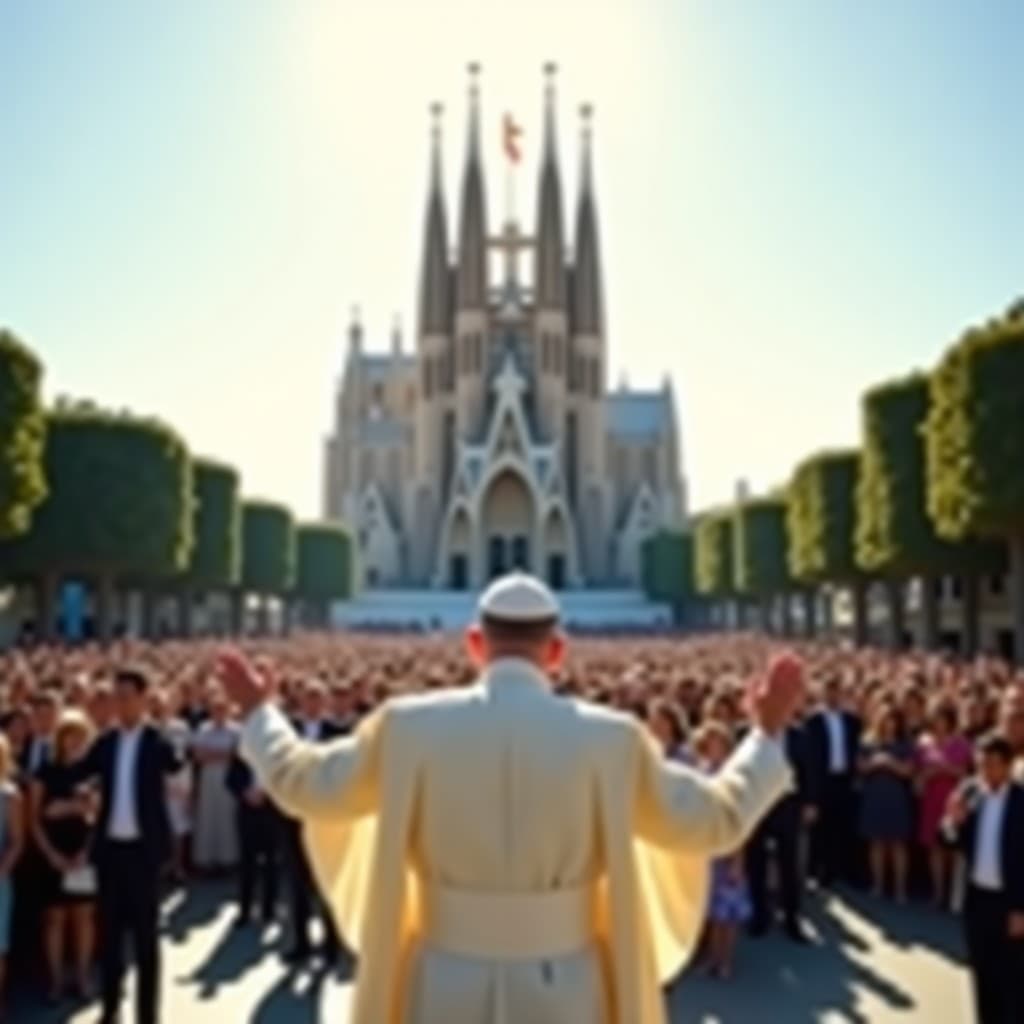
Pope Leo XIV arrived in Spain on Saturday for a week-long visit, his first to an EU country outside Italy, where he will inaugurate a new tower in Barcelona's Sagrada Familia basilica and meet migrants who crossed dangerous Atlantic waters to reach Europe, according to France 24. The Washington Post reported that the pontiff is drawing huge crowds in Madrid and appears to be making a star turn, with his emotive assurance enthralling the faithful.
The visit marks a deliberate pivot in Vatican diplomacy toward migration as a central moral and political issue. Unlike his predecessors, Pope Leo has made the question of how wealthy nations treat migrants a defining theme of his early papacy, positioning the Church as a voice for the vulnerable in a continent increasingly hardening its borders.
For Rome and the Italian state, the Pope's prominence on migration creates both opportunity and tension. The Vatican's moral authority can amplify Italian arguments for burden-sharing within the EU, yet it also places pressure on the Italian government to align its own migration policies with papal teaching—a challenge for any administration managing both domestic politics and international obligations.
The Pope's arrival in Spain comes at a moment of acute European anxiety about migration. The Guardian has reported extensively on how EU member states are tightening asylum rules and border controls; Italy, as the Mediterranean's primary landing point, has borne the administrative and political weight of this hardening. Pope Leo's visit to Spain signals that the Vatican intends to challenge this trend from the moral center of European Christianity.
France 24's coverage emphasizes the Pope's intention to meet migrants who crossed the Atlantic—a detail that distinguishes this visit from earlier papal travels. The focus on direct encounter with migrants, rather than abstract discussion of migration policy, reflects a pastoral approach that the Washington Post characterized as drawing crowds and commanding attention. The outlet noted that the pontiff's visibility and emotional engagement contrast with the stoicism traditionally associated with the papacy.
The Sagrada Familia inauguration serves as a symbolic anchor for the visit. Barcelona's basilica, designed by Antoni Gaudí and under construction for over a century, represents human aspiration and artistic ambition. The Pope's presence at this inauguration, combined with his focus on migrants, creates a narrative about human dignity and the transcendent values that should guide European societies—a message directed implicitly at secular governments.
For the Vatican's institutional position, the visit represents a continuation of Pope Leo's strategy to position the Church as a moral counterweight to market-driven and security-focused approaches to migration. Project Syndicate published commentary on the Pope's first encyclical, Magnifica Humanitas, which addresses artificial intelligence but invokes the Tower of Babel as a parable about human hubris and fragmentation. The same theological framework—concern about technology and systems that fragment rather than unite humanity—underpins his migration stance.
Rome's diplomatic corps views the papal visit with careful attention. The Italian state benefits from the Pope's moral authority when it argues for EU burden-sharing on migration, yet Italian governments must also manage domestic political constituencies skeptical of immigration. The Pope's unambiguous moral stance—that migrants deserve dignity and protection—does not easily translate into the compromise-laden politics of border management.
The Washington Post's observation that the Pope might be the bigger star than Bad Bunny, who was also touring Madrid, reflects a broader shift in how the Vatican projects itself internationally. Pope Leo appears to be deliberately cultivating a public presence and media visibility that earlier popes avoided. This strategy amplifies his message but also exposes the Church to the same scrutiny and criticism that secular leaders face.
Spain itself provides a significant context. The country has become a secondary Mediterranean migration route, with migrants attempting to reach Europe via Morocco and the Strait of Gibraltar. Spanish authorities have faced criticism from human rights organizations, documented in international press coverage, for their handling of migrant arrivals. The Pope's visit implicitly addresses Spanish policy, even if he does not explicitly criticize the government.
The timing of the visit—occurring as Italy's coastguard recovered ten bodies from a capsized migrant boat off Malta—creates a stark juxtaposition in international media coverage. The Pope's message about the dignity of migrants and the responsibility of wealthy nations arrives as the material reality of Mediterranean crossing continues to claim lives. Foreign correspondents in Rome and Madrid will likely draw connections between these events.
For the Vatican's broader institutional interests, the migration focus serves multiple purposes. It positions the Church as morally engaged with contemporary crises; it appeals to younger, more progressive Catholics who expect the institution to address social justice; and it asserts Vatican influence over European political discourse at a moment when religious authority has declined in secular societies.
The Pope's encyclical on artificial intelligence, Magnifica Humanitas, also informs the migration visit. Both issues—AI and migration—concern Pope Leo as questions about human dignity in systems that can fragment or devalue individual persons. The encyclical's invocation of the Tower of Babel as a cautionary tale about human ambition without moral grounding extends to migration: wealthy nations building walls and systems of exclusion without asking whether such systems honor human dignity.
International coverage of the visit, particularly from France 24 and the Washington Post, emphasizes the Pope's emotional engagement and his ability to draw crowds. This represents a deliberate departure from papal tradition. Earlier popes conducted official visits with ceremonial distance; Pope Leo appears to be cultivating direct connection with audiences, a strategy that amplifies his message but also exposes him to the same celebrity culture and media scrutiny that he might otherwise avoid.
For Rome's foreign policy establishment, the Pope's prominence on migration complicates diplomatic strategy. Italian officials can cite papal teaching when arguing for EU action on burden-sharing, yet they must also manage the reality that migration policy involves security, economic, and social concerns that moral arguments alone do not resolve. The tension between the Vatican's moral clarity and the state's political complexity will likely persist throughout Pope Leo's papacy.