
LIGURIA
Posidonia 2026 convenes as Genoa reasserts shipping dominance
Mediterranean's largest maritime trade show opens amid Middle East tensions and container-ship attacks on global routes.
Marina Doria1,487 wordsEdition №6Saturday, 6 June 2026 — Edition № 6
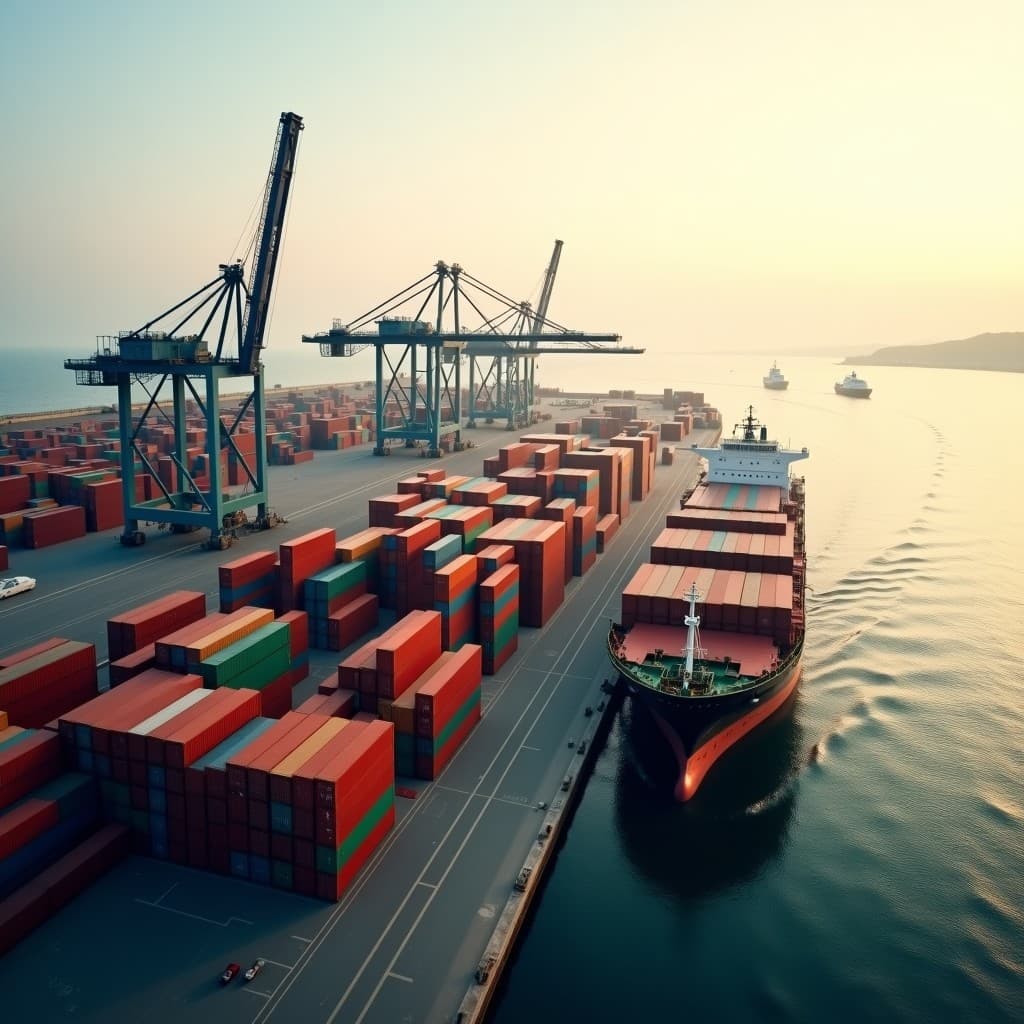
Posidonia 2026, the Mediterranean's principal maritime trade exhibition, opened in Genoa on June 1 and concluded June 5, drawing the international shipping sector to Italy's largest port at a moment when global container routes face new hazards. The timing underscores Genoa's role as a nerve centre for European trade: the Port Authority and the city's logistics ecosystem have positioned themselves as a stable hub even as Middle Eastern tensions disrupt conventional shipping lanes and expose the vulnerability of vessels transiting contested waters.
On June 1, the same day Posidonia opened its doors, MSC Mediterranean Shipping Company confirmed that its container vessel MSC Sariska V was struck by two projectiles while departing the Iraqi port of Umm Qasr, according to Marine News Magazine. The first projectile struck the vessel during pilot departure; a second hit the crew accommodation area shortly after. No crew members were injured, but the incident underscores the physical risk now embedded in global container shipping and the strategic importance of Mediterranean ports as alternative routing hubs.
For Genoa, the convergence of Posidonia and rising Middle East volatility carries immediate commercial weight. The port handles roughly 2.7 million containers annually and serves as the primary Italian gateway for transatlantic and Asia-Europe trade. Shipping lines and logistics operators attending Posidonia this week faced a practical question: how to maintain throughput and cost efficiency when traditional Suez-route vessels now face attack risk, insurance premiums, and longer rerouting around Africa.
Posidonia, held every two years in Genoa since 1970, is the Mediterranean's largest gathering of shipowners, port operators, equipment manufacturers, and maritime finance. The 2026 edition drew industry participants at a moment when the sector confronts multiple structural pressures: geopolitical fragmentation of trade routes, the energy transition and decarbonisation of shipping fleets, and the consolidation of container-line market share among a shrinking number of mega-carriers.
The MSC Sariska V incident, reported by Marine News Magazine on June 2, is the latest in a pattern of attacks on commercial shipping in the Persian Gulf and Red Sea. The projectile strikes—whether from state actors, proxy forces, or non-state groups—have forced shipping lines to reassess route economics. Longer passages around the Cape of Good Hope add 10 to 14 days to Asia-Europe transit time and increase fuel consumption, raising per-container costs. For lines already operating on thin margins, the calculus of which ports to call and how to balance speed against risk has shifted.
Genoa's strategic position in this reconfigured landscape is substantial. The port sits at the apex of the northern Mediterranean, with direct rail and road links to the Alpine passes and Central Europe. A container unloaded in Genoa can reach Milan, Munich, or Lyon faster than one routed through Suez to Rotterdam or Hamburg. As Middle East volatility persists, shippers have begun diverting volume to Mediterranean gateways—Genoa, Barcelona, Valencia—to shorten supply chains and reduce exposure to chokepoint risk.
The Port Authority of Genoa has invested heavily in modernising container terminals and rail connections to inland Europe. The Voltri container terminal, expanded in recent years, now handles some of the largest post-Panamax vessels. The Genoa-Rotterdam corridor, once a secondary route, has gained traffic share. Seatrade Maritime News, which published daily coverage from Posidonia throughout the week, reported that terminal operators and shipping lines were discussing capacity expansion and berth scheduling to accommodate rerouted traffic.
For Liguria's broader economy, Posidonia represents both opportunity and exposure. The region's port-dependent sectors—logistics, warehousing, trucking, customs brokerage—benefit from increased throughput. But the underlying cause—geopolitical fragmentation and the militarisation of sea lanes—reflects a structural shift in global trade that favours consolidation and scale. Smaller operators and regional logistics firms face pressure to merge or specialise to compete with multinational carriers and integrated port operators.
The enclosure of the Suez route as a reliable corridor for European trade is not new; the 2021 blockage of the Ever Given demonstrated the vulnerability of that chokepoint. But the current Middle East tensions appear more persistent and less amenable to quick resolution. Shipping lines are now factoring in a structural premium for rerouting and are investing in fleet flexibility—vessels capable of serving multiple routes and port configurations. This favours ports with modern infrastructure and hinterland connectivity, characteristics Genoa possesses.
Posidonia also serves as a forum for discussing decarbonisation standards and alternative fuels. The International Maritime Organization's regulations on sulphur content and carbon intensity have pushed shipowners toward liquefied natural gas, methanol, and ammonia-fuelled vessels. European ports, including Genoa, are investing in bunkering infrastructure for these fuels. The transition is capital-intensive and favours established, well-capitalised ports over smaller terminals.
The conference also addressed insurance and risk management in contested waters. Lloyd's of London and other maritime insurers have raised premiums for vessels transiting the Red Sea and Persian Gulf. Some routes now carry war-risk surcharges of 0.5 to 1 percent of cargo value. For high-value goods—electronics, pharmaceuticals, luxury items—the cost differential between Suez and Cape routing has narrowed, making the longer journey economically viable. This shift has implications for Genoa's cargo mix and the types of goods flowing through its terminals.
Genoa's position as a transshipment hub also benefits from route fragmentation. Containers destined for inland Europe no longer need to concentrate at the largest northern European ports; they can be discharged in Genoa and distributed by rail and road. This reduces congestion at Rotterdam and Hamburg and spreads logistical value across the Mediterranean. Port operators in Genoa have been marketing this advantage to shipping lines and freight forwarders.
The Posidonia gathering also reflected broader industry consolidation. The top three container lines—MSC, Maersk, and CMA CGM—now control roughly 80 percent of global container capacity. These mega-carriers have the scale to absorb rerouting costs and the bargaining power to negotiate berth priority and terminal fees. Smaller lines and regional operators face margin compression. For Genoa, this means competition for berth slots and terminal capacity is intense, and port fees are under pressure.
Looking forward, the incident involving MSC Sariska V and the broader Middle East volatility are likely to sustain elevated rerouting traffic through Mediterranean ports for the near term. However, the durability of this shift depends on whether Middle East tensions persist or de-escalate. A return to Suez stability would likely reverse some of the traffic diversion. Genoa's strategy, evident from Posidonia discussions, is to position itself as a permanent alternative, not a temporary refuge—by investing in infrastructure, hinterland connectivity, and service differentiation.
The convergence of Posidonia 2026 and the MSC Sariska V attack illustrates the interconnection between global geopolitics, maritime commerce, and regional port economies. Genoa's ability to capture and retain rerouted traffic depends on execution: reliable berths, efficient cargo handling, competitive pricing, and seamless rail and road connections to inland markets. The port has these assets, but so do competitors in Barcelona, Valencia, and Marseille. The next two years will reveal whether Genoa can consolidate its position as the Mediterranean's primary gateway for Asia-Europe trade.
For Liguria's workforce and regional economy, the stakes are material. Port-related employment—stevedores, truck drivers, warehouse workers, customs brokers, logistics planners—is concentrated in and around Genoa. Sustained traffic growth supports wages and employment stability. But the transition to larger vessels, automated container handling, and integrated logistics platforms also displaces labour. The regional challenge is to ensure that port growth translates into broadly shared prosperity rather than concentrated gains for multinational operators and capital-intensive automation.