
SPORT
Real Madrid circles Arsenal's Calafiori as Serie A loses defensive depth
The Italian left-back's summer move signals another talent drain from the league as Europe's elite hunt Serie A's emerging defenders.
Tobia Marenghi1,247 wordsEdition №10Wednesday, 10 June 2026 — Edition № 10
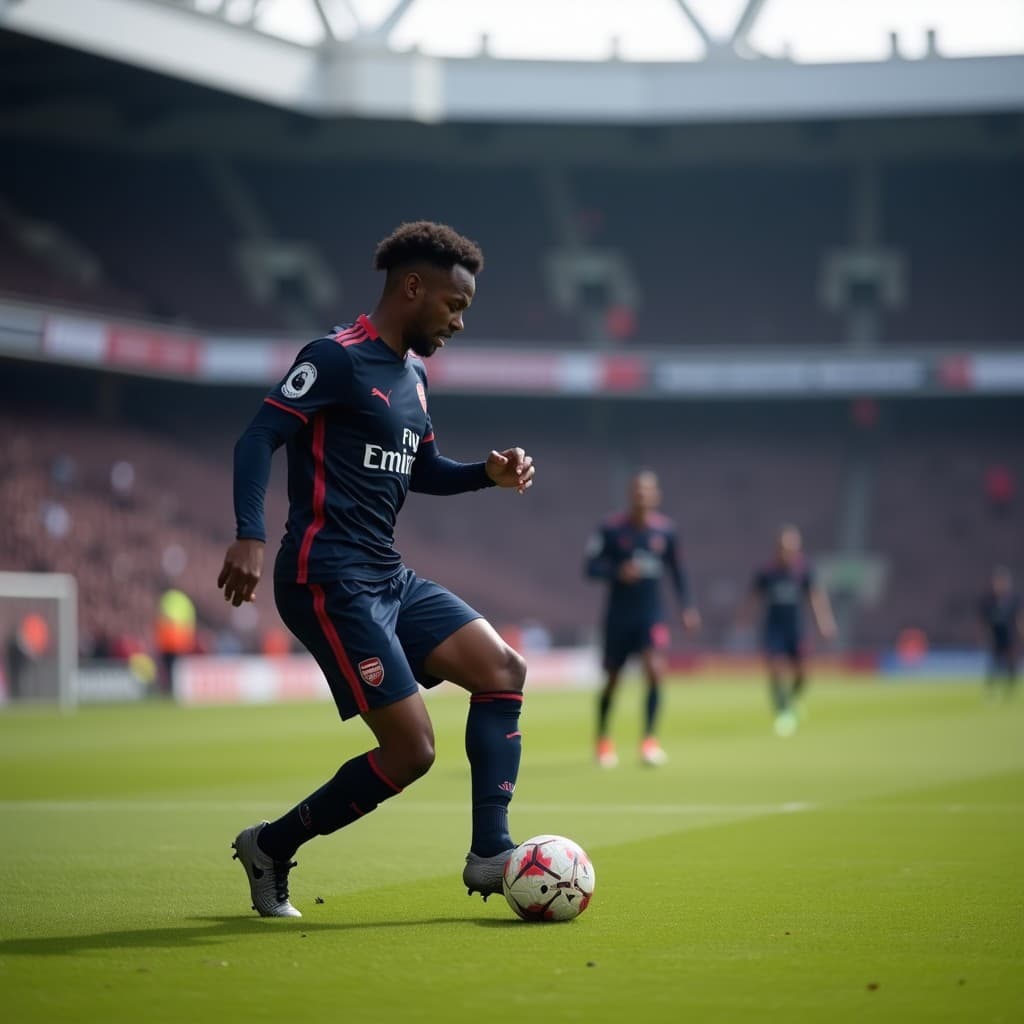
Real Madrid have begun scouting Riccardo Calafiori at Arsenal, according to the BBC's transfer coverage, adding the Italian left-back to a growing list of Serie A-developed players now in demand across Europe's top five leagues. The 22-year-old, who came through Bologna's academy before his move to the Premier League, represents the latest chapter in a familiar story: Serie A develops young talent, and the continent's richest clubs harvest it.
The timing matters. As the summer transfer window opens, Italian football faces a peculiar paradox. The league has produced a generation of defenders—Calafiori among them—capable of competing at the highest level, yet the economic gravity of the Premier League, La Liga and Ligue 1 continues to pull them away. Arsenal's decision to acquire Calafiori last year was itself a raid on Serie A's depth; now Real Madrid's interest suggests that even a season in England has not dimmed his appeal to Spain's biggest club.
Calafiori's trajectory illuminates a structural challenge for Italian football. He developed at Bologna, a club that has long served as a talent factory for Serie A and beyond, yet the moment he matured into a marketable asset, he departed for the Premier League. Real Madrid's scouting mission signals that his value has only increased—and that Serie A's loss is becoming Europe's gain.
The BBC's report on Real Madrid's interest in Calafiori arrives amid a broader reshuffling of Europe's defensive landscape. Tottenham, according to the same coverage, are also hunting Serie A talent, eyeing Juventus defender Gleison Bremer. Manchester United's chase of Newcastle's Lewis Hall rounds out a picture in which Italian football's academy output is being systematically evaluated and extracted by clubs with greater financial reach.
Calafiori's path from Bologna to Arsenal to potential Real Madrid interest is not anomalous. It reflects a decade-long pattern in which Serie A has become a finishing school for European football rather than a destination for consolidated talent. Young Italians and foreign prospects develop in the league, prove themselves, and then depart for higher wages and greater European exposure. The cycle repeats: Bologna finds the next prospect, develops him, and watches him leave.
Bologna's role in this ecosystem is instructive. The Emilia-Romagna club has become one of Europe's most prolific exporters of young talent, a status that brings prestige but also chronic instability. Calafiori's departure was not anomalous; it was inevitable. The club's business model depends on identifying undervalued players, developing them over one or two seasons, and selling them at a profit to wealthier leagues. It is efficient; it is also exhausting.
The Italian left-back's profile—technically sound, athletically capable, young enough to develop further—fits the template that English, Spanish and French clubs now actively seek. Arsenal paid a reported fee that reflected his potential; Real Madrid's scouting suggests that potential is being realised faster than expected. A second season in a top European league, even if spent mostly on the bench or in rotation, can accelerate a player's market value.
For Serie A, the pattern carries consequences. The league's competitive balance depends partly on the ability to retain or develop players through their prime years. When young defenders of Calafiori's calibre depart after a single season abroad, the league loses not only the player but also the narrative of progression. Juventus, Inter and Milan can still command resources to compete for top talent, but mid-table and upper-mid-table clubs face a narrowing window to build squads before their best players are poached.
Real Madrid's interest also reflects a broader European scouting shift. Italian defenders have long been valued for their tactical discipline and positional intelligence. Calafiori represents a newer archetype: a left-back capable of playing in a high, pressing defensive line, comfortable in possession, and mobile enough to cover ground in modern attacking systems. These qualities are now at a premium across Europe, and Serie A remains one of the few leagues where such players can be developed and then sold at a profit.
The BBC's coverage does not specify whether Real Madrid have made a formal approach or are in the preliminary scouting phase. Arsenal, having invested in Calafiori, are unlikely to sell without substantial compensation. Yet the mere fact of Madrid's interest signals that the player's market value has risen since his move to London. For Arsenal, that is a validation of their recruitment; for Serie A, it is another reminder that the league's role in the European football ecosystem is increasingly that of a talent pipeline rather than a destination.
Calafiori's potential move also sits within the broader context of Serie A's summer 2026 transfer window. The Guardian's interactive guide to men's transfers across Europe's top five leagues shows that Italian clubs are both buyers and sellers, but the balance has shifted. Serie A clubs are increasingly selling to fund purchases rather than competing directly for the continent's most expensive talents. Juventus, Inter and Milan can still operate in the top tier of the market, but the league as a whole has less purchasing power than it did a decade ago.
The left-back position, in particular, has become a focal point for European clubs seeking to upgrade their defensive flanks. Real Madrid's interest in Calafiori, Tottenham's pursuit of Bremer, and Manchester United's chase of Hall all point to a market in which full-backs capable of contributing in the attacking phase are at a premium. Serie A has produced several such players in recent years; most have left.
For Bologna, Calafiori's potential departure to Real Madrid would represent a bittersweet outcome. The club receives credit for developing him, and the sale would generate revenue. Yet the loss of another young talent reinforces the cycle that keeps Bologna competitive in Serie A but unable to challenge for European honours. The club's business model is sustainable, but it is also limiting.
Real Madrid's scouting mission, if it materialises into a formal bid, would test Arsenal's resolve to retain a player they acquired less than a year ago. The English club invested in Calafiori as part of a longer-term project; Real Madrid's interest suggests that project may be accelerating faster than expected. Whether Arsenal choose to sell will depend partly on their own defensive priorities and partly on the fee Madrid is willing to offer.
The broader implication is clear: Serie A's young defenders are increasingly viewed as assets to be acquired, developed briefly, and then sold to wealthier leagues. Calafiori's story, if it ends with a move to Real Madrid, will be one of many in a summer window that is likely to see several Italian-developed talents depart for Spain, England and France. The league's role as a talent factory is secure; its ability to retain and build around those talents remains constrained.