
ECONOMY
Red Sea disruption redirects Saudi oil flows toward Mediterranean
Houthi threats push supertankers south as Genoa and regional ports vie for rerouted cargoes
Marina Doria426 wordsEdition №56Saturday, 25 July 2026 — Edition № 56
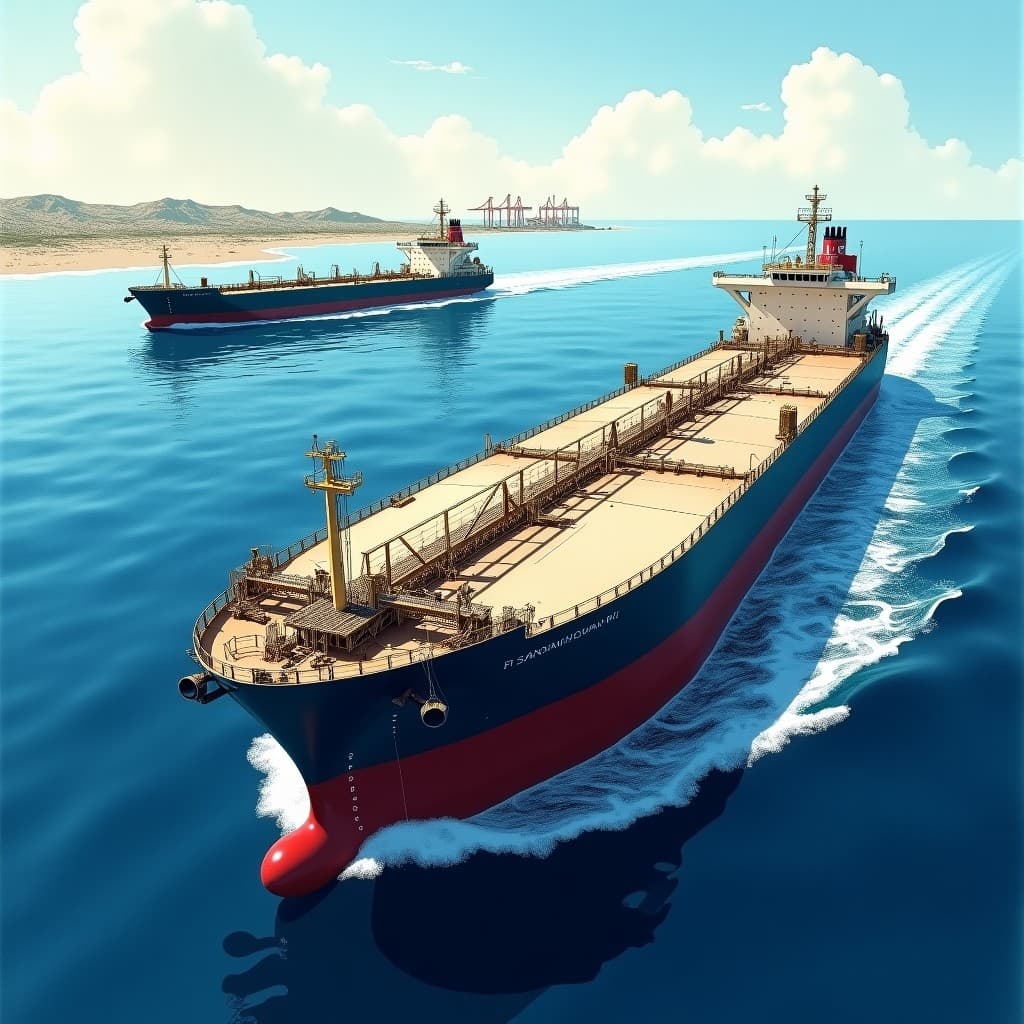
Two Chinese supertankers carrying a combined 4 million barrels of Saudi Arabian crude are exiting the Red Sea via the Bab el-Mandeb strait, according to Marine News Magazine citing shipping data. The Singaporean-flagged VLCC Xin Long Yang reversed course mid-route on Tuesday and resumed southward passage late Wednesday, part of a broader pattern of vessels avoiding Red Sea transit risks. A Saudi vessel came under attack in the region during the same period, underscoring the persistent threat posed by Houthi operations against commercial shipping.
The rerouting pattern reflects a structural shift in global oil logistics. Supertankers avoiding the Red Sea must transit south around Africa — a journey that adds weeks to voyage time and hundreds of thousands of dollars in fuel and operating costs per voyage. This economic pressure is already forcing shippers to evaluate alternative discharge ports, with Mediterranean terminals — including those serving Genoa, the region's largest container and bulk facility — positioned to capture rerouted cargoes that would otherwise proceed through the Suez Canal to northern Europe or the Atlantic.
For Genoa's port authority and the Liguria logistics sector, the Red Sea disruption presents both opportunity and exposure. Opportunity: if Saudi crude rerouting accelerates, Mediterranean refineries and storage terminals stand to receive increased volumes, generating berth utilization, stevedoring work and downstream demand for refined-product distribution. Exposure: prolonged Red Sea insecurity could push Asian shippers toward Pacific-focused supply chains, reducing the volume of Asia-Europe traffic that transits Suez and Mediterranean ports. The Port of Genoa's competitiveness depends partly on its position in that trade flow; sustained rerouting could either concentrate traffic (if Mediterranean becomes the preferred hub) or disperse it (if Asian producers shift to Pacific outlets entirely).
Marine News Magazine's reporting on Chinese supertanker movements reflects the real-time volatility shaping shipping economics. A single VLCC reroute costs operators roughly $500,000 to $1 million in additional voyage expenses; when combined across the global fleet, such decisions ripple through port utilization, terminal scheduling and regional logistics employment. Genoa's port management has indicated readiness to handle increased crude and product volumes, but capacity constraints — berth availability, storage infrastructure, labour — are not infinite. The port's ability to capture rerouting gains depends on whether it can offer faster turnaround, competitive rates and reliable discharge infrastructure compared to other Mediterranean options. Current data suggests the disruption is still in its early phase; sustained Red Sea closure would test those capabilities within weeks.