
LIGURIA
Red Sea Shipping Threat Reshapes Routes; Genoa Braces for Diversion Surge
Houthi attacks on Israeli vessels signal new pressure on Mediterranean ports as global container traffic seeks safer passage
Marina Doria1,247 wordsEdition №9Tuesday, 9 June 2026 — Edition № 9
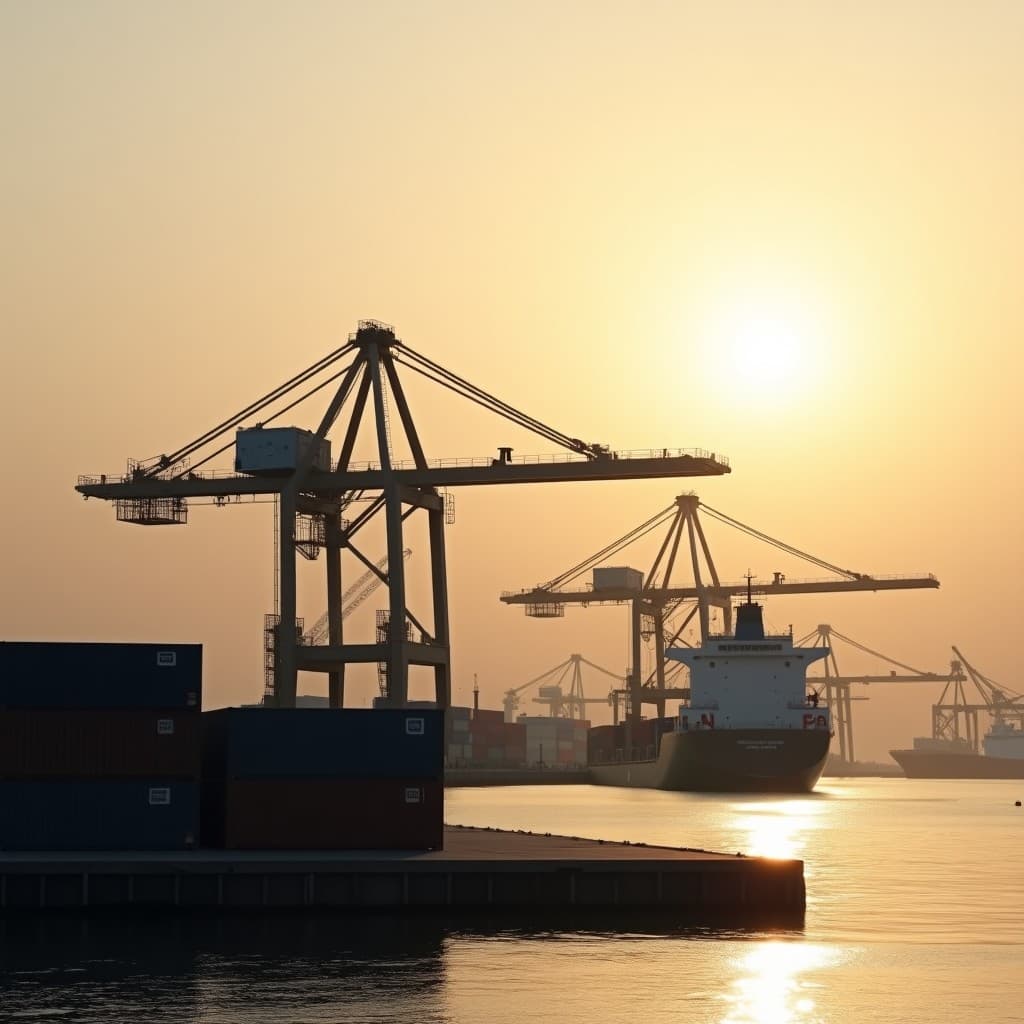
The Yemen-based Houthi movement has declared a complete ban on Israeli maritime navigation in the Red Sea, threatening to treat all Israeli-linked vessels as legitimate military targets. According to Seatrade Maritime News, the group's statement follows coordinated strikes with Iran against Israel and signals an escalation in attacks on shipping in one of the world's busiest trade corridors.
For Genoa's port authority and shipping logistics sector, the threat carries immediate operational weight. The Red Sea route, linking Europe to Asia via the Suez Canal, is the fastest passage for container traffic between the Mediterranean and Indian Ocean. Diversions away from that corridor—whether through longer routes around Africa or via overland and rail alternatives—alter the calculus of where ships dock and how cargo flows through European gateways.
The targeting of Israeli-flagged and Israeli-owned vessels creates a secondary pressure: shipping lines and insurers must now assess whether to reroute, accept higher insurance premiums for Red Sea transit, or shift to ports perceived as safer staging points. Genoa, as Italy's largest container terminal and a major Mediterranean hub, sits at the intersection of these decisions.
The Houthi threat is not new in isolation. The group has conducted sporadic attacks on shipping in the Red Sea for months, but the explicit declaration of a total ban on Israeli maritime navigation represents a shift in scope and rhetoric. Seatrade Maritime News reported that the Houthi statement came as part of a broader pattern of Iranian and Houthi coordination, with both entities launching strikes on Israel in recent weeks.
What distinguishes this moment is the clarity of the targeting rule. By declaring all Israeli-linked movements legitimate military targets, the Houthis are signalling that the attacks will not be random or limited to military vessels. Commercial shipping, which relies on predictability and low-risk passage, faces a new category of uncertainty.
The Red Sea carries roughly 12 percent of global maritime trade by volume. Container ships, bulk carriers, and tankers moving between Europe and Asia depend on the Suez Canal shortcut. A sustained threat to that route forces shipping lines to choose between accepting risk, paying higher insurance, or taking longer passages—each option carries cost and time implications that ripple through port operations and supply chains.
Genoa's position in this calculation is strategic. The port handled approximately 2.7 million TEUs (twenty-foot equivalent units) of containers in 2025, making it the second-busiest container port in the Mediterranean after Rotterdam. It is the primary gateway for northern European and Alpine trade into Italy and the Balkans. If Red Sea disruptions persist, shipping lines may route more traffic through Mediterranean ports rather than risk the longer African circumnavigation or the delays of alternative corridors.
The port authority and terminal operators in Genoa have already experienced the cascading effects of previous Red Sea disruptions. When Houthi attacks intensified in late 2023 and early 2024, some shipping lines rerouted around Africa, adding 10 to 14 days to transit times and increasing fuel costs. The longer voyages meant fewer ship rotations and, in some cases, reduced calls at Mediterranean ports as lines optimized for fewer, larger vessels on longer cycles.
This time, the economic context differs. According to Reuters reporting on global shipping in recent months, container rates have stabilized after the post-pandemic volatility, and lines have excess capacity. A sustained Red Sea threat could push some of that capacity toward Mediterranean alternatives, potentially increasing berth demand at Genoa and other northern Italian ports.
However, the port faces infrastructure constraints that limit its ability to absorb sudden surges. The Morandi bridge collapse in 2018 and subsequent rebuilding reshaped Genoa's road access to the port. While the new bridge has improved flow, the hinterland connections—rail and truck routes into the Alpine region and central Europe—remain a bottleneck during peak traffic periods. A sudden influx of diverted container traffic could expose those limits.
The insurance and shipping industry is also watching closely. Lloyd's List and other maritime trade publications have noted that Red Sea disruptions increase insurance premiums and operational costs, which shipping lines eventually pass to shippers and consumers. For Italian exporters of machinery, textiles, and food products, higher shipping costs reduce competitiveness, particularly for time-sensitive goods heading to Asian markets.
Genoa's logistics sector—warehousing, customs brokerage, trucking firms, and rail operators—has adapted to volatility before. The port supports a cluster of supply-chain service providers that have learned to manage disruptions. But sustained Red Sea pressure could force longer-term decisions about infrastructure investment and capacity planning.
The geopolitical dimension adds uncertainty. The Houthi statement is explicitly tied to the Israel-Palestine conflict and broader Iranian-Israeli tensions. Any escalation in that conflict could intensify Red Sea attacks or prompt international naval responses that further complicate passage. Conversely, any de-escalation or diplomatic breakthrough could ease the threat. Shipping lines and port operators are in a holding pattern, unable to commit to major strategic shifts until the trajectory becomes clearer.
For now, Genoa's role is to remain ready. The port authority has experience managing surge capacity from previous disruptions. But if Red Sea threats persist and become the new normal, the port will need to invest in additional berths, faster cargo-handling equipment, and improved hinterland connections to capture the diverted traffic and convert it into sustained competitive advantage.
The broader lesson for Mediterranean ports is that geopolitical risk is now a permanent feature of global shipping. Genoa, with its deep-water facilities and established connections to northern Europe, is well-positioned to benefit if shipping lines seek alternatives to the Red Sea route. But that advantage depends on the port's ability to handle increased traffic without choking on its own infrastructure constraints.