
OPINION
The Republic at Eighty: Ceremony, Distance, and What Endures
Editorial Board410 wordsEdition №4Thursday, 4 June 2026 — Edition № 4
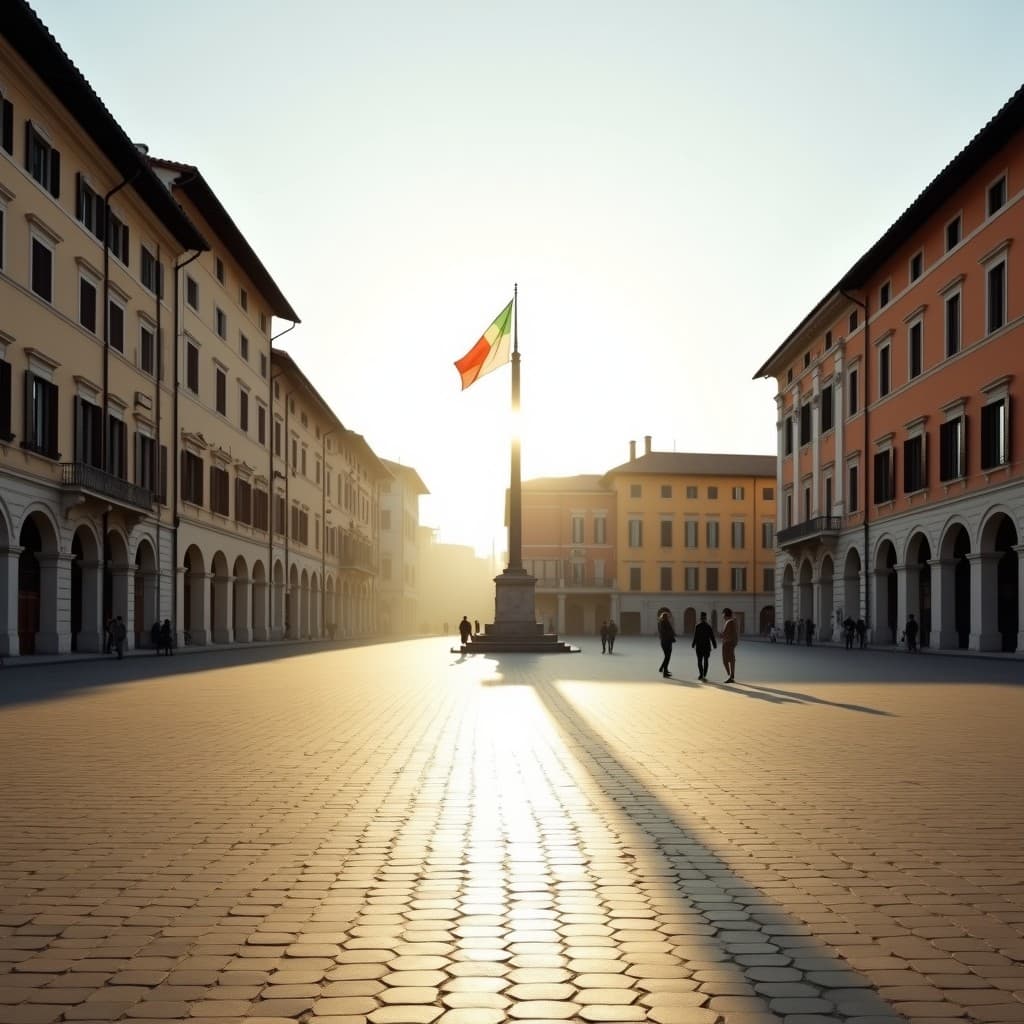
Euronews reported this week that Italy commemorated the eightieth anniversary of the birth of the Republic with ceremonies, military parades and flypasts in Rome, marking the 1946 referendum that ended the monarchy and set the country on its democratic course. The coverage was, as such coverage tends to be, respectful and brief: a paragraph of context, images of aircraft trailing coloured smoke, the language of official occasion. What it could not easily convey — what the foreign wire rarely pauses to convey — is the particular weight that 1946 carries in Italian memory, the narrowness of the vote, the exhaustion and devastation from which that democracy was constructed.
Eighty years is a significant interval. It is long enough to have produced institutions with genuine depth — a Constitutional Court, a career judiciary, a bicameral parliament that has survived governments of every complexion — and short enough that the founding generation's choices still shape the constitutional architecture that governs daily life. When the international press covers Italian political instability, it sometimes forgets that the instability has always been contained within a framework that has not collapsed. That framework was built in 1946 and after. Its durability is worth marking, even if the parade is the only image the wire transmits.
There is, however, a tension in the timing that the foreign coverage does not fully surface. The same week that Italy paraded its military inheritance down the Via dei Fori Imperiali, the European Commission was, according to Euronews, preparing to criticise Rome's fiscal choices — specifically, fuel duty cuts that Brussels considers poorly targeted. The Republic celebrates its sovereignty; its European partners audit its budget. This is not a contradiction unique to Italy, but Italy experiences it with particular acuity, given the scale of its public debt and the consequent dependence on the confidence of bond markets and EU institutions. A democracy can be eighty years old and still find its room for manoeuvre circumscribed by arithmetic.
We do not raise this to diminish the occasion. Republics that have lasted eight decades through the pressures of the twentieth century and into the uncertainties of the twenty-first deserve their ceremony. But the world's coverage of Italy's anniversary will be more useful to its readers if it holds both things at once: the genuine achievement of democratic continuity, and the unresolved tensions — fiscal, demographic, institutional — that the next eighty years will be required to answer. The parade ends; the questions remain.